
Farming Simulator 25 Alpacas Guide: How to Feed, Walk, Breed and Shear Them in Beans & Alpacas
The Beans & Alpacas expansion launched on October 27, 2026, and brought some very fluffy new residents to your farm. Farming Simulator 25 alpacas work very differently from the sheep you know: they don’t drop wool pallets on their own, they need regular walks to stay happy and their fleece has to be sheared in a small minigame. This guide explains everything you need to know about Farming Simulator 25 alpacas, from housing and feeding to breeding, shearing and turning fleece into plush toys.
What Makes Farming Simulator 25 Alpacas Special?
Alpacas arrive with Beans & Alpacas as a new animal type, alongside Brahman cattle. The expansion is available on PC and consoles and is also included in the Year 2 Season Pass. According to GIANTS Software’s official Animals 101 lesson on alpacas, three things set them apart from other livestock:
- No automatic wool: Unlike sheep, alpacas don’t produce wool by themselves. They have to be sheared once a year, in spring.
- Happiness: Alpacas have a happiness value, and it influences how much fleece you get when shearing.
- Walks: Taking your alpacas for walks on a leash is the way to keep that happiness up.
Alpacas come in four colors: white, grey, brown and fawn (some GIANTS material calls the last one beige). The color is purely visual, so pick whatever looks best on your farm.
What You Need Before Buying Alpacas
Before you spend money on animals, make sure you have the basic equipment GIANTS recommends:
- Alpaca housing: Place suitable housing first. Shearing takes place inside the barn, so plan the layout with that in mind.
- Front loader: Use a bale spike for hay bales and a pallet fork for pallets such as fleece.
- Leash: Needed for walks and for guiding alpacas into the barn for shearing.
- Shearing tool: Required to shear the fleece.
- Animal trailer (optional): If you want to transport alpacas yourself instead of paying for direct delivery, look for the alpaca icon on the trailer in the shop. Larger trailers may require a truck or dolly, so check the displayed “Combinations” before buying.
Tip: Leave plenty of room around the barn entrance. Leading one alpaca inside gets tricky when the rest of the herd decides to stand in the way.
How to Feed Alpacas in Farming Simulator 25
Alpacas are easy to feed. They only need grass or hay, but the two are not equal:
- Grass: 60% feeding effectiveness
- Hay: 100% feeding effectiveness
A meadow in their pasture can replace the grass you would otherwise deliver, as long as there is enough of it. Check the animal tab in the menu regularly to make sure the supply never runs out. Good feeding matters for more than fleece, because it keeps your alpacas healthy, and health is one of the conditions for breeding.
How Often Do You Need to Walk Alpacas?
Walking is the new hands-on part of alpaca care. Equip the leash, approach an alpaca and take it for a stroll to increase its happiness. The required frequency depends on your time settings:
- Standard time setting: one walk per day
- 12 days per year: one walk per month
Because happiness affects the amount of fleece, skipping walks costs you money at shearing time. Keep an eye on happiness in the animal menu, especially in the weeks before spring.
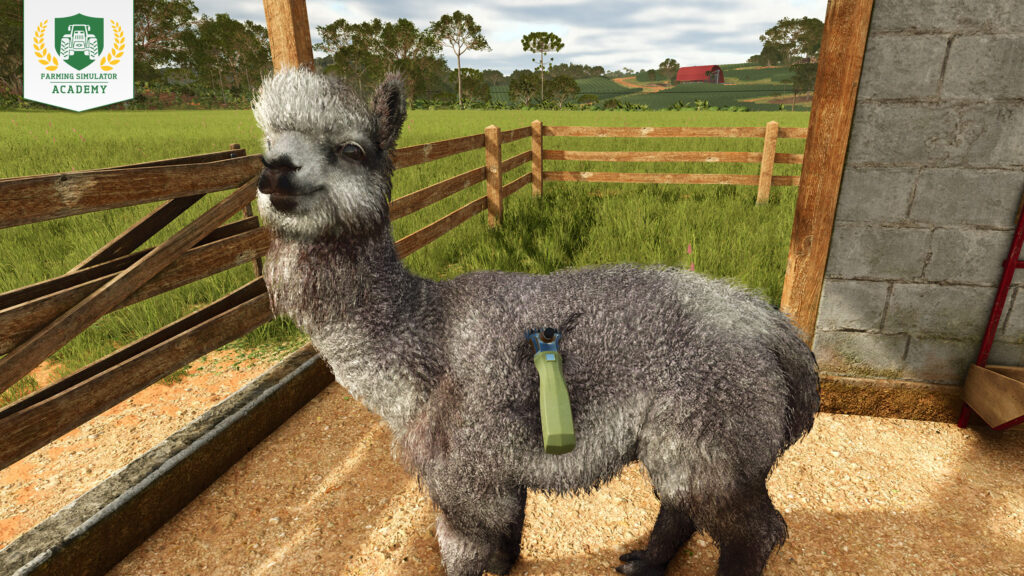
Shearing only starts once your alpaca is inside the barn, so you have to lead it there on the leash first.
How to Shear Alpacas in Farming Simulator 25
Shearing happens exactly once per year, in spring. Here is how it works step by step:
- Wait for spring: Only adult alpacas with grown fleece are worth shearing. Young alpacas start without harvestable fleece, and it grows as they get older.
- Lead the alpaca into the barn: Use the leash to guide one animal into the shearing area. The minigame only starts once the alpaca is inside.
- Shear carefully: Use the shearing tool to start the minigame. GIANTS modeled it after the fishing minigame from Highlands Fishing, and the main rule is simple: don’t go too fast, or the machine overloads.
- Repeat for the herd: Bring in the next alpaca and shear it the same way.
- Collect the pallet: When shearing is complete, a pallet of alpaca fleece appears next to the barn. Pick it up with your pallet fork.
Don’t feel like shearing a whole herd by hand? You can hire a worker to do the annual shearing for a fee. According to the official Farming Simulator 25 changelog, Patch 1.25 added animal workers who can handle leading and shearing alpacas, as well as riding and grooming horses.
How to Breed Alpacas
Alpacas reproduce on their own once three conditions are met:
- The alpaca is at least 14 months old.
- Its health is at 100%.
- There is free space in the housing for another animal.
If no babies show up, check these three points first. The most common culprit is a full barn, so leave a slot or two open if you want your herd to grow. GIANTS hasn’t published a fixed breeding timer, so don’t plan around a specific number of days.
What to Do With Alpaca Fleece
Once you have your fleece pallets, you can sell them directly or feed them into the new production chains. GIANTS lists the alpaca branch like this in its official production preview:
- Spinnery: turns Alpaca Fleece into Alpaca Wool
- Tailor Shop: makes Alpaca Plush, Alpaca Pillow and Alpaca Socks
- Carpentry: makes Alpaca Chair and Alpaca Stool
Processing takes more steps, but finished products can earn you more money than raw fleece. On the new Catuaí map, you’ll find a spinnery and an animal dealer among the local production and service points, so the whole alpaca business fits nicely into the Brazil-inspired region.
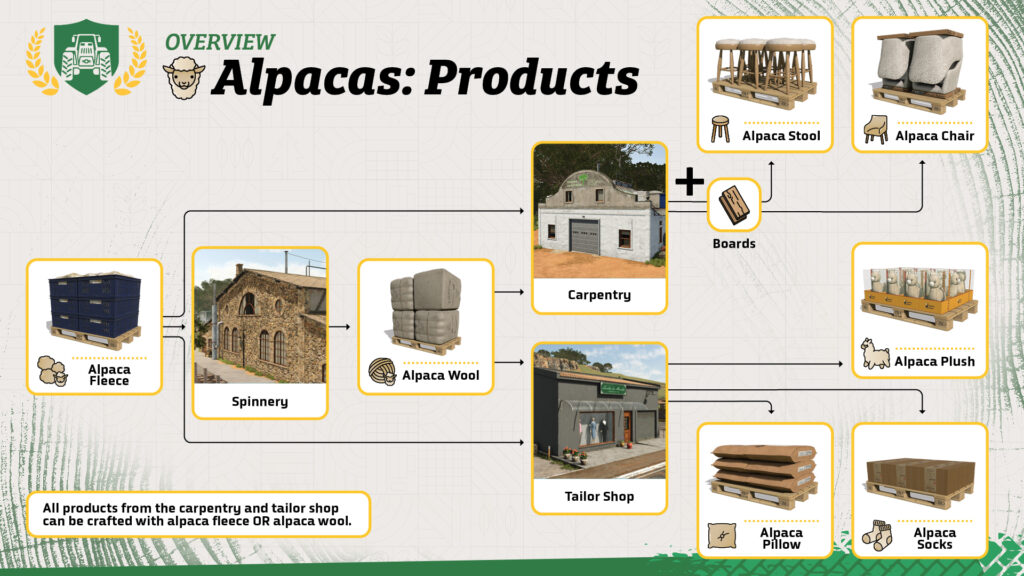
From fleece to plush toy: the official overview of the alpaca production chain.
Quick Tips for Your First Alpaca Farm
- Feed hay if you can: It offers 100% feeding effectiveness, compared to 60% for grass.
- Build walks into your routine: Happy alpacas mean more fleece in spring.
- Keep a free slot: Without space, your alpacas won’t breed.
- Take your time when shearing: Rushing overloads the machine.
- Start by selling fleece: Once your herd grows, the spinnery and tailor shop are worth a look for extra profit.
Our Verdict
Farming Simulator 25 alpacas ask for a bit more attention than sheep, but that’s exactly what makes them fun. Feed them hay, walk them regularly, keep a slot free for offspring and shear them carefully every spring, and your herd will pay you back in fleece, wool and adorable plush toys. If you enjoy livestock systems with a little more depth, take a look at our Rust livestock guide as well. This guide reflects Farming Simulator 25 version 1.25.1.0 with the Beans & Alpacas expansion and GIANTS’ official information as of November 10, 2026. Values may change with future updates.
Keep the adventure going! Check out more Gaming Guides on Gamersuniverse.
Picture Source: GIANTS Software