
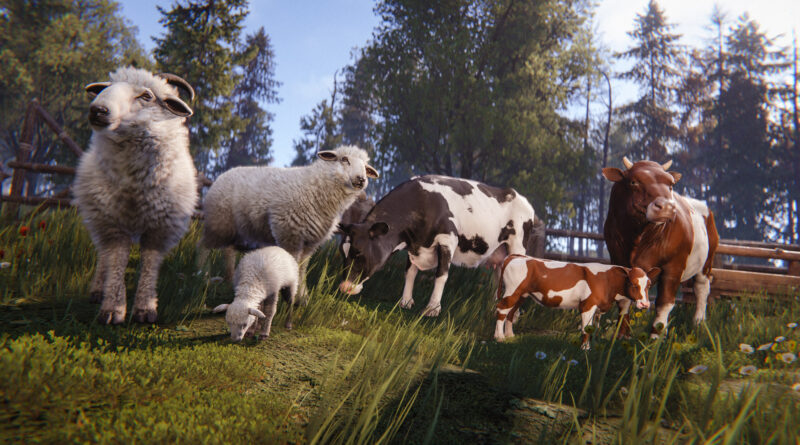
How to Breed Cows and Sheep in Rust: Livestock Taming, Genes, Milk and Selling Guide
Rust’s Livestock update turned cows and sheep into a full farming system. Since the October 2026 patch, you can tame wild animals, fence them in, milk and shear them, sell them at the ranch and, most importantly, breed cows in Rust for better genes. In this guide, we explain how to find and tame livestock, how to build a pen that keeps them healthy, how breeding and genes work and how to turn your herd into scrap and resources.
Quick answer: Tame a wild cow and bull (or buy young animals from the livestock vendor at a ranch), lead them into a pen built from Animal Fences, give them grass, water and room, and keep them in good condition. A bonded adult female and male from different herds will then breed on their own. Keep the calves with the best genes, sell the rest and repeat.
🐄 What the Rust Livestock Update Added
Facepunch released the Livestock update on October 1, 2026. According to the official changelist and the official update post on Steam, these are the farming features that matter for this guide:
- Cows and sheep: two new farmable animals with needs and genetics.
- New resources: dung from both, milk from cows, wool from sheep, plus beef and mutton.
- Milk, Skimmed Milk and Cream: new consumables, plus Creamy and Milky versions of most pure teas.
- Shepherds Pie and Beef Pie: new food items.
- Animal fences and gates: new deployables to keep your animals in.
- Vendor bartering: grown animals and wool can be sold to a vendor at the stables.
- Biofuel Generator: turns raw or spoiled meat and other organic matter into Low Grade Fuel.
This guide reflects the game after the early October hotfixes and the Halloween patch of October 22, 2026. Facepunch is still tuning livestock, so exact timers and values can change with future updates.
🤝 How to Find and Tame Cows and Sheep in Rust
You have two ways to start a herd: tame wild animals or buy young ones. Wild cows and sheep usually roam open grassland and plains in small groups. Taming works through trust, not food or tools. Simply stay close to the animal and let it get used to you.
- Get close and stay close: familiarity only builds while you are near the animal. The default range is 20 meters.
- Don’t hurt anything: hitting an animal costs you a lot of trust with it, and hurting one member of a herd also lowers your trust with the rest. Bulls and rams will attack people they don’t trust, so back off if they charge.
- Wait for the bond: after around five minutes, the animal is bonded enough to follow your lead, and a bonded adult cow can be milked. Since the early October hotfixes, a full bond takes about 15 minutes, and the animal needs it before it will breed.
- Lead it home: lead the animal back to your base the same way you would lead a horse. Move slowly, because the lead can break if the animal gets stuck.
To speed things up, eat a Shepherds Pie before you start. Players and server hosts agree it makes livestock build trust with you faster. The faster way to get animals is the livestock vendor at the ranch and large barn monuments, who sells young animals. Community guides report a calf costs about 300 scrap and a lamb about half that, and that bought calves come already bonded and on a lead, so you can walk them straight home.
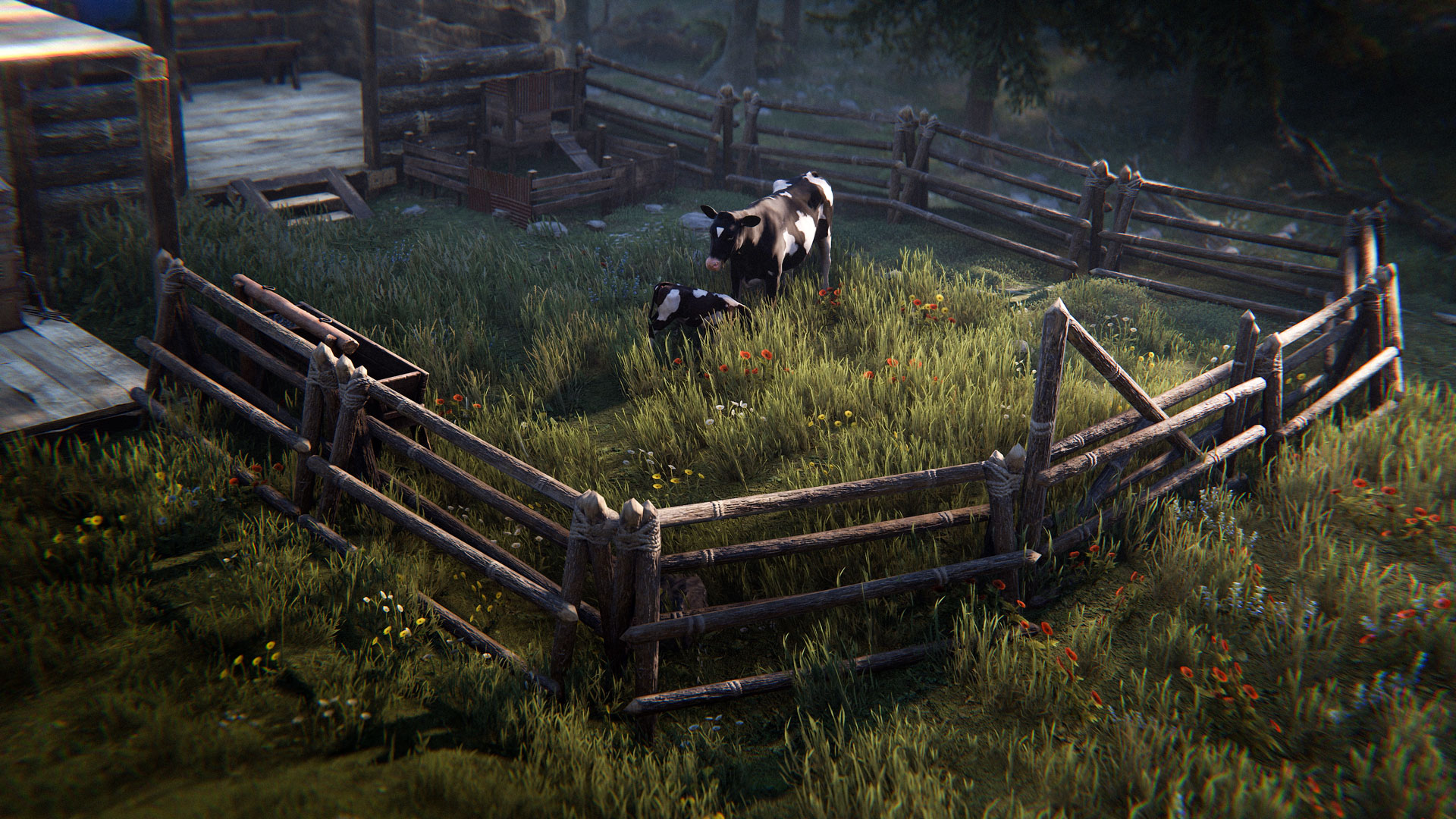
Build your pen before you bring animals home, so they can’t wander off.
🏡 How to Build a Rust Livestock Pen
Livestock have three needs: food, water and space. An animal’s overall condition follows its lowest need, not the average, so one neglected need is enough to drag the whole animal down. If you ignore your animals completely, they can go from full health to dead in about an hour with default server settings.
- Fences: use the new Animal Fence and Animal Fence Gate. Make the fence tight, because animals try to squeeze through gaps.
- Food: cows and sheep graze on grass, but a patch can be eaten bare. Add a Hitch & Trough and fill it with vegetables, berries or bread as backup. Grass alone is less nourishing, and animals eat less from the trough when plenty of grass is around.
- Water: animals drink from fresh water such as rivers and lakes, or from the water section of the Hitch & Trough. Building near a river makes life much easier.
- Space: crowding makes animals unhappy. Don’t cram your whole herd into one tiny pen, and split breeding animals from animals you plan to sell.
- Security: wild predators attack livestock, and so do other players. Keep the pen inside or right next to your base defenses.
Since an early October hotfix, livestock also can’t be hurt in safe zones, and each server has a cap of 300 livestock per species.
🐂 How to Breed Cows in Rust, Step by Step
Breeding happens automatically once the conditions are right. You don’t need to press a button. Here’s what you need:
- An adult female and an adult male of the same species: a cow and a bull, or a ewe and a ram. Rams have horns, ewes don’t. Calves and lambs can’t breed until they grow up.
- A full bond: both animals need to be fully bonded with you first.
- Good condition: with default server settings, an animal stops breeding at 60 percent condition or lower and is only willing again from 70 percent. Keep food, water and space high.
- Different herds: each animal shows a herd number. Animals with the same herd number are family, and breeding them produces inbred young with weaker genes. Always pair a female and a male from different herds.
- Keep them close: a male looks for a mate within 30 meters by default, and after breeding he waits 10 minutes before he can breed again.
When it works, the female shows a Pregnant label in her stats. Community testing puts pregnancy at about 10 minutes and growing up at roughly one hour. Young animals only grow while they are tame, and they start out familiar with the same players as their mother. A cow won’t carry again until her calf has grown up and she has rested for a while, which depends on her Fertility gene.
🧬 Rust Livestock Genes Explained (D, L, Y, F, H)
Like plants, cows and sheep have genetics. Facepunch says they can be bred “to hunt for a god clone”, meaning an animal that is good on every gene. Every animal has five genes, each shown as green (good), grey (ok) or red (bad). The multipliers below are the default server values for good and bad genes, compared with an ok gene at 1x.
| Gene | What it does | Bad (red) | Good (green) |
|---|---|---|---|
| D Dung | How often the animal drops dung | 0.6x | 1.6x |
| L Longevity | How long the adult lives | 0.65x | 1.5x |
| Y Yield | How much milk or wool it gives | 0.6x | 1.6x |
| F Fertility | How often it breeds and how many young it carries | 0.65x | 1.6x |
| H Hardiness | How well it copes with low food, water or space | 0.7x | 1.5x |
The important part is inheritance. Each gene has two copies, and the animal only shows the better one. A calf gets one random copy of each gene from its mother and one from its father. With default settings, genes don’t mutate, so a calf can only be green on a gene if at least one parent carries a good copy. Wild animals roll their genes at random, with only about a 20 percent chance per copy of being good and 30 percent of being bad, which is why a wild god clone is extremely rare.
Our breeding tips:
- Cover every gene: pick pairs where every gene is green on at least one parent.
- Prioritize Fertility and Yield: good Fertility speeds up every generation that follows, and good Yield means much more milk or wool.
- Cull and sell: keep the calves with the most greens, sell or harvest the rest and bring in new herds to avoid inbreeding.
- Coat hints are not guaranteed: players report that coat patterns hint at genes, such as more patch coverage for better Yield, but these are community observations, not official.
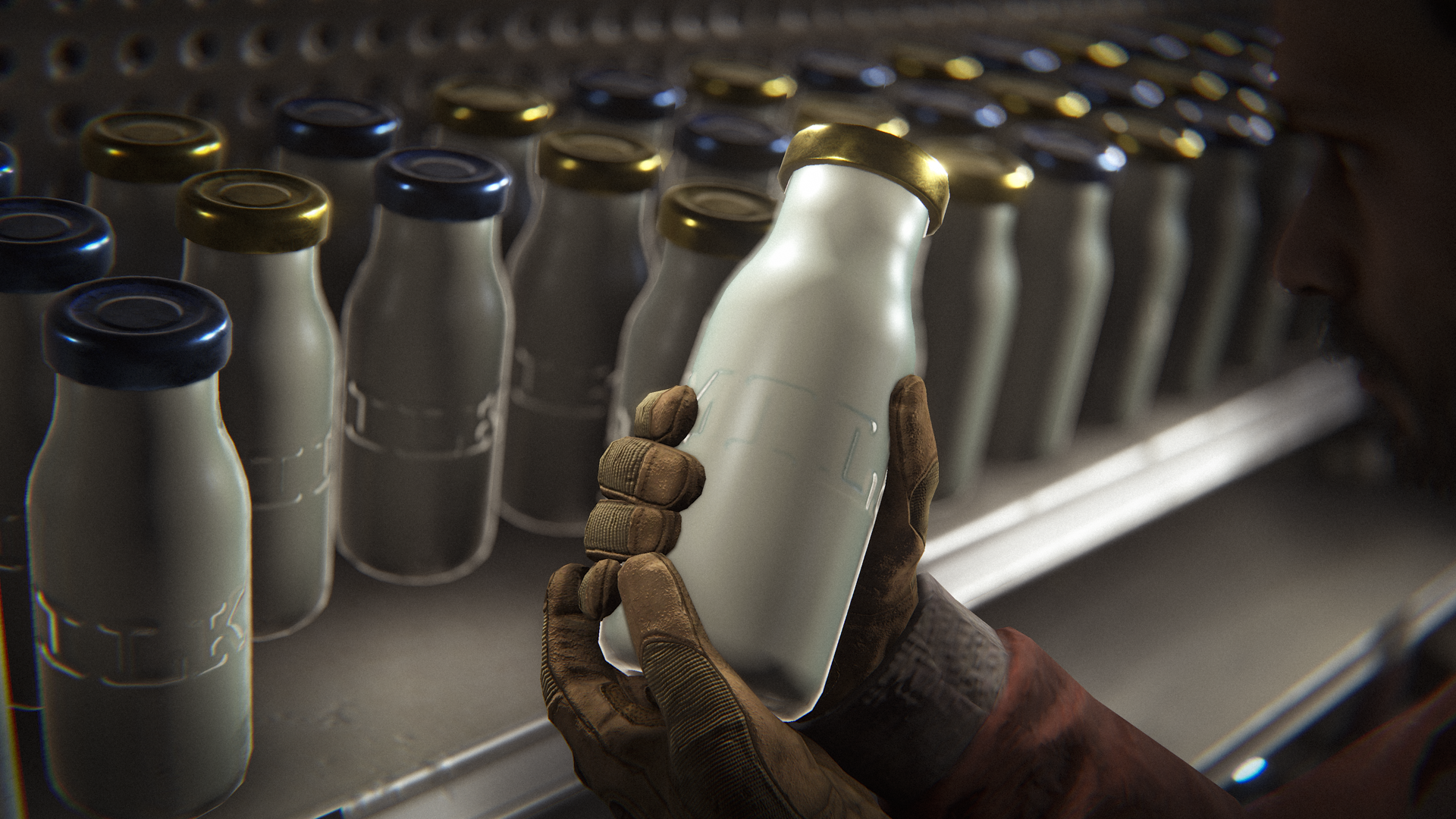
Refrigerate milk for four hours, then skim it into Skimmed Milk and Cream.
🥛 Milk, Cream, Wool and Dung: What Your Herd Produces
- Milk: milk a tame adult cow by interacting with her. You don’t need a tool. You can drink it right away, but if you keep it in a fridge for four hours, you can skim it into Skimmed Milk and Cream. Milk generally makes tea effects last longer, while Cream makes them stronger.
- Wool: shear a tame sheep by hitting its fleece with a skinning tool such as a knife. Players report that hitting a section that is already bare hurts the sheep, so watch where you swing.
- Dung: both cows and sheep drop dung, which you can use as fertilizer for your crops. Facepunch also cut the dung output of horses, so livestock are now the better source. Animals drop less dung when their condition is low.
- Meat and materials: livestock can be harvested for meat, bones and leather like any other animal. Mutton is needed for the Shepherds Pie.
- Low Grade Fuel: the new Biofuel Generator turns raw or spoiled meat and other organic matter into Low Grade Fuel. It has to be stirred by hand about every 30 minutes, and food with more calories gives you more fuel.
💰 How to Sell Cows and Sheep at the Ranch
Grown animals can be sold for resources. Lead the animal to the stables and talk to the livestock vendor outside. Here’s how the official bartering works:
- The vendor makes a randomized offer based on the animal’s gene quality.
- You can reject the offer and get a new one two more times. After that, the vendor won’t buy that animal for 15 minutes.
- Wool works the same way, but the offer depends on how much wool you bring in one go. The maximum is 400.
- Since an early October hotfix, animals you bought or found in the wild sell for noticeably less, so animals you bred yourself are the real money makers.
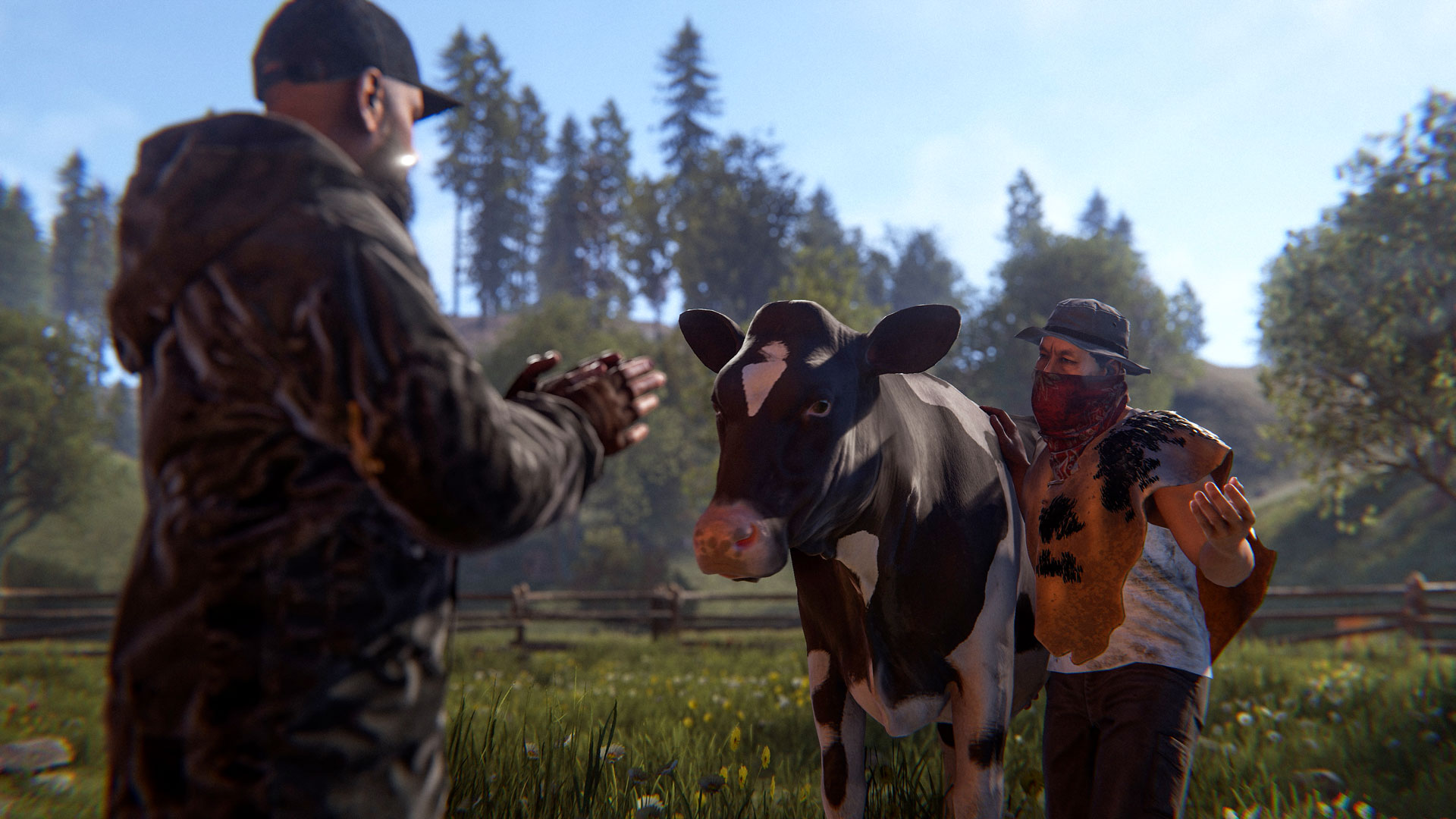
Bred animals with good genes get the best offers from the livestock vendor.
⚠️ What Is Still Changing
Rust’s livestock system is still a work in progress. Since launch, Facepunch has fixed runaway breeding, aggressive sheep and hovering cows, and it keeps working on feeding, herd limits, shearing and milk processing. Server owners can also change many livestock values with server settings, so modded or community servers may behave differently from what we describe here. If something doesn’t match on your server, check its rules or the latest patch notes first.
❓ Rust Livestock FAQ
How do you tame a cow in Rust?
Stay close to it without hurting it or its herd. After around five minutes, you can lead it, and after about 15 minutes, it is fully bonded and ready to breed. A Shepherds Pie speeds this up.
Why are my cows not breeding?
Check that both animals are adults of the opposite sex, fully bonded, in good condition and close to each other. A cow that just gave birth also won’t carry again until her calf has grown up.
What does the herd number mean?
Animals with the same herd number are related. Breed only animals from different herds to avoid inbred young.
Do sheep breed the same way as cows?
Yes. Sheep use the same five genes and the same breeding rules. The main difference is that Yield means wool instead of milk.
Where do you sell livestock in Rust?
Lead a grown animal to the livestock vendor at the stables of a ranch or large barn. The vendor also buys wool.
Picture Source: Facepunch Studios
Keep the adventure going! Check out more Gaming Guides on Gamersuniverse.