Former Dragon Age Boss Questions Whether BioWare Should Have Become a ‘One-Project Studio’ to Survive EA
BioWare’s shutdown last month keeps prompting soul-searching from the people who spent years building the studio’s games. Former Dragon Age executive producer Mark Darrah has now floated a different path EA could have taken, narrowing BioWare down to a single project at a time instead of juggling Mass Effect, Dragon Age and Star Wars: The Old Republic all at once.
A Studio Split Across Three Franchises
Speaking in an interview with Pembridge, Darrah explained that BioWare’s existence inside EA was essentially a zero sum game, where giving one project resources always meant taking them away from another. He said the studio operated the same way throughout its history, but the external pressure around it kept changing. In BioWare’s earlier years, growing demand simply meant hiring more people, the era that produced Baldur’s Gate and Neverwinter Nights. Once EA’s financial constraints set in around 2007 and 2008, the studio met that same demand for more hands by cutting other branches instead, including a planned Jade Empire sequel codenamed Revolver and its handheld development group, leaving Dragon Age and Mass Effect to absorb everything else.
Even a Single Franchise Might Not Have Been Enough
Darrah’s proposed fix would have gone further still, spinning Star Wars: The Old Republic off into its own independent studio within EA, then letting BioWare ship Mass Effect and Dragon Age until one series won out, leaving the team to focus on just that one franchise going forward. But he was quick to undercut his own idea, pointing out that several other studios within EA have already tried exactly this kind of consolidation and it still didn’t save them. As he put it, those teams “still got murdered in their sleep,” leaving him unsure whether narrowing BioWare down would have changed anything at all.
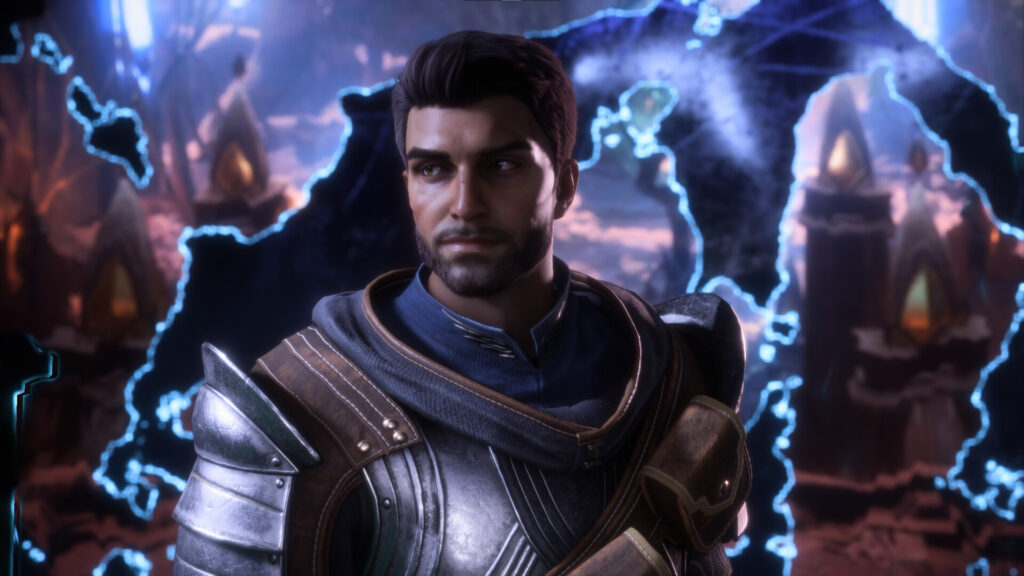
Dragon Age: The Veilguard, released in 2024, stands as BioWare’s last shipped game.
A Track Record Elsewhere at EA
Despite that uncertainty, Darrah pointed to examples where narrowing focus did pay off elsewhere at EA. Maxis, he said, is a studio that figured out how to live inside EA in a way BioWare never managed, with The Sims 4 turning around after a rough launch once the whole team rallied behind it. He drew a similar comparison to Battlefield Studios, which had nowhere left to go but to fix Battlefield 6 after its own bumpy start, and ended up turning it into one of the publisher’s biggest recent successes.
Resources That Never Lined Up
Darrah contrasted that kind of focus with how things actually played out at BioWare. When Mass Effect: Andromeda shipped, Dragon Age 4 had already been starved of staff for years, and there was no mechanism in place to pull developers back once one project needed them more than another. That is, in Darrah’s view, the core reason BioWare never adapted to life inside EA the way some of the publisher’s other studios eventually did.
There is no way to know whether any of this would have actually saved BioWare, and Darrah stopped short of saying it definitely would have. But it adds another angle to the ongoing conversation about how EA’s decision to shut the legendary RPG studio down came about, and whether a different structure years earlier could have changed its fate.
Keep the adventure going! Check out more Gaming News on Gamersuniverse.
Picture Source: Electronic Arts / BioWare, Mass Effect Legendary Edition, Dragon Age: The Veilguard