
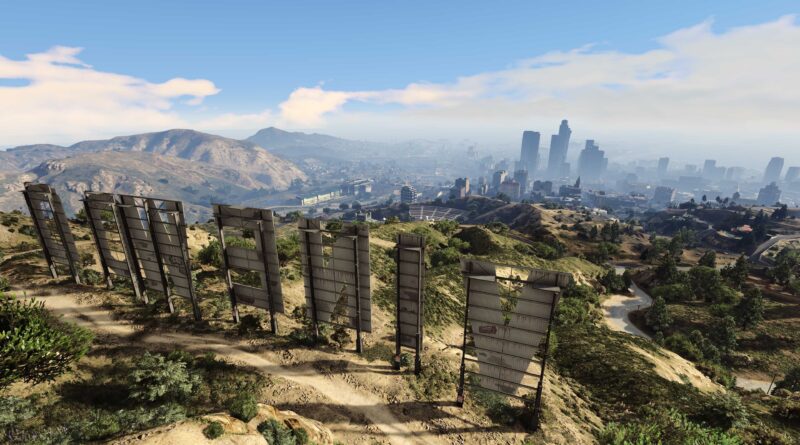
GTA Online Review: A Decade-Long Journey, 10/10
Before Grand Theft Auto VI arrives on November 19, 2026, we wanted to revisit the longest and biggest GTA journey to date. Not another single-player campaign, but Grand Theft Auto Online: the living Los Santos that launched on October 1, 2013, grew through more than a decade of updates, and taught a generation how a sandbox can keep reinventing itself. For that journey, the score is 10 out of 10.
GTA Online is not a closed story with a fixed ending. It is an ecosystem of missions, heists, businesses, freemode chaos and community invention that kept expanding while players grew up alongside it. The first awkward hours, the ridiculous shootouts, player-made battles such as the green-versus-purple Alien War, the carefully planned heists and the slow grind of building a criminal empire all belong to one continuous trip. GTA Online grew with a whole generation of players, and that long, self-reinventing journey is what earns the score.
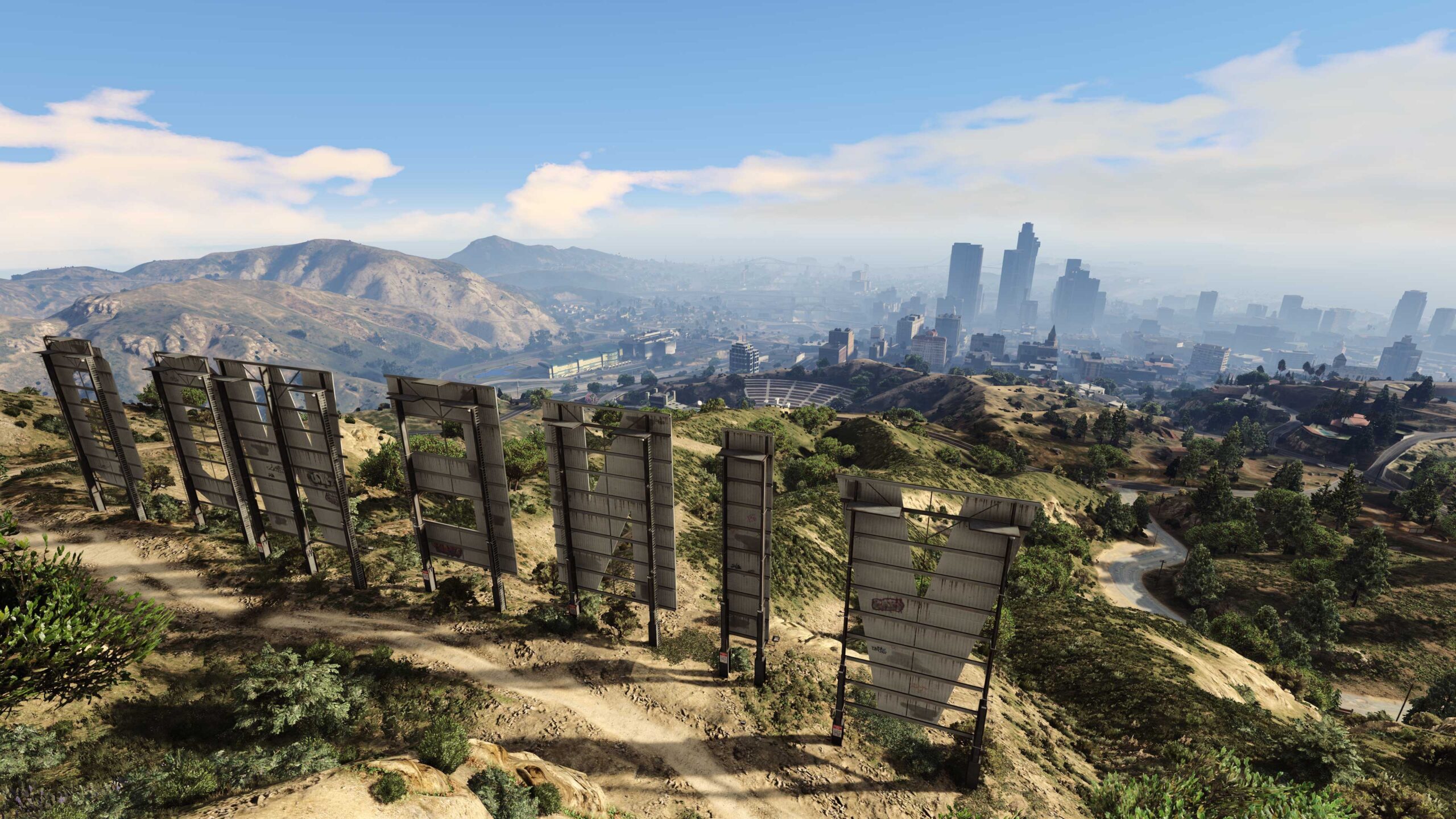
Grand Theft Auto Online (Picture Source: Rockstar Games)
Table of Contents
What GTA Online Is
GTA Online is the multiplayer half of Grand Theft Auto V: a shared San Andreas where you create a custom protagonist and climb from street jobs into organized crime. It launched free with GTA V for PlayStation 3 and Xbox 360 on October 1, 2013, then moved forward with the game onto PlayStation 4 and Xbox One, PC, and later PlayStation 5 and Xbox Series X|S. The character you build is not Michael, Franklin or Trevor from the single-player campaign. When story-mode faces return, they do so as specific contacts: Trevor Philips shows up early with contact missions and the Series A Funding heist, and Franklin Clinton later anchors The Contract. Your Online identity stays continuous across years of updates, which is the opposite of a brand-new single-player cast in a future mainline game.
That continuity is the point. GTA Online did not ask players to restart every winter. It asked them to keep the same criminal, the same garage and the same unfinished empire while the city changed around them. Few live-service sandboxes have held that bargain for this long at this scale.
Story Across a Decade
Chronology is part of what makes Online special. At launch, Rockstar stated that GTA Online is set a few months prior to Grand Theft Auto V’s single-player story. The early contact missions and heist work sit in that prequel window: you arrive in Los Santos, take jobs from people such as Lamar, Simeon, Gerald, Ron and Lester, and can work for Trevor Philips before the single-player campaign unfolds. Later update strands move past that window into the years after GTA V. The Contract is the clearest published example, presenting Franklin Clinton years after the Union Depository heist, running F. Clinton and Partner and pulling the Online player into a modern Los Santos hustle with Lamar and others. Story here is a stack of arcs that begins before GTA V and then continues after it.
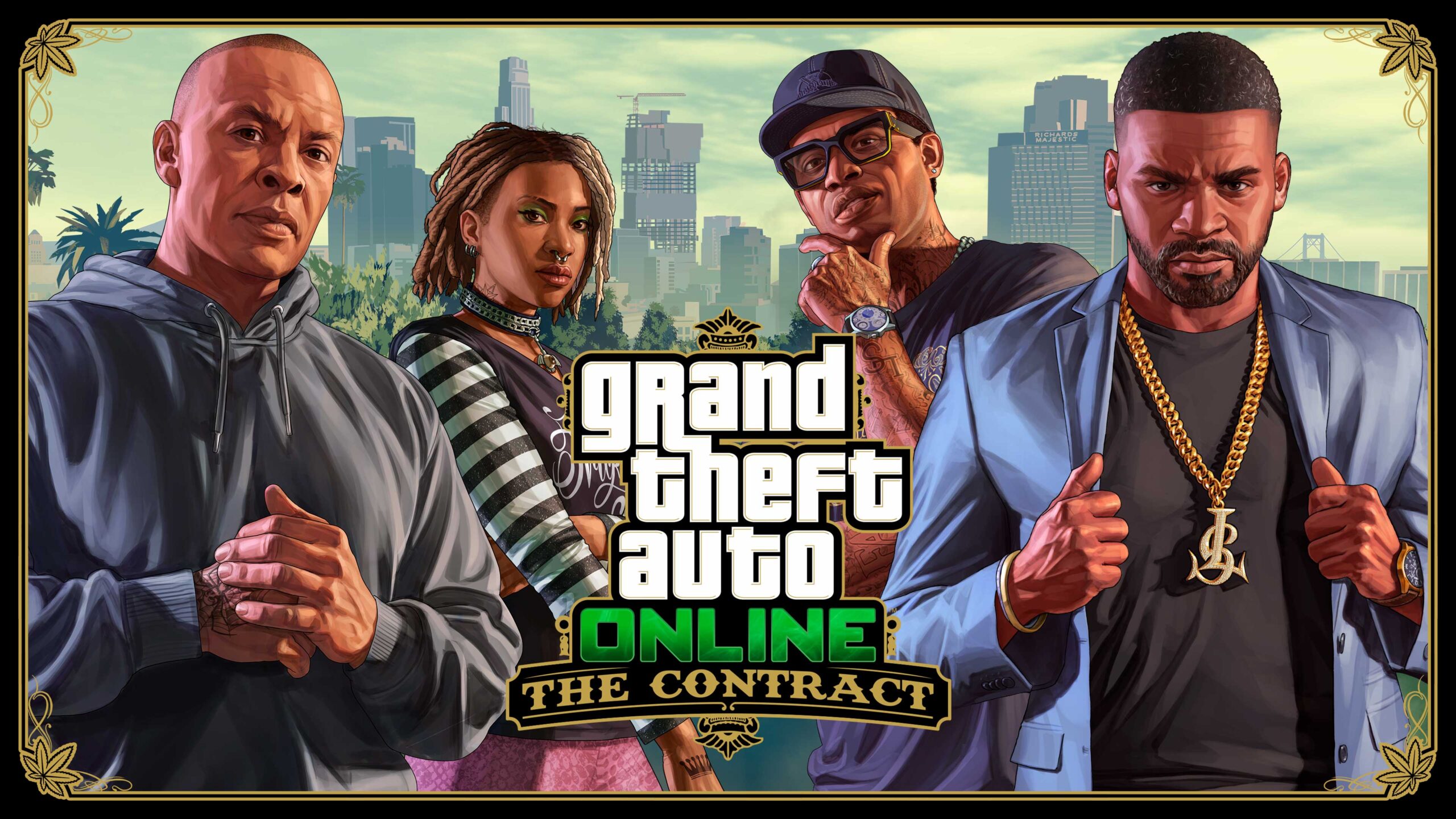
Official key art for The Contract in GTA Online (Picture Source: Rockstar Games)
That stack is still amazing. Early Online teaches the city’s geography through messy jobs and crew comedy. Later chapters raise the cinematic bar: heist finales, underground facilities, casino intrigue, a Caribbean island raid and celebrity-adjacent contracts. Returning faces are usually placed with care. Lester remains the planner. Lamar remains the chaotic friend who opens doors. Trevor belongs to the early crime ladder and Series A Funding. Franklin returns in The Contract as a successful operator rather than the kid from South Los Santos. Online never becomes a sequel campaign that puts you in their shoes as player characters; it keeps your custom protagonist at the center while the city and its guest stars age around you.
The narrative volume is huge. Mission strands, setups and finales can easily fill a very long stretch of play depending on pace, retries and co-op logistics, without being one fixed campaign length. What matters more than any hour count is how well those chapters land: sharp dialogue, memorable set pieces and a sense that Online kept finding new ways to tell crime stories in the same city.
Heists and Co-op Design
Heists are where Online’s design feels most like classic GTA spectacle. Rockstar announced the original Online Heists for March 10, 2015, bringing setups and finales that forced crews to plan, specialize and survive together. The structure still holds: preparation missions, a finale, payouts that depend on performance and teamwork. Later heists did not just clone that template.
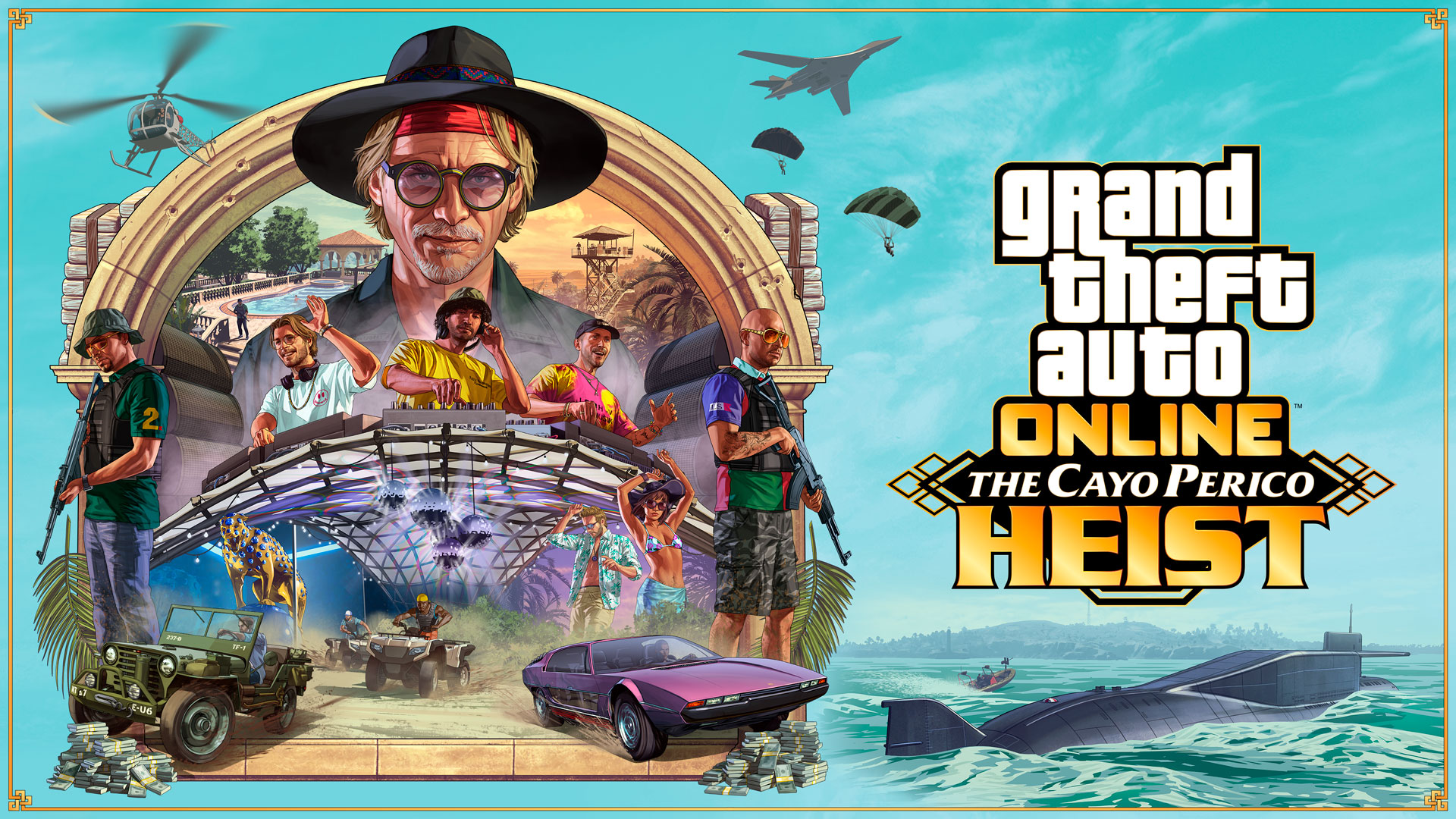
Official key art for The Cayo Perico Heist in GTA Online (Picture Source: Rockstar Games)
The Doomsday Heist pushed into three acts and a larger science-fiction crime canvas, with Rockstar presenting it as a major story-driven expansion when it went live. The Diamond Casino Heist made casing, approach choice and arcade planning part of the fantasy. The Cayo Perico Heist proved Online could leave Los Santos entirely, infiltrate El Rubio’s island and still feel like GTA: scouting, stealth or loud approaches, then a getaway that players still argue about years later. Across those updates, co-op is the real star. A good crew turns setups into comedy. A bad matchmaking session turns them into a lesson about leaving the session.
As mission design, the best heists balance spectacle with readable objectives. Original Heists taught roles and failure states. Doomsday stretched the runtime into acts with freemode setups that other players could disrupt. The Casino Heist rewarded casing and approach choice. Cayo Perico proved a mostly solo-capable elite heist could still feel special without deleting co-op. The weaker evenings are the ones padded by busywork or ruined by disconnected partners. Even then, the highs are high enough that heists remain the content most people remember when they talk about “their” Online years.
Businesses, Progression and the Economy
If heists are the movies, businesses are the long season. CEO offices, motorcycle clubs, bunkers, nightclubs, arcades, agencies, auto shops and more turned Online into a management game wearing a crime comedy mask. The loop is simple to describe and demanding to master: buy a property, unlock upgrades, run supply or contract work, sell product, reinvest. Progression is public. Your garage, clothes and vehicles advertise how long you have been on the path of questionable entrepreneurship.
This is also where Online’s ambition and its cynicism share a room. Building an empire is satisfying because each property changes how you use the map: a nightclub changes nightlife runs, an agency changes contract flow, an arcade changes heist planning. It is frustrating because many pipelines are deliberately slow without a large in-game bankroll, Shark Cards or similar cash shortcuts can shorten that wait, and older sale missions can still collide with hostile lobbies. The score stays at 10 because the fantasy of rising from nothing remains powerful, and because Rockstar kept inventing new businesses instead of freezing the economy in 2015. The grind is part of the design, not an accident.
Freemode Chaos and Community Events
Freemode is Online’s other masterpiece: a public lobby where races, rival sales, random kindness and sudden rocket griefing can happen on the same street. Rockstar feeds that space with weekly updates, adversary modes, races and seasonal events. Players feed it with invention.
The green-versus-purple Alien War is the clearest example of player-made culture. The Martian bodysuits came from Arena War content. The war itself was not a Rockstar-scripted campaign with a sealed official start date. Around spring 2020 it exploded across social media as crews in green or purple suits fought with melee weapons, turned lobbies into costume battles and proved freemode could host folklore. That is GTA Online at its strangest and most alive: the developers ship toys, the players invent a holiday.
Funny shootouts, airport standoffs, impromptu races and “one last sale before bed” stories are why Online feels like a generation’s hangout spot, not only a content roadmap. The same openness also enables griefing. Both truths sit in the same session.
Music and Sound
GTA’s radio identity survived the jump into Online and then expanded with it. Driving across Vinewood with a station arguing politics between tracks still feels like classic GTA. Later updates added more music contexts: nightclub floors and DJ culture after After Hours, Arena War’s own official soundtrack release, and story-tied musical moments such as The Contract’s Dr. Dre chapter. The effect is cumulative. Online did not replace the radio fantasy. It kept adding rooms where music matters, from cars to clubs to heist tension, while still sounding like the same satirical Los Santos.
The wider mix still does the classic GTA job: satire on the radio, needle drops in the car, and sudden quiet before a finale goes loud. That tonal control is the real sound quality here, more than any checklist of platform audio features.
Visuals, Platforms and Technical Evolution
Online has lived through several hardware generations. It began on PlayStation 3 and Xbox 360 in 2013, arrived on PlayStation 4 and Xbox One in November 2014, reached PC in April 2015, and landed on PlayStation 5 and Xbox Series X|S on March 15, 2022 with Rockstar’s expanded and enhanced package. On March 4, 2025, Rockstar followed with a free PC upgrade to GTAV Enhanced, bringing enhancements previously limited to those PS5 and Xbox Series X|S versions of GTA Online and adding optimizations aimed at modern PCs. Frame rate and image quality still depend on platform, settings and session state.
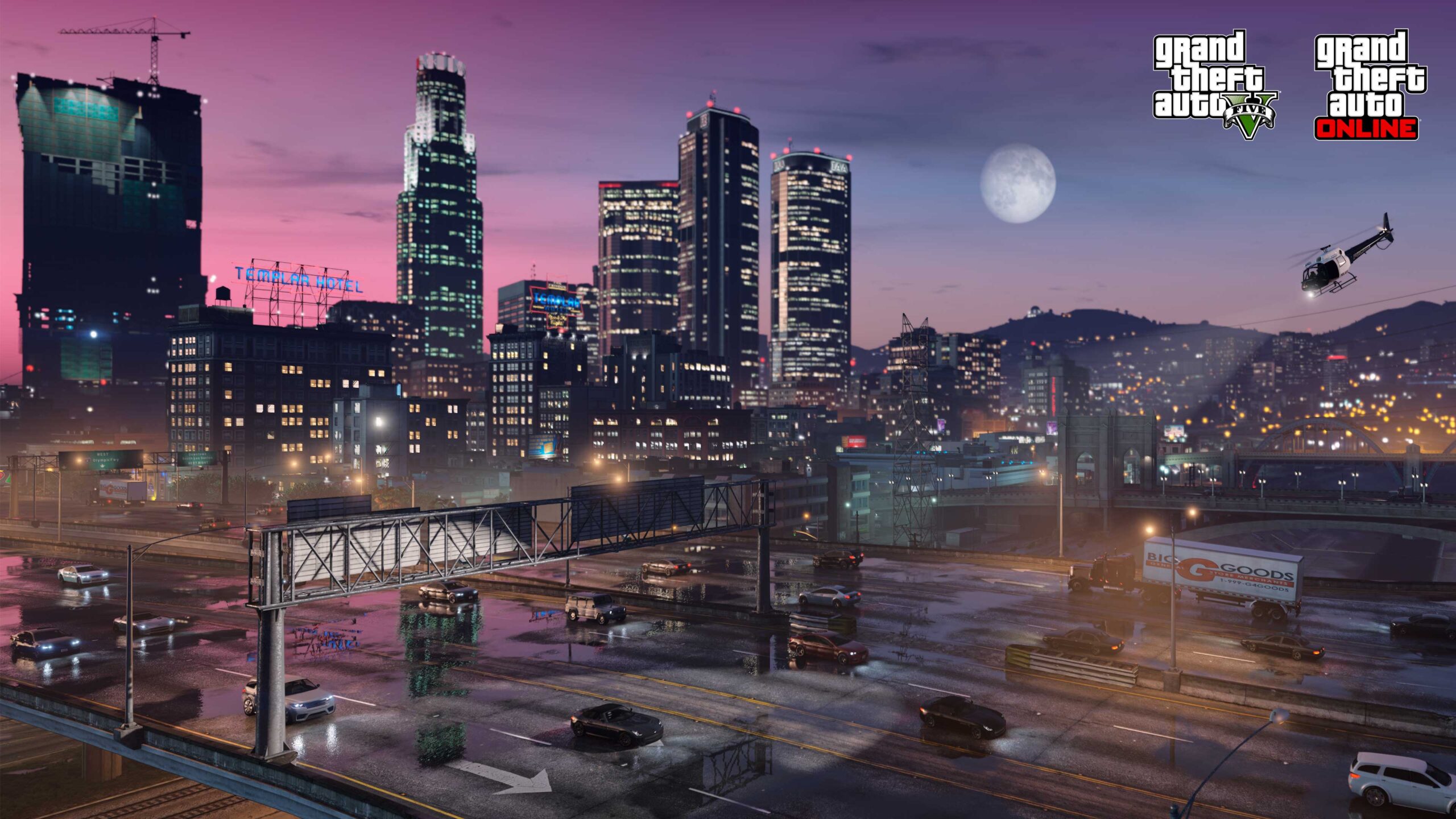
Los Santos at night in the official Enhanced version of GTA Online (Picture Source: Rockstar Games)
Visually, Los Santos aged better than many 2013 online worlds because Rockstar kept dressing it. New interiors, vehicles, businesses and heist locations made the map feel revisited rather than abandoned, while the Enhanced console and PC packages focused on sharper presentation and current-hardware comfort. The city remains the star. The platform upgrades are what kept that city playable for new hardware without asking everyone to start over.
What Still Frustrates
A 10 out of 10 does not mean Online is gentle. Loading into a session can still test patience. Public lobbies can still punish anyone moving cargo. Shark Cards and premium pricing make the double economy impossible to ignore: time versus money. Some update loops lean on repetition. Balance between solo-friendly content and grief-prone freemode sales has improved in places and remained messy in others. New players face a mountain of menus, properties and FOMO that 2013 players never saw on day one.
Those problems are real. Server and session weirdness has been part of the myth since launch week in 2013. Griefing can still ruin a carefully stacked sale. Shark Cards and other cash shortcuts remain a blunt reminder that Rockstar built a cash ladder beside the gameplay ladder, while major update content kept arriving without a separate expansion purchase. Those issues do not erase the achievement. The same open lobbies that enable griefing also enabled the Alien War and countless crew stories. The score reflects the whole journey’s cultural and design achievement, not a claim that every weekly update was flawless or that Online is finished learning how to onboard newcomers.
A Short Timeline
- October 1, 2013: GTA Online launches on PlayStation 3 and Xbox 360.
- November 18, 2014 / April 14, 2015: Current-gen console version, then PC, expand the audience.
- March 10, 2015: Original Online Heists arrive.
- Later major chapters: Doomsday Heist, Diamond Casino Heist, Cayo Perico Heist, The Contract and many business updates keep rewriting the fantasy.
- March 15, 2022: Expanded and Enhanced versions on PlayStation 5 and Xbox Series X|S.
- March 4, 2025: Free PC upgrade to GTAV Enhanced for GTA V and GTA Online.
- November 19, 2026: Grand Theft Auto VI is scheduled to launch, which is why this Online retrospective lands now.
Gamersuniverse Score:
10 out of 10 stars⭐
Grand Theft Auto Online is the longest and biggest GTA journey to this day: a story anthology that grew before and after GTA V’s campaign, a heist machine, a business sim, a radio comedy and a community playground. It grew with a generation. It kept reinventing its own ecosystem. That earns a clean 10, with eyes open about grind, monetization and lobby chaos.
Score Summary
- Overall: 10/10 – The longest GTA journey, still reinventing itself.
Who GTA Online Is For
- Players who want co-op crime stories and heists more than a short campaign.
- Empire builders who like progression, properties and long-term goals.
- Freemode social players who enjoy races, chaos and community events.
- Maybe skip or dip lightly if monetized grinds and public-lobby griefing kill the fantasy for you.
Which chapter defined your Online years: the first Heists, Cayo, The Contract, or a ridiculous freemode night you still quote? Tell us in the comments.
More on Gamersuniverse: Reviews.
Grand Theft Auto Online
Summary
Grand Theft Auto Online is the longest and biggest GTA journey to this day: a story anthology that grew before and after GTA V’s campaign, a heist machine, a business sim, a radio comedy and a community playground. It grew with a generation. It kept reinventing its own ecosystem. That earns a clean 10, with eyes open about grind, monetization and lobby chaos.
Picture Source: Rockstar Games / GTA Online