The Imperium of Man Explained — What Is the Empire of Man and Who Is the Emperor
Ask any Warhammer 40,000 player what the setting is actually about, and most will start with the same eight words. It is the 41st Millennium, and there is only war. But behind that grim slogan sits one specific empire, one impossibly old ruler, and one throne that has not stopped humming for ten thousand years.
If you’ve seen the phrase Empire of Man floating around forums, video essays or a friend’s Discord server, you’ve already met it. It’s simply the informal, easier-to-say version of the Imperium of Man, the galaxy-spanning human government that sits at the very center of Warhammer 40,000’s setting. Whether people call it the Empire of Man or the Imperium of Man, they’re talking about the same thing, humanity’s last, brutal, faith-fueled bastion against extinction.
And at the head of that empire, at least on paper, sits the Emperor, a being so central to the setting that his health, or lack of it, decides the fate of a hundred billion worlds.
This guide breaks down exactly what the Imperium of Man is, where it came from, who the Emperor really is, why he’s not quite dead but not quite alive either, and how the empire he built ten thousand years ago is holding up right now, in the current era of the tabletop game and novels. We’ll go from the ashes of a broken Earth all the way to the Great Rift tearing the galaxy in half, so buckle in, this one runs long.
⚜️ Quick Facts Before We Start
- Official name — Imperium of Man (Empire of Man is fan and community shorthand, not an in-universe title)
- Ruler — the Emperor of Mankind, founder of the Imperium, immobile on the Golden Throne since the end of the Horus Heresy
- Capital world — Terra (Earth), seat of the Imperial Palace and the Adeptus Terra
- Founded — late 30th Millennium, after the Unification Wars and the start of the Great Crusade
- Scale — roughly a million worlds and trillions of Human citizens, run day to day by the High Lords of Terra
- Current era — the Era Indomitus, following the destruction of Cadia and the birth of the Great Rift
🌍 What Is the Imperium of Man, Exactly
At its simplest, the Imperium of Man is the largest and most powerful Human government in the Warhammer 40,000 setting, a single political entity that claims authority over roughly a million worlds spread across the Milky Way galaxy. Its capital and holiest site is Terra, the planet we call Earth, sitting at the heart of the Segmentum Solar.
Population estimates for the Imperium are almost meaningless because they’re so large. Sources describe a citizenry running into the trillions, spread across everything from overcrowded hive worlds whose city-continents house tens of billions of people, to feral worlds where technology has been forgotten entirely, to forge worlds dedicated purely to industry and machine worship.
On paper, the Imperium is an absolute theocratic monarchy. In practice, it’s closer to a suffocating, superstition-choked bureaucracy that happens to also have a god on the throne. That contradiction, faith and machinery, mysticism and administration, is baked into everything the Imperium does. It fights aliens with prayer as often as with plasma. It punishes independent thought as heresy in one breath and depends on the genius of engineers and scholars in the next.
Crucially, the Imperium of Man isn’t really ruled day to day by the Emperor. He has been silent, immobile and barely alive for ten thousand years. Instead, an enormous bureaucracy of priests, generals, inquisitors and administrators interpret his ancient will and run the empire in his name, an arrangement we’ll look at properly further down.
To understand why the most powerful Human government in the galaxy is run this way, we need to go back to before the Imperium existed at all, back to the ruined Earth the Emperor was born into.
🌑 Before the Emperor — the Age of Strife
Long before the Imperium, humanity had already reached the stars once. During the Dark Age of Technology, an era stretching back tens of thousands of years, Mankind colonized huge stretches of the galaxy using technology far beyond what the Imperium can build in the 41st Millennium, sentient machines, terraforming on a massive scale, faster interstellar travel.
That golden age ended catastrophically. Massive Warp Storms, failing ancient technology, and conflicts with Mankind’s own creations tore human civilization apart. What followed became known as the Age of Strife, or Old Night, thousands of years of isolation, war and regression during which entire colony worlds lost contact with each other and, in many cases, forgot they had ever been anything more than the primitive, warlord-ruled backwaters they’d become.
Terra itself didn’t escape. By the late 29th Millennium, humanity’s homeworld had fractured into roughly ninety competing nations and warlord states, fighting with a mix of nuclear weapons, mutated soldiers and salvaged pre-Strife technology.
It was into this shattered world that the Emperor of Mankind stepped forward, and his origins are, deliberately, one of the murkiest parts of the entire setting. Games Workshop has never confirmed a birthplace, a birth year, or even a birth name for him. What the lore does establish is that he was already ancient by the time of the Unification Wars, an immortal Perpetual who had walked among humanity for thousands of years under different identities, quietly shaping history, gathering knowledge, and preparing for the moment he would finally reveal himself.
That moment came in the final centuries of the 30th Millennium, when the Emperor, using a mix of political alliances, genetic science and the newly created Thunder Warriors, set out to do what no one had managed since the Dark Age, unite Terra under one banner.
⚔️ The Unification Wars — How One Man Conquered a Broken Earth
The campaign to reunite Terra is known as the Unification Wars, and it’s where most of the Imperium’s founding myths, and its founding sins, were created.
The Emperor’s primary weapon in this war was the Thunder Warriors, twenty regiments of genetically engineered super soldiers, larger and stronger than the Space Marines who would later replace them, created using crude but effective gene sculpting and muscle grafting techniques. Alongside more conventional forces, the Thunder Warriors smashed their way through Terra’s warring states one by one, forcing surrender or annihilation.
Several of Terra’s nations get individual mentions in the lore. The Achaemenid Empire, a monarchy of allied tribes, avoided much of the devastation by swearing loyalty early, while Albia’s mechanized ironside soldiers held out fiercely before the Emperor personally negotiated a surrender. Not every fight went so smoothly, and the wars are remembered, honestly, as brutal on every side.
The campaign came to its official end at the Battle of Mount Ararat, where Imperial legend says the Thunder Warriors sacrificed themselves to the last man to secure victory. The truth, as later fiction has revealed, is far darker. With Terra unified, the Thunder Warriors had become a liability, unstable, prone to violent physical decay from their crude augmentation, and unsuited to a longer campaign among the stars. Rather than let them live on as an unpredictable army, the Emperor had the survivors quietly eliminated, likely by his own elite guard, so they could be replaced by a more stable design, the gene-seed-based Space Marines.
With Terra finally his, the Emperor did something almost as significant as the conquest itself. He outlawed religion. Every remaining church and cult on Terra, including the last surviving faith, the Church of the Lightning Stone, was torn down. In its place he promoted a philosophy called the Imperial Truth, the idea that Mankind’s future belonged to reason, science and human self-reliance, not gods, superstition or psychic mysticism. It’s one of the great ironies of the setting that the same man who banned religion on Terra would, ten thousand years later, be worshipped as a god by every world he once ruled.
🚀 The Great Crusade — Building an Empire Among the Stars
With Terra secured, Luna occupied, and the tech priests of Mars brought into an alliance, the Emperor had everything he needed to look outward. Around 798.M30, he launched the Great Crusade, a two-hundred-year military campaign to reconquer the scattered, lost colony worlds of humanity and bring them under one Imperial banner, whether they wanted it or not.
The scale of the Great Crusade is genuinely hard to picture. At its peak the campaign involved over four thousand primary expedition fleets, backed by tens of thousands of smaller deployment groups, all working to extend what the Imperium called Compliance, a mix of diplomacy, conquest and occasionally outright extermination, across a huge portion of the galaxy.
The single most important decision the Emperor made before the Crusade began was the creation of the Primarchs, twenty genetically engineered demigod sons, each designed to lead one Space Marine Legion into battle. Before the Crusade even started, a rival power scattered the still-infant Primarchs across the galaxy, so instead of growing up together on Terra, each one was found, raised and shaped by a completely different world, giving each of them a wildly different personality, culture and fighting style once the Emperor eventually tracked them down.
Names like Horus, the first found and the Emperor’s favored son, Leman Russ of the savage but honorable Space Wolves, Roboute Guilliman, the brilliant administrator who built the realm of Ultramar, and Rogal Dorn, the master fortifier of the Imperial Fists, became legends during this era, leading their Legions from world to world, planet after planet either welcomed into Compliance or crushed beneath Imperial boots.
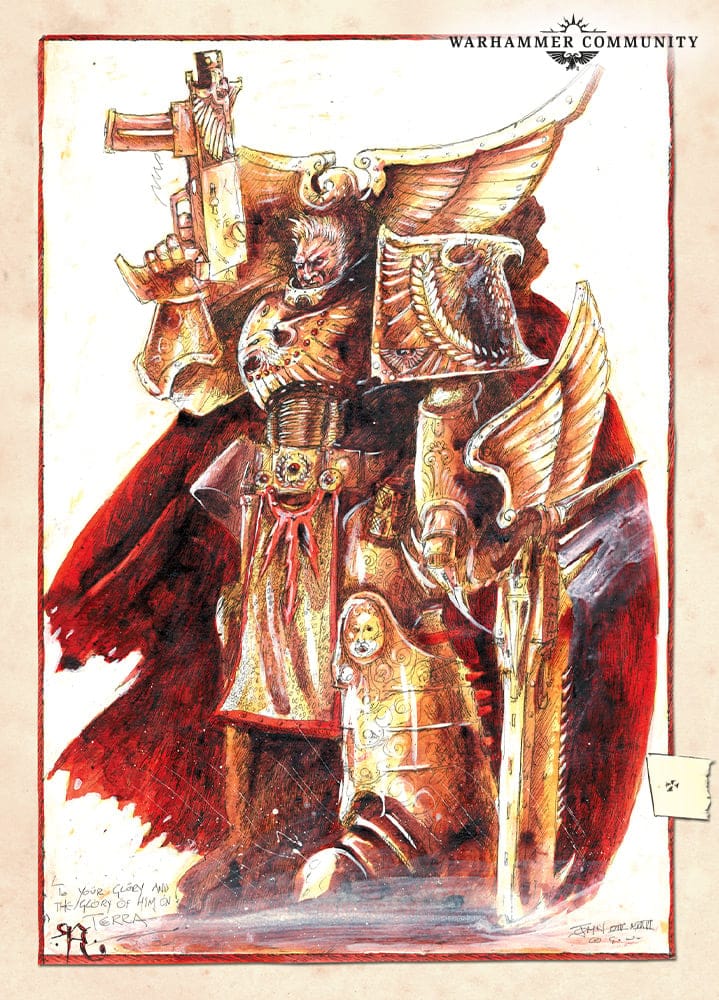
Behind the front lines, the Emperor was also busy on quieter, more secretive projects, an astropathic corps to allow instant communication across the stars, and a psychic beacon called the Astronomican, which would let starships navigate the treacherous Immaterium, or Warp, the parallel dimension ships have to travel through to cross interstellar distances in any reasonable time.
By the final years of the Great Crusade, roughly two centuries after it began, the Imperium of Man stretched across almost the entire galaxy. It looked, for a brief moment, like the Emperor’s dream of a unified, rational humanity had actually been achieved. It was about to collapse into the single bloodiest civil war in human history.
🔥 The Horus Heresy — When the Emperor’s Favorite Son Turned Traitor
Around the early 31st Millennium, with the Great Crusade nearly complete, the Emperor made a decision that would break his empire. He returned to Terra to focus on a secret project of his own, later revealed to be an attempt to repair the ancient Webway, a network of stable pathways through the Warp that could let humanity travel the stars without relying on treacherous Warp routes at all. He handed overall command of the Crusade to Horus, naming him Warmaster, supreme commander of all Imperial forces.
That decision, and the Emperor’s refusal to explain his true purpose even to his most trusted son, planted seeds of resentment among several Primarchs. The Chaos Gods, the malevolent entities that inhabit the Warp, exploited that resentment perfectly. Wounded during a campaign on the planet Davin and manipulated by Chaos worshippers already embedded in his forces, Horus was turned, and he didn’t turn quietly.
Horus’s rebellion began in earnest at the Isstvan System. At Isstvan III, he purged the loyalist elements within his own Legions using a Warp-corrupted virus bomb. At Isstvan V, he lured three entire loyalist Legions into a trap now remembered as the Dropsite Massacre, crippling three Space Marine forces in a single, devastating ambush and turning roughly half the Imperium’s military might against the Emperor.
What followed became known as the Horus Heresy, a galaxy-wide civil war that lasted around nine years and consumed entire star systems. Rather than grinding through a long war of attrition, Horus gambled everything on a single, decisive strike, a direct assault on Terra itself, aiming to kill the Emperor and end the war in one stroke.
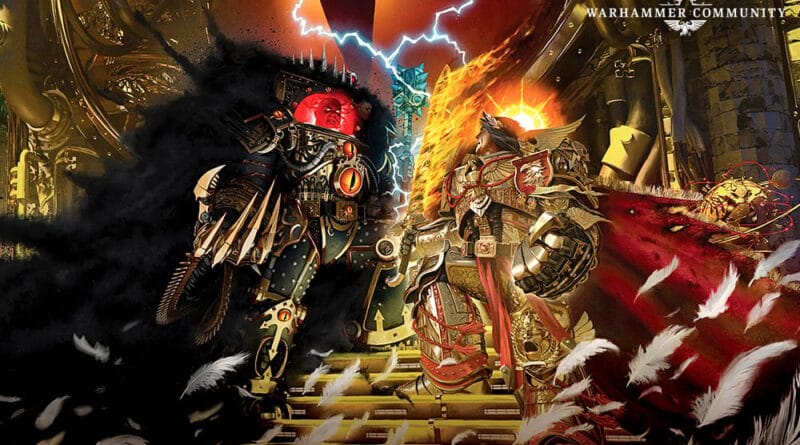
The Siege of Terra, and the final duel between Horus and the Emperor, is the single most pivotal event in the entire setting. Fighting his way through the outer defenses and into the Imperial Palace, Horus finally confronted his father in person. The Emperor won the duel and killed Horus, but not before Horus had inflicted wounds severe enough to be fatal to any ordinary being, and arguably fatal to the Emperor himself. With his most beloved son dead by his own hand and his own body ruined beyond any conventional cure, the Emperor’s closest advisors made the decision that still defines the Imperium ten thousand years later, they placed him on the Golden Throne.
👑 The Golden Throne — A God Kept Alive by a Thousand Deaths a Day
The Golden Throne isn’t a symbolic seat of power, it’s an ancient, half-understood machine, a relic of the Dark Age of Technology that the Emperor himself rediscovered and partially repaired long before the Heresy, originally intending to use it to open a stable gateway into the alien Webway.
After the duel with Horus, that same device became the only thing standing between the Emperor and true death. Housed deep within the Sanctum Imperialis at the heart of the Imperial Palace on Terra, the Throne is described as a bulky, golden mechanism suspended over doors large enough for a war machine to walk through, wired into a hall big enough to house several companies of Space Marines.
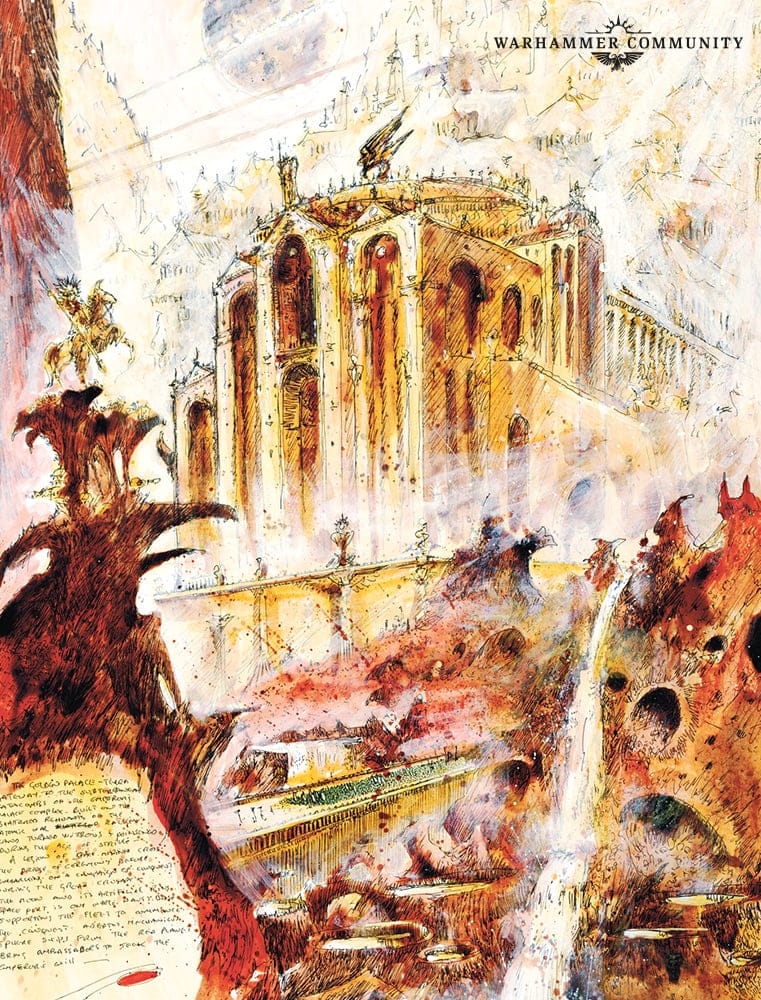
What the Throne actually does is grim by design. It keeps the Emperor’s shattered body from finally dying, not through healing, but through raw technological life support combined with the sheer force of his own will. That will, in turn, needs constant psychic fuel, and the Imperium provides it through the ritual sacrifice of psykers, historically numbering close to a thousand a day, their minds and souls consumed to keep the Throne, and the man on it, running.
In exchange for that horrifying cost, the Golden Throne powers the Astronomican, the psychic lighthouse every Imperial starship needs to navigate the Warp safely. Without it, interstellar travel across most of the Imperium becomes close to suicidal, which is precisely why nobody in the Imperium, however uncomfortable the truth makes them, is willing to let the Emperor finally die.
Is the Emperor still in there, in any meaningful sense? The lore is intentionally vague. He no longer responds to conversation or physical stimuli, but sources describe him continuing to battle the Chaos Gods within the Immaterium, guiding faithful psykers through a divination tool called the Emperor’s Tarot, and remaining, in some undefined way, aware. Whether that counts as being alive is left for the reader, and the Imperium’s own scholars, to argue about.
✝️ Is the Emperor Actually a God
Here’s the twist that makes the Emperor’s story genuinely interesting rather than just tragic, the man who is worshipped across a hundred billion worlds as the one true God-Emperor spent his entire active life trying to stamp out religion.
During the Great Crusade, the Emperor’s official position, the Imperial Truth, held that he was simply the most advanced Human who had ever lived, a supremely evolved psyker and leader, not a deity. Legions like the Word Bearers, who tried to build a religion around him anyway, were publicly humiliated for it, their attempts at worship rejected outright.
Everything changed after the Heresy. With the Emperor silent on the Golden Throne and the Imperium reeling from near-collapse, his regent Malcador the Sigillite and his surviving loyalists needed something to hold a shattered civilization together. Over the following centuries that something became outright religion, the Imperial Cult, formalized as the Adeptus Ministorum, or Ecclesiarchy, which declared the Emperor humanity’s one true god and became the Imperium’s official state religion.
That religion hasn’t gone unchallenged. In the 36th Millennium, the tyrannical High Lord Goge Vandire briefly seized total control of both the Ecclesiarchy and the Administratum during a period called the Age of Apostasy, or Reign of Blood, plunging the Imperium into a brutal internal purge until he was overthrown by a loyalist uprising led by the priest Sebastian Thor, with help from Vandire’s own bodyguard, later reorganized into the Adepta Sororitas, the Sisters of Battle.
The uncomfortable truth the Imperium tries very hard not to examine too closely is that the Emperor himself, according to most surviving accounts of his own words, never wanted to be worshipped at all. Whether he actually is a god in any literal, cosmic sense, or a psychic being powerful enough that the distinction barely matters, remains one of the setting’s oldest, and most deliberately unresolved, questions.
🏛️ Who Really Runs the Imperium Today
If the Emperor cannot speak, sign orders or even move, someone still has to run a government spanning a million worlds. That job falls to an enormous, ancient bureaucracy collectively known as the Adeptus Terra, the Priesthood of Terra, made up of dozens of semi-autonomous departments, or Adepta, each interpreting the Emperor’s ancient will in its own domain.
At the top of that structure sits the Senatorum Imperialis, better known as the High Lords of Terra, traditionally a council of around twelve of the most powerful figures in the Imperium. Permanent seats typically include the Master of the Administratum, who runs the day-to-day bureaucracy and is arguably the most powerful individual in the Imperium in practice, the Fabricator-General of Mars, who leads the tech-worshipping Adeptus Mechanicus, the Ecclesiarch, head of the Ecclesiarchy, the Grand Master of the Officio Assassinorum, the Master of the Astronomican, the Paternoval Envoy of the Navigators, and a representative of the Inquisition.
A few key organizations sit slightly outside, or only loosely within, this structure altogether. The Inquisition, tasked with hunting heresy, mutation and alien infiltration wherever it appears, answers to almost no one but itself. The Adeptus Astartes, the Space Marines, are officially part of the Adeptus Terra but operate with huge independence, each of the roughly one thousand Chapters answering first to its own Chapter Master. The Adeptus Mechanicus of Mars is technically an ally rather than a subject, controlling almost all of the Imperium’s advanced technology and, in effect, running its own parallel state.
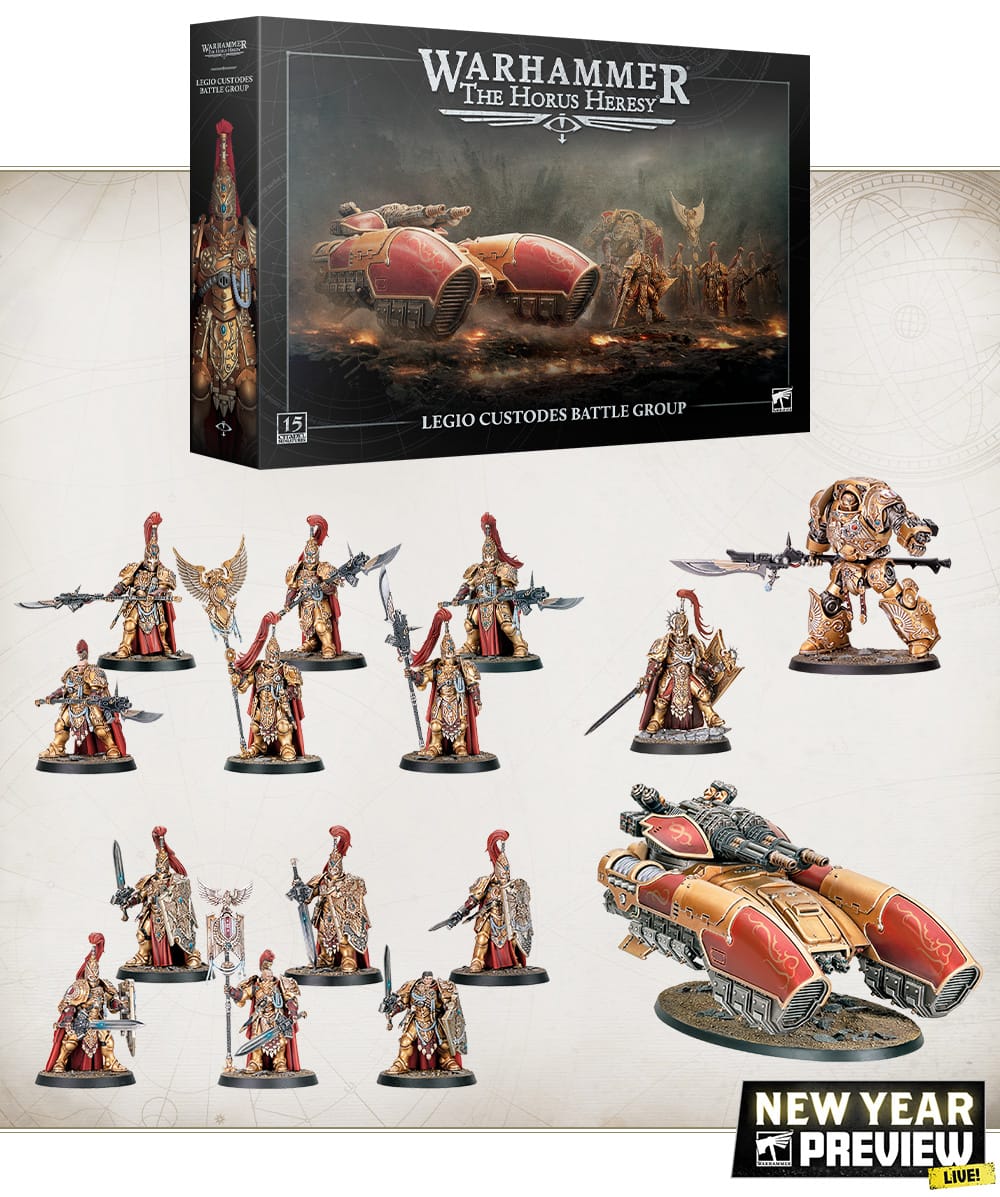
Beneath all of that sit the forces that actually keep the Imperium’s worlds functioning and defended, the Astra Militarum, better known as the Imperial Guard, an army of literally billions of ordinary Human soldiers, the Imperial Navy, which moves those armies between the stars, the Adeptus Arbites, the Imperium’s law enforcement, and the golden-armored Adeptus Custodes, an elite force of only a few thousand warriors whose sole purpose is guarding the Emperor’s body and the Imperial Palace itself.
This system hasn’t always run smoothly. History records outright civil wars within the government, brief dissolutions of the High Lords entirely, and even a single event known simply as the Beheading, in which an entire sitting council was assassinated on the orders of one of their own. Even at its healthiest, the Imperium’s government is less a well-oiled machine than a controlled catastrophe that has, somehow, held together for ten thousand years.
🌌 How Big Is the Imperium of Man, Really
Numbers in Warhammer 40,000 are deliberately, almost comically, vast, because the setting wants you to feel how completely insignificant a single Human life is against the scale of the Imperium.
The Imperium is generally described as encompassing around a million worlds, though the true figure is impossible for even its own administrators to pin down with any accuracy, entire sectors can go silent for centuries without anyone in the capital ever noticing. Individual hive worlds alone can house tens of billions of people under a single planet-spanning city, and the Imperium claims trillions of citizens overall, a number so large it stops functioning as a statistic and starts functioning as pure atmosphere.
To manage a domain that size, the Imperium relies on institutions built for permanence rather than efficiency. The Administratum keeps records that are frequently centuries out of date, tithes and tax demands are calculated using calendars that no longer reliably match real time, and entire worlds have been known to fall to Chaos or be wiped out by xenos raiders long before word of the crisis even reaches Terra. It’s a genuinely broken system, and that brokenness is one of the setting’s core, deliberate themes, not a flaw in the writing but the entire point of it.
💥 The Great Rift and the Imperium’s Darkest Hour
For most of the 41st Millennium, the Imperium’s story was one of slow, grinding decline, a period the lore calls the Time of Ending, as old enemies resurfaced and terrifying new ones, the alien Tyranids, the awakening Necrons, the rapidly expanding T’au Empire, all closed in at once.
That decline reached a breaking point during the Thirteenth Black Crusade, when the arch-traitor Abaddon the Despoiler finally succeeded in destroying Cadia, the fortress world that had guarded the Eye of Terror, the Imperium’s single most important defensive chokepoint against Chaos, for ten thousand years. The Cadian System’s destruction triggered the birth of the Great Rift, also called the Cicatrix Maledictum, a galaxy-spanning tear in reality connecting realspace directly to the Warp.
The Great Rift effectively split the Imperium in two overnight. The larger, western half, still connected to Terra and the light of the Astronomican, became known as the Imperium Sanctus. The eastern half, cut off and plunged into darkness, left largely to fend for itself, became the Imperium Nihilus. Communication between the two halves became close to impossible, and entire sectors, even whole Space Marine Chapters, simply vanished from Imperial records overnight.
Into this crisis returned the one figure capable of giving the Imperium any real hope, the Primarch Roboute Guilliman, restored from ten thousand years of stasis by the combined efforts of Archmagos Belisarius Cawl and, unexpectedly, the aeldari death god Ynnead. Taking up the title of Imperial Regent, the living voice of the Emperor, Guilliman reorganized the High Lords, defended Terra itself against a Chaos incursion during the Second Battle of Terra, and launched the Indomitus Crusade, a fleet-scale operation, backed by a new generation of Primaris Space Marines, aimed at reclaiming and reinforcing as much of the shattered Imperium as possible.
That crusade is, as far as the current published lore goes, still ongoing. Games Workshop has deliberately left the exact current date ambiguous, referring to this period as the Era Indomitus, or the Age of the Dark Imperium, somewhere in the very late 41st or early 42nd Millennium, a fittingly uncertain end to an empire that has never once, in ten thousand years, been able to say with confidence what tomorrow will bring.
❓ Quick Questions About the Imperium and the Emperor
Is the Empire of Man the official name?
No. The setting’s official term is the Imperium of Man. Empire of Man is a common, perfectly understandable fan nickname, but you won’t find it printed in a Games Workshop rulebook.
Is the Emperor dead?
Not exactly, and not exactly alive either. His body survives on the Golden Throne through ancient technology and sheer will, but he hasn’t spoken or moved in ten thousand years.
Could the Emperor come back?
The lore keeps the door open without confirming anything. As a Perpetual, he may theoretically be able to heal or be reborn if freed from the Throne, but doing so risks silencing the Astronomican and dooming the Imperium, so nobody has dared try.
Who leads the Imperium while the Emperor is on the Throne?
Day to day, the High Lords of Terra. Since his resurrection, Primarch Roboute Guilliman has taken the lead role as Imperial Regent and Lord Commander of the Imperium.
Final Words — Why the Emperor and His Empire Still Matter
Strip away the miniatures, the dice and the endless rulebook updates, and the Imperium of Man works because it tells one very simple, very old story extremely well, what happens to a civilization that survives its worst nightmares by becoming almost as monstrous as the things it’s fighting.
The Emperor set out to build a rational, united, superstition-free humanity, and instead created an empire that worships his own dying body as a god, sacrifices psykers by the thousand to keep the lights on, and treats individual Human life as an acceptable, expected cost of doing business. None of that makes the Imperium the villain of Warhammer 40,000. In a galaxy full of Chaos gods, hive-mind alien swarms and ancient robotic tyrants, the grim, flawed, brutal Imperium of Man is still, undeniably, humanity’s side.
Whether you know it as the Imperium of Man or the more casual Empire of Man, and whether you think the Emperor is a benevolent god, a tragic tyrant, or simply the most powerful, most trapped prisoner in the galaxy, one thing the lore has never actually answered is whether he can, or ever will, wake up. Until Games Workshop decides otherwise, the Emperor protects, and a trillion Imperial citizens have no real choice but to believe that’s enough.
Keep the adventure going! Check out our latest posts for more lore, reviews and gaming news here: Gaming
Official Warhammer 40,000 Website
Picture Source, Games Workshop – Warhammer Community, Games Workshop – Warhammer Community