
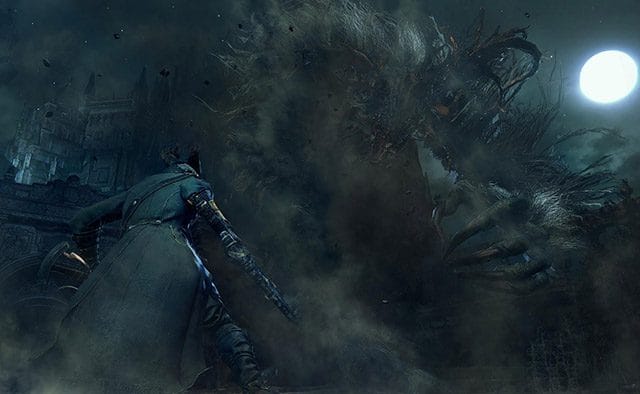
The Story of Bloodborne: A Complete Lore Deep-Dive into Yharnam, the Old Blood, and the Great Ones
Some games tell you their story. Bloodborne makes you dig for it, in item descriptions, in muttered dialogue, in the architecture of a city that keeps rebuilding itself on top of its own secrets. Six years after Dark Souls taught a generation of players to read environmental storytelling like tea leaves, FromSoftware and director Hidetaka Miyazaki used that same method to tell a much stranger story, one about blood, evolution, and things that were never meant to be understood by human minds.
Bloodborne’s story became so famous for being obscure that, within months of release, players had crowd-sourced an entire community research document nicknamed “The Paleblood Hunt” just to untangle it. That’s the tradition we’re working in here. This is our full lore deep-dive into Bloodborne: the founding of Yharnam, the schism at Byrgenwerth, the Healing Church and its secrets, the Great Ones that watch from beyond the veil of the Hunt, and the old hunters who paid for their curiosity with their souls. We’ve built this piece to work as a hub, a place to understand how everything in Yharnam connects, with individual factions and characters like Gehrman, Lady Maria, and the Great Ones getting their own dedicated deep-dives down the line. Consider this your Paleblood Hunt, minus the eldritch curse.
⚠️ Full Spoiler Warning ⚠️ This article covers the complete story of Bloodborne and its The Old Hunters expansion, including all three main endings. If you haven’t finished the game yet, bookmark this and go get your Platinum first, Yharnam will still be here.
🩸 Quick Facts Before We Start
- Developer — FromSoftware, directed by Hidetaka Miyazaki, developed under the working title “Project Beast”
- Publisher — Sony Computer Entertainment (now Sony Interactive Entertainment)
- Release — March 24, 2015 (NA), March 25 (PAL) and March 26–27, 2015 elsewhere, exclusively on PlayStation 4
- Expansion — The Old Hunters, released November 24, 2015
- Setting — Yharnam, a Gothic, Victorian-inspired city gripped by a blood-borne plague
- Inspirations — H. P. Lovecraft’s cosmic horror and Bram Stoker’s Gothic fiction, with architecture drawing on real locations in Romania and the Czech Republic
- Core mystery — the Old Blood, a forbidden substance tied to alien beings called the Great Ones
🏚️ Welcome to Yharnam, City of the Old Blood
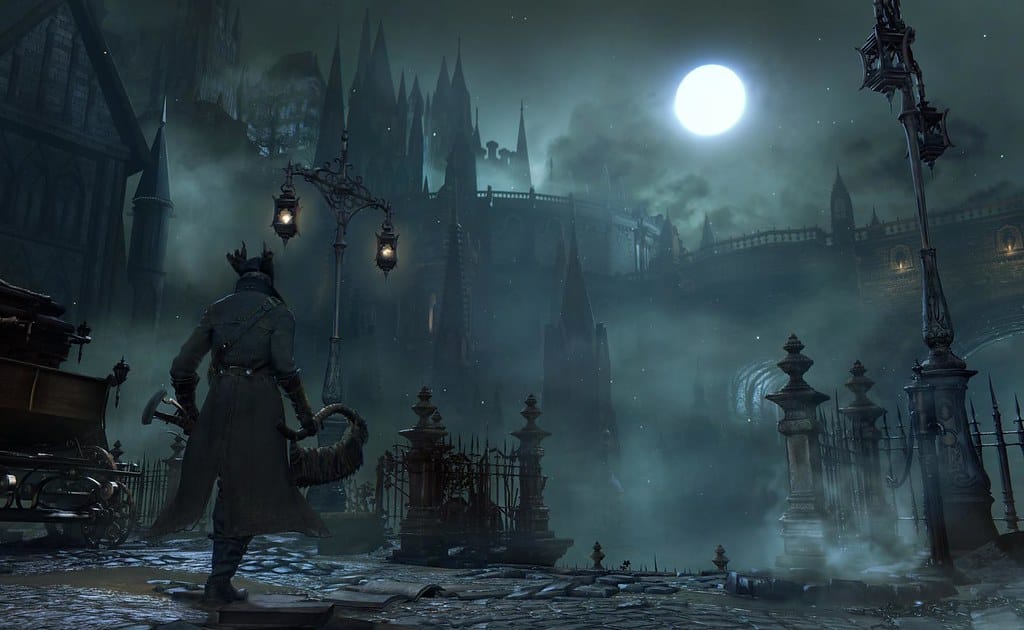
You wake up in a clinic, feverish, having just agreed to a blood transfusion you don’t remember much about. By the time you stumble outside, the city has already fallen apart. Bonfires burn in the street. Something that used to be a person is chewing on a corpse. Somewhere, church bells are ringing, calling the Hunt. This is Yharnam on any given night, and it’s the only home the game ever gives you.
Yharnam is built in layers, literally. Old Yharnam, the oldest and lowest district, was burned to the ground years before the game begins after an earlier outbreak of the beast plague spiraled out of control there, a purge carried out with fire and firearms by a hunter sect known as the Powder Kegs. One of the hunters who took part, a marksman named Djura, never forgave himself for it, and now spends his retirement guarding Old Yharnam’s surviving beasts instead of hunting them. Central Yharnam and the Cathedral Ward were built above and around those ashes, dominated by the looming towers of the Healing Church. Higher still sit the Upper Cathedral Ward and Yahar’gul, home to secretive factions chasing knowledge no sane institution should want. The city’s vertical geography isn’t just level design flair, it’s a physical timeline: newer, more desperate ideas literally built on the ashes of older, equally desperate ones, and the game’s famously interconnected map lets you walk that timeline in a single, continuous loop.
What makes Yharnam sick is also what made it great: the Old Blood, a substance discovered deep beneath the city that can heal any wound, cure any disease, and grant power far beyond what a human body should hold. It also, given enough time and exposure, turns people into beasts. The entire plot of Bloodborne is the slow, horrifying unraveling of a city that built its wealth and religion on top of a cure that was never meant for human veins, and the game opens on the single night that unraveling finally reaches its breaking point, an event the game refers to simply as “the Hunt” and, in its darkest hour, “the night of the Hunt’s Nightmare.”
📜 Byrgenwerth and the Schism That Started Everything
Long before Yharnam existed as a city of blood-drunk pilgrims, it was a small farming and fishing settlement watched over by a college of scholars called Byrgenwerth, led by Master Willem, a lakeside institution devoted to a single obsession: transcendence. Willem believed humanity was capable of evolving beyond its current limits if it could only acquire enough forbidden knowledge, or Insight, about the true nature of the cosmos.
That obsession led Byrgenwerth’s scholars to the ancient underground ruins beneath the region, the labyrinthine Chalice Dungeons, remnants of a much older, long-vanished civilization known as the Pthumerians, who had once made direct contact with beings from beyond human comprehension and built entire subterranean kingdoms in their honor. In these ruins, the scholars found two things that would define the rest of Yharnam’s history: proof that god-like alien entities called the Great Ones existed, and a strange, potent substance the Pthumerians had guarded, the Old Blood.
This discovery split Byrgenwerth in two. Willem believed the only safe path to transcendence was through Insight, through perception and the mind, famously teaching his students to metaphorically “line their brains with eyes” rather than tamper with the blood directly. One of his brightest students, Laurence, disagreed. Laurence believed the Old Blood itself was the answer, a literal, physical miracle that could heal the sick and elevate humanity far faster than any amount of quiet study ever could. Willem’s warning to him has become the single most quoted line in the entire series: fear the Old Blood.
Laurence didn’t listen. He and a group of like-minded scholars left Byrgenwerth, carried Old Blood up from the ruins, and founded a new institution in the city above: the Healing Church. Willem stayed behind with the handful of scholars who still believed in his path, among them a runesmith named Caryll, credited with inventing the Caryll Runes players use throughout the game, and a younger student, Micolash, whose own ambitions would eventually take Byrgenwerth’s teachings somewhere even darker. Neither Willem nor Laurence got the ending he wanted. Willem was eventually cut off from the outside world by an ascended Great One called Rom, left to mutter about eyes on a lakeside balcony for the rest of his life, while Laurence would live just long enough to see his life’s work poison the entire city he’d tried to save, before dying as a beast himself, his transformed skull left as a grim monument in Byrgenwerth’s old lecture hall.
⛪ The Healing Church, Blood Ministration, and the Choir
Laurence’s Healing Church didn’t stay a small breakaway sect for long. Its signature practice, Blood Ministration, offered ordinary Yharnamites something no other institution in the world could: a genuine cure for disease, delivered through transfusions of Old Blood. People flocked to the city by the thousands, and Yharnam grew from a modest settlement into a booming, blood-soaked metropolis inside a single generation. The Church grew wealthy and powerful in step with it, eventually becoming Yharnam’s de facto government, its cathedral towers dwarfing everything else in the skyline.
Internally, the Church organized itself into three rough echelons. At the bottom were the black-garbed Church Hunters, ordinary men and women trained to put down beasts during the nightly Hunt, and it’s this rank-and-file group that most of the game’s regular Hunter enemies belong to. Above them were the white-robed clergy and “doctors” who administered blood healing to the public and ran institutions like the Iosefka’s Clinic where the player’s own journey begins. At the very top, hidden even from most of the Church’s own members, sat the Choir, an elite research division that used the Church’s wealth and manpower not to heal the sick, but to continue Byrgenwerth’s original goal of contacting a Great One directly. The Choir eventually succeeded, establishing communion with a being called Ebrietas, Daughter of the Cosmos, whom they keep imprisoned and worshipped simultaneously in the hidden Upper Cathedral Ward, using knowledge drawn from her to develop increasingly esoteric weapons and rituals that ordinary Hunters were never meant to see.
The tragedy of the Healing Church is that its central product was always a slow poison. Old Blood heals almost anything, but repeated exposure gradually erodes the boundary between human and beast, a process the game calls the “curse of beasthood.” By the time the game begins, that erosion has reached a tipping point across the entire city, and the Church that built its empire on miracle cures finds itself, quite literally, unable to contain what it created. Its own highest-ranking clergy, including Laurence himself in his final beast form, become some of the very monsters ordinary Hunters are sent out to kill.
👁️ Who, or What, Are the Great Ones?
If Bloodborne has a central concept, it’s the Great Ones, cosmic entities that occupy roughly the same narrative space as gods without actually being gods in any traditional, comforting sense. They aren’t worshipped for moral guidance or the promise of an afterlife. They’re worshipped, feared, and hunted because they represent a kind of knowledge and power human minds were never built to hold, closer to Lovecraft’s indifferent cosmic horrors than to any conventional pantheon of deities with plans for humanity.
Great Ones appear to reproduce, after a fashion, and their offspring, sometimes called Kin, can take almost any form: aquatic, insectoid, humanoid, or something with no clean description at all. What they share is an association with blood, with dreams, and with a resource the game calls Insight, essentially the currency of cosmic awareness. The more Insight a Hunter accumulates, the more of Yharnam’s true, monstrous nature they can perceive, whether they want to or not, an extra eye literally appears on the loading screen for every point gained, and high enough Insight lets players see creatures that were invisible to them before.
Several named Great Ones drive the plot directly. Rom, the Vacuous Spider, was once a Byrgenwerth scholar who achieved a form of ascension and now maintains a false, illusory version of Yharnam to shield those not ready to see the truth, killing her is what causes the Blood Moon to finally rise over the city. Ebrietas is the Choir’s captive deity, kept prisoner behind Yharnam’s most secretive doors. Amygdala, a sprawling, many-armed Great One glimpsed clinging to rooftops across Yharnam’s skyline for most of the game before becoming an optional boss, is one of the setting’s more mysterious Kin, its exact role left deliberately unexplained. Mergo, whose story we’ll get to shortly, may be the saddest of them all. And above every other Great One in the game sits the being that watches from the Hunter’s Dream itself, but we’re not there yet.
👑 Cainhurst Castle and the Vilebloods
Not every faction in Yharnam’s history bent the knee to the Healing Church. Cainhurst Castle, an isolated Gothic estate to the north, was once home to a noble bloodline that discovered its own, distinct connection to the Old Blood, one apparently tied to the ancient Pthumerian queen who once ruled the labyrinths beneath the region. Consuming a corrupted strain of this blood transformed Cainhurst’s aristocracy into the Vilebloods, vampiric nobles who hunted ordinary Hunters in secret to harvest their blood in pursuit of power the Healing Church had no interest in sharing.
The Church saw Cainhurst as a rival, both spiritually and politically, and eventually sent an order of zealous Executioners, led by Martyr Logarius, to wipe the Vilebloods out. According to Alfred, one of the last surviving Executioners players meet in the base game, the purge succeeded but at heavy cost to both sides, and Logarius himself was left to guard the one Vileblood he couldn’t bring himself to finish off: Annalise, Queen of the Vilebloods, the only survivor and the sole individual capable of creating new Vilebloods by sharing her own corrupted blood. Rather than kill her, Logarius sealed her behind an illusory prison and stood watch over it as its self-appointed warden. By the time players reach Cainhurst, it’s a frozen, abandoned tomb of a castle, its nobles turned to ice and its halls filled with the ghosts of a war the official histories would rather forget, one that players can end all over again, either by helping the fanatical Alfred finish Logarius’s original mission, or by kneeling before Annalise and reviving the Vileblood line she represents.
🌙 The Hunt, the Hunter’s Dream, and Gehrman
Every night in Yharnam that a certain threshold is crossed, church bells summon Hunters into the streets to cull the beasts before they can spread the plague further. This ritual is called the Hunt, and it’s old enough that an entire profession, and an entire supernatural support structure, has grown up around it.
That support structure is the Hunter’s Dream, a pocket dimension outside normal time where Hunters rest, level up, and prepare between hunts, tended by a silent figure known only as the Doll, whose appearance, tellingly, mirrors a real character we’ll meet in the DLC. The Dream’s caretaker and true master is Gehrman, the First Hunter, an old man bound to a wheelchair who was, in his prime, the very first person Byrgenwerth trained to fight the beasts their research had unleashed. Gehrman is the one who taught Lady Maria and Ludwig, who mentored the Church’s earliest Hunters, and who has been quietly trapped in this dream, waging an endless, unwinnable war on behalf of forces he can no longer fight back against, for far longer than any of the game’s other characters realize. Every messenger, every workshop tool, every lantern the player interacts with in the Dream ultimately answers to him, or to whatever, by that point in the story, is actually pulling his strings.
🕯️ The Hunters You Meet Along the Way
Yharnam’s story is told largely through the handful of other Hunters and survivors the player encounters, each representing a different way of coping with a city eating itself alive. Eileen the Crow, a veteran Hunter of Hunters, polices the ones who have themselves gone mad with bloodlust, offering a rare, weary code of honor in a game largely populated by the desperate and the deluded. Djura, stationed in the burned ruin of Old Yharnam, refuses to fire on new arrivals out of guilt over the massacre he once took part in, unless provoked. Alfred hunts Vilebloods with a fanatic’s certainty that he’s on the side of righteousness, right up until his questline reveals exactly how far that certainty is willing to go. Arianna, a sex worker from the Cathedral Ward, carries a far more personal connection to Yharnam’s cosmic horror than she initially lets on, tied directly to the fate of the Great One Mergo. Even Iosefka, the doctor whose clinic the game opens in, isn’t quite what, or who, she first appears to be by the second half of the story. None of these characters get a cutscene explaining their arc, you have to follow their dialogue across multiple visits and piece it together yourself, which is exactly why Bloodborne’s cast rewards repeat playthroughs more than almost any other FromSoftware game.
👶 The School of Mensis and the Nightmare of Mergo
While the Healing Church pursued communion with the Great Ones through blood and the Choir pursued it through captivity, a third faction chased the same goal through an even darker method. The School of Mensis, led by the scholar Micolash, believed that direct contact with a Great One could grant a person literal eyes on the inside of their brain, the same evolutionary leap Rom had achieved, if only the ritual could be performed correctly. Mensis operated out of Yahar’gul, the Unseen Village, using a device called the Mensis Cage as a kind of cosmic antenna to reach across the barrier separating dreams from reality.
Mensis got their contact. Using their ritual, they beckoned a Great One called Mergo, generally believed by players and lore researchers to be a stillborn child of the entity Oedon and the ancient Pthumerian queen Yharnam herself. Because Mergo was stillborn, it exists in the resulting Nightmare not as a physical being but as a slumbering, infantile consciousness that can only cry, cared for in this strange dream by a devoted guardian, Mergo’s Wet Nurse. The ritual’s side effect was catastrophic: Mergo’s cries drew a Blood Moon far closer to Yharnam than anyone intended, an event tied directly to the plague spiraling out of control on the very night the game takes place. Nearly the entire School of Mensis was killed in the process of finally getting what they wanted, their brains harvested and, according to item descriptions, found to be rotten rather than enlightened.
Yahar’gul, the Unseen Village, is one of the bleakest locations in the game for good reason, it’s the site of a ritual that succeeded exactly as intended and still ended in mass death, its streets littered with the corpses of cultists who got exactly what they asked for. Defeating Mergo’s Wet Nurse and silencing that harrowing cry is what finally allows the long night to end, the game’s own victory message specifically reads “Nightmare Slain” the moment she falls, a detail many lore researchers point to as evidence that the Wet Nurse, not the infant Mergo, was truly the one sustaining the Nightmare all along.
🗝️ The Pthumerians and the Chalice Dungeons
Underneath all of Yharnam’s more recent history lies something far older: the Pthumerians, an ancient underground civilization that had already made contact with the Great Ones and mastered the Old Blood long before Byrgenwerth’s scholars ever set foot in their ruins. Explored through the game’s procedurally generated Chalice Dungeons, Pthumerian society is only ever glimpsed in fragments, tombs, dead soldiers still standing guard, and the recurring presence of a mysterious Pthumerian Queen named Yharnam, whose name the city above was ultimately built to honor, or perhaps to appease.
Queen Yharnam is one of the game’s most debated figures. Item descriptions suggest she is somehow connected to both Mergo and to the Great One Oedon, and several lore researchers believe she may have been offered, willingly or not, as a surrogate host for a Great One’s child long before recorded Yharnam history even began, making the entire city’s later obsession with blood, motherhood, and cosmic offspring a very old story repeating itself on the surface. The Chalice Dungeons themselves, while largely built for replayable endgame content, layer in this deeper Pthumerian history for players willing to dig for it, right down to a final confrontation with beings tied to the very root of the game’s cosmology.
🐟 The Old Hunters: Ludwig, Lady Maria, and the Fishing Hamlet
Bloodborne’s one major expansion, The Old Hunters, doesn’t just add new areas, it recontextualizes the entire main game by finally answering where Gehrman’s earliest, long-vanished Hunters actually went. The answer is the Hunter’s Nightmare, a cursed dream-realm where the very first generation of Hunters has been trapped for what may be centuries, endlessly reliving the sin that put them there, hunting each other and anything else that wanders in for eternity.
That sin took place at the Fishing Hamlet, a remote coastal village whose residents worshipped the corpse of a beached Great One they called Kos, or Kosm, as a literal mother figure, their own bodies gradually mutated by prolonged exposure to her. Working under Master Willem, Gehrman and a young hunter from Cainhurst named Lady Maria led an expedition to the Hamlet after rumors spread that Kos had died while pregnant, meaning her body held an Umbilical Cord, one of the single most powerful substances in the entire setting, said to grant whoever consumes it something close to the perspective of a Great One itself. The expedition got what it came for. It’s heavily implied that Maria and the other old hunters slaughtered the villagers and desecrated Kos’s body to claim her unborn child’s cord, an act so blasphemous that everyone directly involved was cursed to relive it forever in the Nightmare, hunted in turn by the same Kos parasites and villagers they once hunted themselves.
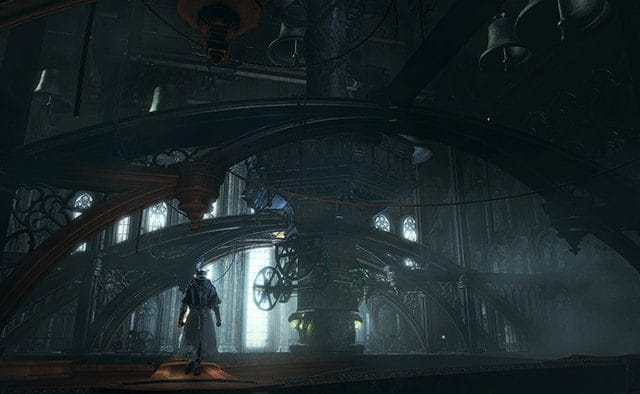
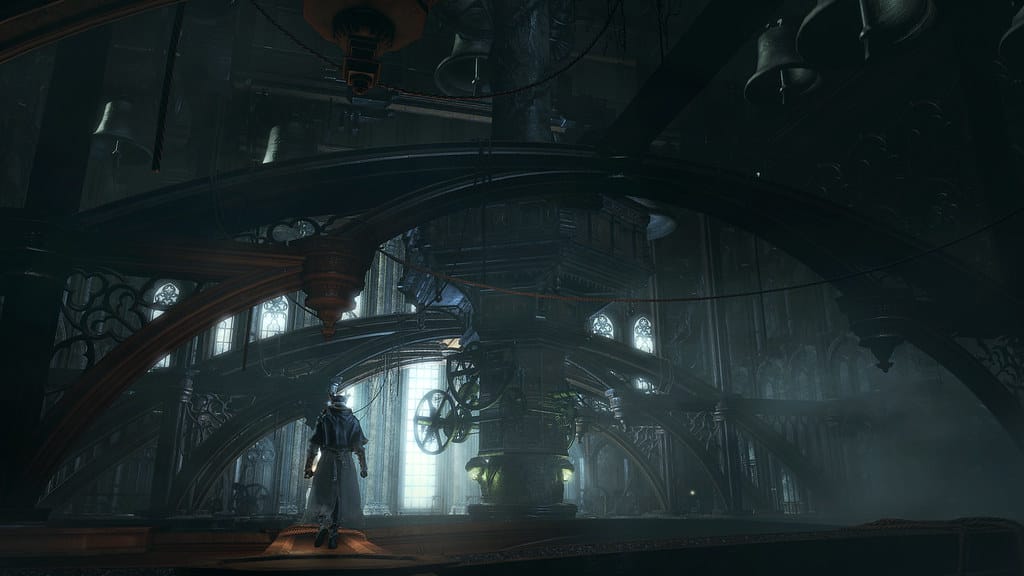
Maria couldn’t live with what she’d done. At some unknown point she discarded her beloved trick sword, the Rakuyo, down a well, unable to stomach it any longer, and withdrew to the Astral Clocktower within the Healing Church’s Research Hall, spending the rest of her existence quietly caring for the deformed, experimented-on patients housed there, who came to revere her as something close to a saint, all while guarding the entrance to the Fishing Hamlet from anyone who might uncover the Church’s oldest secret. Her fellow old hunter Ludwig, once a noble knight and founder of the Church’s Hunters, suffered a different fate, gradually losing himself to beasthood and becoming one of the DLC’s most tragic bosses, a monstrous, horse-like beast in his first phase who, partway through the fight, is reawakened by his own weapon, the Holy Moonlight Sword, and rises to finish the battle as a knight once more under the title Ludwig, the Holy Blade, still trying to protect the innocent even as his own mind and body fell apart around him.
At the bottom of it all waits the Orphan of Kos, the corpse-mother’s grieving, furious child, generally considered one of the hardest bosses FromSoftware has ever built, and the true, rotten heart of the Healing Church’s entire history laid bare in a single, brutal fight against a being that, by every reasonable definition, never asked to exist in the first place.
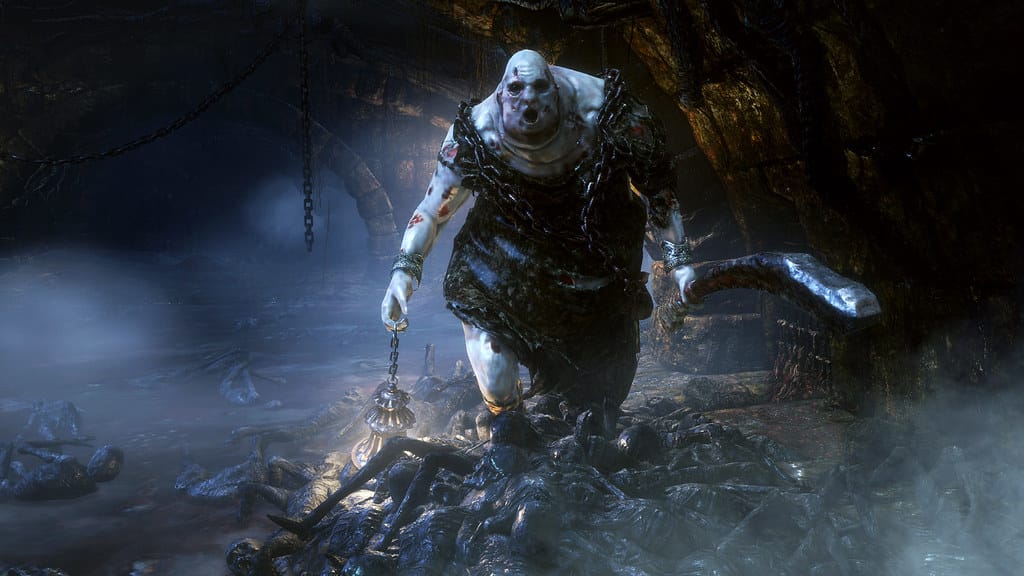
The DLC also fleshes out just how far the Church’s obsession with the Fishing Hamlet went beyond the original expedition. Brador, an ancient Hunter and assassin once employed directly by the Church, now sits chained in a dark cell within the Nightmare, still waiting, bell in hand, for orders that will never come. Simon the Harrowed, a much later Hunter who stumbled onto the Fishing Hamlet’s existence and was murdered by Brador for it, is trapped reliving his own discovery over and over, begging any Hunter who will listen to finally put an end to the horror feeding the Nightmare. Together, these smaller stories confirm what Lady Maria’s questline only implies: the Fishing Hamlet wasn’t a one-time mistake, it’s a secret the Church has been actively protecting, and killing for, across generations.
🌑 The Moon Presence and Bloodborne’s Three Endings
Every thread in Bloodborne eventually leads back to the Hunter’s Dream, and to the true reason it exists. Gehrman never built this dream to help Hunters, he was trapped in it decades ago by a Great One that has watched over it in secret ever since: the Moon Presence. In exchange for an endless supply of new Hunters to fight on its behalf, the Moon Presence has kept Gehrman alive and trapped, waiting for the one thing it actually wants, a human surrogate willing, or unwilling, to become its new vessel and finally let it be born properly into the world.
How the game ends depends on what the player does at that final confrontation, and Bloodborne offers three distinct outcomes, named after their own trophies. In the most grounded ending, Yharnam Sunrise, the Hunter accepts Gehrman’s offer and lets him strike them down, waking up back in the real Yharnam as an ordinary, mortal survivor of the night’s carnage, the sun rising over an ending that finally lets someone simply walk away. In Honoring Wishes, the Hunter refuses Gehrman’s offer and kills him instead, only for the Moon Presence to bind them to the Hunter’s Dream in his place, becoming the next Hunter fated to one day offer someone else that exact same choice. And in the true ending, achieved by consuming three specific Umbilical Cords before making that same refusal, the Hunter resists the Moon Presence entirely and defeats it as well, transforming into an infant Great One in a scene that is as much a birth as it is an ending, closing the game’s recurring themes of blood, motherhood, and evolution in one final, unsettling image, with the game’s credits explicitly naming this outcome “Childhood’s Beginning.”
🩹 Why It All Works: Themes Beneath the Blood
Strip away the boss fights and the trick weapons, and Bloodborne is telling one very specific story over and over from different angles: what happens when the desire to transcend our limits outruns any ability to control the consequences. Willem wanted evolution through knowledge and lost his mind reaching for it. Laurence wanted evolution through blood and turned an entire city into a slow-motion outbreak. Mensis wanted contact with the divine and got it, then died screaming. Even Gehrman, trying to protect people from the monsters his own research helped create, ends up as the eternal warden of the very nightmare that traps him, a role he never chose and can no longer escape.
Threaded through all of that is a recurring, deliberately uncomfortable motif of childbirth and motherhood. Blood Ministration itself is framed with obstetric imagery throughout the game’s environments and item descriptions. Great Ones lose their children and grieve, or their children are stolen and harvested for parts by researchers who see them as scientific specimens rather than as anyone’s family. Kos is worshipped as a mother even in death, her villagers mutated but devoted. Mergo exists only as an infant’s cry, cared for by a nurse rather than a parent. The final transformation, if a player reaches it, turns the Hunter themselves into a newborn. Bloodborne isn’t just asking what happens when humanity reaches for godhood, it’s asking what that reaching costs everyone, and everything, involved in the birth of something new, including the things being born that never consented to any of it.
It’s also, in classic FromSoftware fashion, a story about cycles that refuse to end cleanly. The Hunt happens again every night the Blood Moon threatens to rise. Gehrman’s replacement, whichever ending you choose, is set up to eventually face the exact same choice he did. Even the act of collecting Insight, the resource that lets players see the truth, comes with the cost of being seen in turn, as higher Insight makes the player character visible, and vulnerable, to creatures that previously ignored them entirely. Knowledge in Bloodborne is never free, and neither, in the end, is escape.
🎮 Bloodborne’s Legacy, a Decade Later
Bloodborne turned ten years old in March 2025, and it remains one of the most influential entries in FromSoftware’s catalog, frequently cited among the greatest games ever made for its atmosphere, combat, and world design, and widely credited with helping cement the “soulslike” genre’s move toward faster, more aggressive combat in the years that followed. It’s also, notably, still a PlayStation 4 exclusive over a decade later, with no official PC port, remaster, or sequel confirmed as of this writing.
That absence hasn’t stopped the rumor mill. Fans and outlets have speculated for years about a possible remaster or remake tied to a future PlayStation console launch, pointing to Bloodborne’s tenth anniversary and the precedent set by the Demon’s Souls remake arriving alongside the PS5, and unofficial fan-made ports and frame-rate patches have kept the conversation alive in the meantime. None of this amounts to an official announcement, and Sony and FromSoftware have both stayed silent on the game’s future, so for now, the only confirmed way to experience Yharnam is still the original 2015 release on PS4.
Whatever comes next for Yharnam, its influence is already permanent. The fast, aggressive combat rhythm Bloodborne pioneered, built around dodging instead of shielding and a “regain” system that rewards retaliation over caution, reshaped how FromSoftware approached every game that followed, right up through Elden Ring, and its Lovecraftian take on environmental storytelling helped define an entire generation of soulslike games trying to capture the same dread.
❓ Quick Questions About Bloodborne’s Story
What is the Old Blood?
A substance discovered in ancient Pthumerian ruins beneath Yharnam, tied to the Great Ones, capable of miraculous healing but corrupting to anyone who relies on it too heavily.
Who is the main villain of Bloodborne?
Bloodborne doesn’t have a single traditional villain. The closest thing is the Moon Presence, the Great One secretly controlling the Hunter’s Dream, though the Healing Church’s founding decisions are arguably the root cause of everything that follows.
Do I need to play The Old Hunters to understand the story?
Not strictly, but it fundamentally reframes Gehrman, Cainhurst, and the Healing Church’s origins, and most lore researchers consider it essential to the full picture.
Is there a canon ending?
FromSoftware has never confirmed one. Most lore discussions treat Childhood’s Beginning as the closest thing to a “true” ending since it’s the hardest to unlock, but the game is intentionally left open to interpretation.
Is Bloodborne connected to Dark Souls?
Not directly. The games share a director, a studio, and a broader design philosophy, but Yharnam and Lordran are separate settings with no confirmed narrative link.
Final Words
What makes Bloodborne’s story linger isn’t any single twist, it’s how patiently the game lets you assemble it yourself, one item description and one muttered line of dialogue at a time. Byrgenwerth’s schism, the Healing Church’s slow poisoning of the city it built, Cainhurst’s quiet massacre, the sins buried under the Fishing Hamlet, none of it is ever handed to you directly. You have to want to know, the same way Willem, Laurence, and every other doomed scholar in this story wanted to know, and Bloodborne never quite lets you forget what that kind of curiosity tends to cost.
We’ll be exploring individual characters and factions from Yharnam, Gehrman, Lady Maria, the Great Ones, and more, in their own dedicated deep-dives soon. For now, sleep well, Hunter. The night is still young.
Keep the adventure going! Check out our latest posts for more lore, reviews and gaming news here: Gaming
Official Bloodborne Website
Picture Source, PlayStation.Blog, PlayStation.Blog – Flickr, PlayStation.Blog – Flickr, PlayStation.Blog, PlayStation.Blog – Flickr