
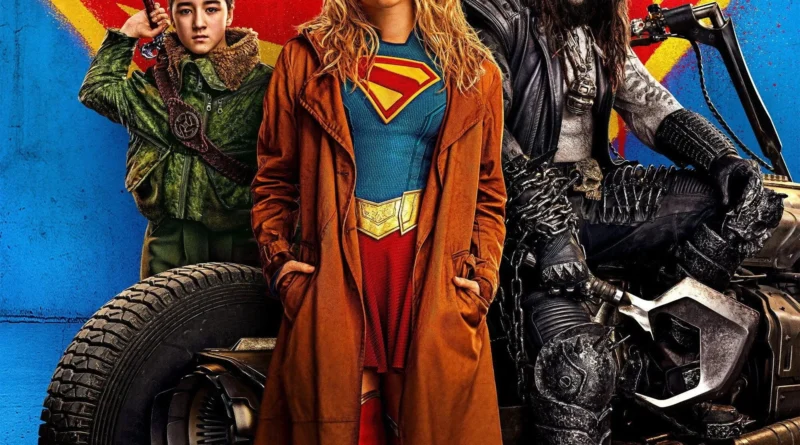
Supergirl Review: Milly Alcock Powers a Messier, More Personal DCU Detour
A year after James Gunn’s “Superman” gave the DCU its golden boy, “Supergirl” hands the spotlight to Kara Zor-El, and it goes looking for a completely different tone. Directed by Craig Gillespie (“I, Tonya,” “Cruella”) from a screenplay by Ana Nogueira, the film adapts Tom King and Bilquis Evely’s “Supergirl: Woman of Tomorrow” and swaps Metropolis optimism for a dusty, road movie revenge story across the stars. Milly Alcock stars as Kara, first glimpsed drunkenly crashing the Fortress of Solitude in “Superman,” now getting her own mission entirely off Earth.
“Supergirl” opened in theaters on June 26, 2026, before landing on Digital on July 28, on 4K UHD, Blu-ray and DVD on September 8, and streaming exclusively on HBO Max from September 10. Here’s the full breakdown across our five categories (2 points maximum each).
Table of Contents
Supergirl Story – 1.5/2
Good Points: A Real Backstory, and a Villain Worth Chasing
Krypto Gets the Plot Moving
The setup is simple and effective: Krem of the Yellow Hills (Matthias Schoenaerts) hijacks Kara’s ship, and when Krypto tries to stop him, Krem shoots the dog with a poisonous dart that leaves him three days to live. That single act does more work than a dozen expository scenes, it gives Kara a real, personal reason to leave Earth behind and chase Krem across the galaxy, antidote or nothing.
Ruthye’s Revenge and Kara’s Backstory
Along the way, Kara reluctantly teams up with Ruthye Marye Knoll (Eve Ridley), a young girl hunting Krem for murdering her father. The film uses their journey, planet-hopping through Bilquis and Barenton, to fold in real backstory on the fall of Krypton and Zor-El’s failed attempt to save it, giving this jaded, harder-edged Kara more emotional weight than a simple revenge plot would need.
Where It Falls Short
The plot is ultimately a fairly straightforward chase across a handful of planets, and some detours (particularly a subplot involving a couple bartering Kara and Ruthye to the Brigands) feel like padding on the way to the finale. The moral question at the film’s center, whether Ruthye should be allowed to kill Krem herself, lands well, but the road there is not always as tight as the emotional payoff deserves.
Supergirl Cast – 2/2
Good Points: Alcock, Ridley, and a Scene-Stealing Momoa
A Jaded, Punk-Edged Kara
Milly Alcock is the clear anchor here. Her Kara is sarcastic, impulsive, and visibly carrying trauma from watching Krypton die on Argo City, a deliberate counterpoint to David Corenswet’s earnest Superman, and Alcock sells every register of it, from drunken bar brawls to the quiet scene where she tells Ruthye the truth about her father Zor-El (David Krumholtz).
Ridley’s Ruthye and Momoa’s Lobo
Eve Ridley matches her scene for scene as Ruthye, an honor-bound kid who refuses to be talked out of her own fight, and their prickly big-sister dynamic is the emotional core of the movie. Jason Momoa’s Lobo, meanwhile, is exactly the gleeful agent of chaos the character needed, a Czarnian bounty hunter who steals every scene he rides his bike through without ever hijacking the film’s focus.
Where It Falls Short
Matthias Schoenaerts’ Krem is a genuinely nasty presence, but he’s kept mostly at arm’s length as a looming threat rather than a fully drawn character, and Emily Beecham’s Alura In-Ze gets little more than a handful of flashback scenes. This is Alcock, Ridley, and Momoa’s show almost entirely, which works, but it does leave the rest of the ensemble thin.
Supergirl World – 1/2
Good Points: A Genuinely Alien Corner of the DCU

Dive Bars and Space Pirates
Where “Superman” gave the DCU a bright Metropolis, “Supergirl” goes for something scrappier: sleazy alien cantinas, junker spaceships, and the Brigands’ scavenger fleet all feel appropriately lived-in and lawless, and it’s a welcome change of pace to see the DCU step off Earth entirely for a full feature. Barenton’s two suns, one green and poisonous to Kryptonians, one yellow, also make for the film’s smartest bit of world-building, turning Kara’s own power set into a ticking clock during the finale.
Where It Falls Short
The galaxy-hopping structure means none of these planets get to breathe for very long before the plot moves on, and the tonal whiplash between goofy space-western comedy and genuinely grim moments (Krem’s massacre of an entire family among them) makes the world feel more chaotic than cohesive. It’s an amusing, scrappy corner of the DCU, but it never quite settles into a consistent identity the way Gunn’s Metropolis did.
Music Score and Effects – 1.5/2
Claudia Sarne came aboard as composer after both Ramin Djawadi and Tom Holkenborg were attached and departed, and her score leans on dirty synth bass and large-scale orchestral writing rather than a memorable theme of its own. It does its job underscoring the action without ever announcing itself the way John Murphy and David Fleming’s “Superman” score did, and the eclectic soundtrack of licensed alt-rock and punk cuts (Sleigh Bells, Wet Leg, Wolf Alice) does more to establish Kara’s rebellious streak than the score itself.
The visual effects fare noticeably better. Krypto’s CG fur and physicality remain some of the most convincing character work the DCU has produced, Lobo’s motorbike chases and the space-pirate dogfights are clean and easy to follow, and the green-sun sequence on Barenton sells Kara’s sudden vulnerability convincingly. It’s a solid, unspectacular package overall: forgettable music paired with dependable, occasionally excellent effects work.
Originality – 1/2
How It Stands Apart / Uniqueness
Taking Kara off Earth entirely and framing her as a harder, more cynical figure than her comic-book counterpart is a genuinely interesting swing, and the film leans hard into that “space western” identity, with director Craig Gillespie citing “True Grit” and “Logan” as touchstones. Letting Kara herself deliver the killing blow on Krem rather than Ruthye, taking that moral weight onto her own shoulders instead of a child’s, is also a meaningful departure from the comic and the strongest idea the script has.
Where it loses ground is that this rougher, more punk-inflected Kara isn’t nearly as brave a reinvention as the marketing suggested. It’s an interesting angle on the character, but stripped of the specific comic-accurate beats and warmth that made “Woman of Tomorrow” resonate on the page, and the actual quest structure (chase the villain across planets, team up with a bounty hunter, save the pet) is fairly standard genre plotting underneath the new coat of paint.
What’s Next for the DCU?

“Supergirl” doesn’t have a post-credits scene, but Kara’s story in Gunn and Peter Safran’s “Gods and Monsters” era is far from over. “Lanterns” is currently airing its first season on HBO Max, with Nathan Fillion’s Guy Gardner (who appeared in “Superman”) starring alongside Aaron Pierre’s John Stewart, and the DCU’s next theatrical stop is James Watkins’ horror-tinged “Clayface,” written by Mike Flanagan, on October 23, 2026.
After that, the story circles back to Metropolis. “Man of Tomorrow,” James Gunn’s direct “Superman” sequel, arrives July 9, 2027, with David Corenswet and Nicholas Hoult both returning, this time forced into an uneasy alliance against Brainiac, and Alcock will reprise Kara alongside them. Executive producer Lars P. Winther has said Kara’s “wild ways” are behind her by that point, with her story turning firmly Earth-based, which suggests “Supergirl” was always meant to be a detour rather than the start of its own trilogy. If our Superman review was about a hero proving the DCU could work, “Supergirl” is the messier, more personal story that gets Kara ready to come home.
Gamersuniverse Score:
7 out of 10 stars⭐
Supergirl gets its most important piece right: Milly Alcock, Eve Ridley, and Jason Momoa carry this film, giving it the strongest cast of any DCU entry so far even when the story around them wanders. Krypto’s poisoning is a genuinely effective hook, the backstory on Krypton’s fall adds real weight, and the visual effects hold up scene after scene, especially the green-sun sequence on Barenton.
It loses ground with a world that’s amusing but chaotic, jumping between planets and tones without ever quite settling, a score that does its job without ever standing out, and a new take on Kara that’s genuinely interesting without being the brave reinvention it was sold as. It’s not as faithful to the comics as some fans wanted, but it’s an interesting, worthwhile detour for the character all the same.
Score Summary
- Story: 1.5/2
- Cast: 2/2
- World: 1/2
- Music Score and Effects: 1.5/2
- Originality: 1/2
Total: 7/10
Have you seen Supergirl yet? Is Jason Momoa your favorite live-action Lobo? Let us know in the comments.
You can find more reviews here: Reviews, and more Movie & Show coverage here: Movie & Show
Supergirl
Summary
Supergirl gets its most important piece right: Milly Alcock, Eve Ridley, and Jason Momoa carry this film, giving it the strongest cast of any DCU entry so far even when the story around them wanders. Krypto’s poisoning is a genuinely effective hook, the backstory on Krypton’s fall adds real weight, and the visual effects hold up scene after scene. It loses ground with a world that’s amusing but chaotic, a score that does its job without ever standing out, and a new take on Kara that’s interesting without being the brave reinvention it was sold as.
Pictures: Warner Bros. Pictures, HBO Max, DC Studios



Pingback: Dune (2021) Review: Denis Villeneuve Turns Arrakis Into a Slow-Burn Sci-Fi Masterpiece - Gamersuniverse