
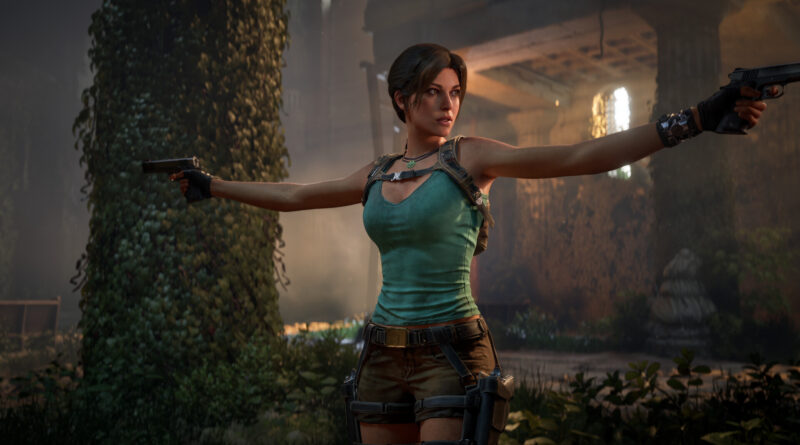
Tomb Raider Timeline Explained: Lara Croft’s Full Story in Order Before Legacy of Atlantis and Catalyst
Tomb Raider turns 30 this year, and Lara Croft’s next two adventures are already lined up. Tomb Raider: Legacy of Atlantis, a full remake of the 1996 original, launches on February 12, 2027, and Tomb Raider: Catalyst, a brand new story, follows later. Both are part of what Crystal Dynamics calls a unified timeline, and that raises the big question many players are searching for right now. So here we have the Tomb Raider timeline explained in full: the three different versions of Lara’s life, every main game’s story in order, the villains and secrets that connect them, and exactly where the two new games fit.
We stick to what the games themselves show and to official statements from the developers, and we clearly mark anything that is fan interpretation. For the latest studio news around the series, see our report on Crystal Dynamics’ latest layoffs.
⚠️ Spoiler Warning ⚠️ This article spoils the stories and endings of the main Tomb Raider games from 1996 to Shadow of the Tomb Raider. Legacy of Atlantis and Catalyst are covered only through officially released information.
🧾 Quick Facts: The Tomb Raider Timeline at a Glance
- Original era (Core Design): Tomb Raider (1996), Tomb Raider II, III, The Last Revelation, Chronicles and The Angel of Darkness (2003)
- Legend era (Crystal Dynamics): Tomb Raider: Legend (2006), Anniversary (2007) and Underworld (2008)
- Survivor era (Crystal Dynamics and Eidos-Montréal): Tomb Raider (2013), Rise of the Tomb Raider (2015) and Shadow of the Tomb Raider (2018)
- Unified timeline: Crystal Dynamics now treats the Survivor trilogy as Lara’s origin story and sets Catalyst years after Underworld
- Tomb Raider: Legacy of Atlantis: remake of the 1996 game by Crystal Dynamics and Flying Wild Hog, out February 12, 2027 on PS5, Xbox Series X/S, Switch 2 and PC
- Tomb Raider: Catalyst: new adventure set in Northern India, originally announced for 2027, with Amazon’s latest signals pointing to 2028
- New voice of Lara: Alix Wilton Regan, who takes over from Camilla Luddington in both new games
🧭 Why the Tomb Raider Timeline Is So Confusing
Tomb Raider has been rebooted twice, and each reboot rewrote Lara’s backstory. That is why there is no single list of “Tomb Raider games in order” that everyone agrees on. Instead, the series is easiest to understand as three eras, each with its own version of Lara’s past:
- The original Lara (1996 to 2003): according to the original game manuals, she is the daughter of Lord Henshingly Croft. At 21, she survived a plane crash in the Himalayas, turned her back on aristocratic life to become an adventurer, and was later disowned by her family.
- The Legend Lara (2006 to 2008): her father is the archaeologist Lord Richard Croft. As a young girl she survived a plane crash in the Himalayas with her mother Amelia, who then vanished in an ancient Nepalese temple. Finding out what happened to her mother drives this whole trilogy.
- The Survivor Lara (2013 to 2018): a young archaeology graduate whose mother disappeared when she was a child and whose father Richard died years later, officially by suicide. Her first expedition turns her from an untested student into a survivor.
For years these three versions simply sat side by side. Then, for the series’ 25th anniversary in 2021, game director Will Kerslake announced that Crystal Dynamics wanted future games to take place after the established adventures and to unify the timelines of Core Design’s and Crystal Dynamics’ games. Legacy of Atlantis and Catalyst are the first results of that plan.
🏝️ The Origin Story: Tomb Raider (2013)
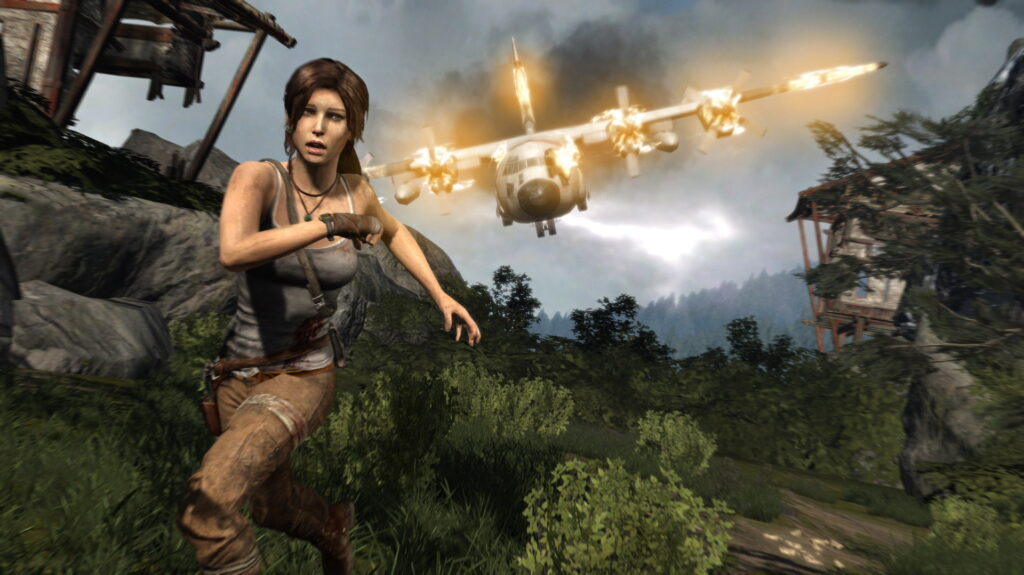
A young Lara fights to survive on Yamatai in Tomb Raider (2013), the official start of her story.
Under the unified timeline, Lara’s story now begins with the 2013 reboot. Fresh out of university, she convinces the crew of the ship Endurance to search for the lost kingdom of Yamatai in the Dragon’s Triangle off the coast of Japan. A violent storm wrecks the ship, and the survivors are stranded on an island ruled by the Solarii Brotherhood, a cult of shipwreck survivors and criminals led by Mathias.
The island’s supernatural storms are no accident. The soul of Himiko, Yamatai’s ancient Sun Queen, is trapped in her corpse, and the storms keep everyone from leaving until she can be transferred into a new body. The Solarii choose Lara’s best friend Sam Nishimura as the new vessel. Along the way Lara loses her mentor Conrad Roth, who dies saving her, and is betrayed by expedition leader Dr. James Whitman, who hands Sam over to the cult. At the summit of the monastery, Lara kills Mathias and destroys Himiko’s remains, ending the storms. She leaves Yamatai knowing her father’s theories about the supernatural were right.
❄️ Rise of the Tomb Raider: Trinity and the Truth About Richard Croft
A year later, Lara picks up her late father’s research into the lost city of Kitezh and the Divine Source, an artifact said to grant immortality. Her search brings her into conflict with Trinity, an ancient order of knights turned paramilitary organization, led in the field by Konstantin and his sister Ana, who once worked with Lara’s father and is secretly seeking the Source to cure her terminal illness.
In Siberia, Lara allies with the Remnant, descendants of the followers of a figure known as the Prophet, and their leader Jacob, who turns out to be the Prophet himself, kept alive by the Source. Lara learns that the Source grants immortality at the cost of the soul and destroys it, freeing Jacob to finally die. Before his own death, Konstantin reveals the game’s biggest twist: Richard Croft did not take his own life but was assassinated by Trinity. In a post-credits scene, Ana denies pulling the trigger herself and is shot by a sniper before she can say more.
🌘 Shadow of the Tomb Raider: The End of the Origin Story
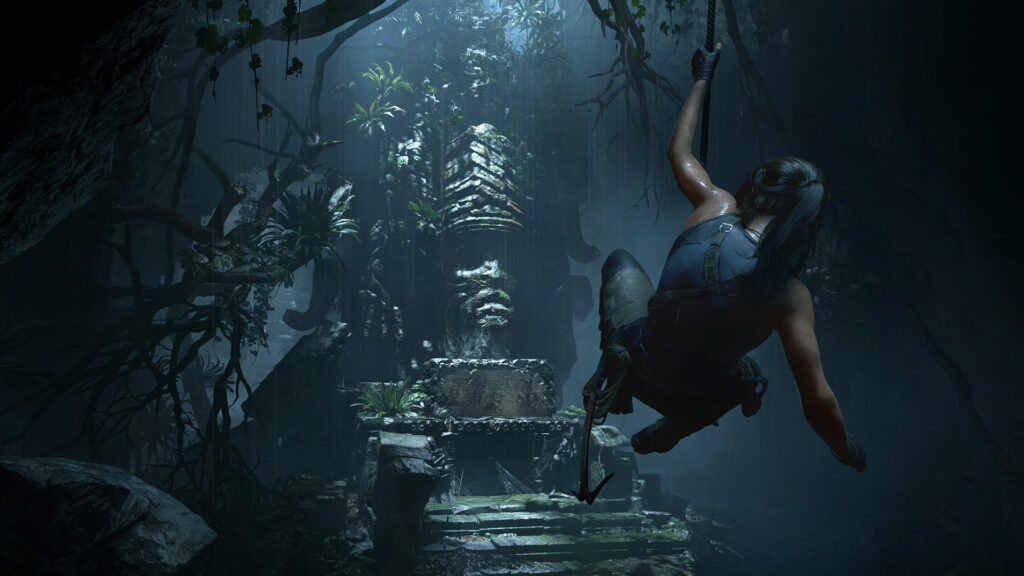
Shadow of the Tomb Raider closes the origin trilogy and turns Lara into the Tomb Raider.
Set months after Rise, Shadow follows Lara and her friend Jonah Maiava as they hunt Trinity across Mexico and Peru. By taking the Dagger of Chak Chel from a temple before Trinity can, Lara unwittingly triggers the Cleansing, a series of Maya cataclysms that will end in a permanent eclipse. Trinity leader Pedro Dominguez turns out to be Amaru, a native of the hidden city of Paititi who wants the power of the god Kukulkan to remake the world.
Amaru also admits he ordered the death of Lara’s father to keep Paititi hidden. In the finale, Lara defeats him and uses the Silver Box of Ix Chel to stop the Cleansing, resisting the temptation to use its power to bring back her parents. The trilogy ends with Lara accepting who she is: the reckless young survivor has become the confident Tomb Raider players know from the classic games.
There is a fascinating footnote here. At launch, Shadow briefly shipped with a different post-credits scene in which Lara has a letter from Jacqueline Natla, the villain of the very first game. A day-one patch removed it, and Square Enix explained it was a direction that had been considered but not chosen and was included by mistake. Fans long saw it as a sign that the reboot was always meant to lead into the 1996 story, which is exactly what Legacy of Atlantis now does.
🔱 Who Is Jacqueline Natla? Tomb Raider (1996) and the Scion of Atlantis
The original Tomb Raider is the story that Legacy of Atlantis retells. Businesswoman Jacqueline Natla hires Lara, through her mercenary Larson, to recover the Scion, an artifact buried in the tomb of Qualopec near Vilcabamba in the Peruvian Andes. Once Lara has it, Larson ambushes her, and she learns that the Scion has three pieces and that Natla has sent rival treasure hunter Pierre DuPont after the others.
The pieces once belonged to the three rulers of Atlantis. Lara finds the second in the tomb of Tihocan beneath St. Francis’ Folly in Greece and follows the trail of the third to the lost city of Khamoon in Egypt. Visions from the Scion reveal the truth: the third ruler betrayed Atlantis, used the Scion to breed monsters and was imprisoned by Qualopec and Tihocan. That traitor is Natla herself. After stealing the Scion, she plans to use her army of creatures to force humanity’s evolution forward. Lara follows her to a hidden Atlantean pyramid on a remote island, destroys the Scion, defeats Natla and escapes as the island explodes.
Crystal Dynamics already remade this story once as Tomb Raider: Anniversary (2007), which tied the Scion to Richard Croft’s research and left Natla alive for a later return.
🐉 The Classic Adventures: Tomb Raider II and III
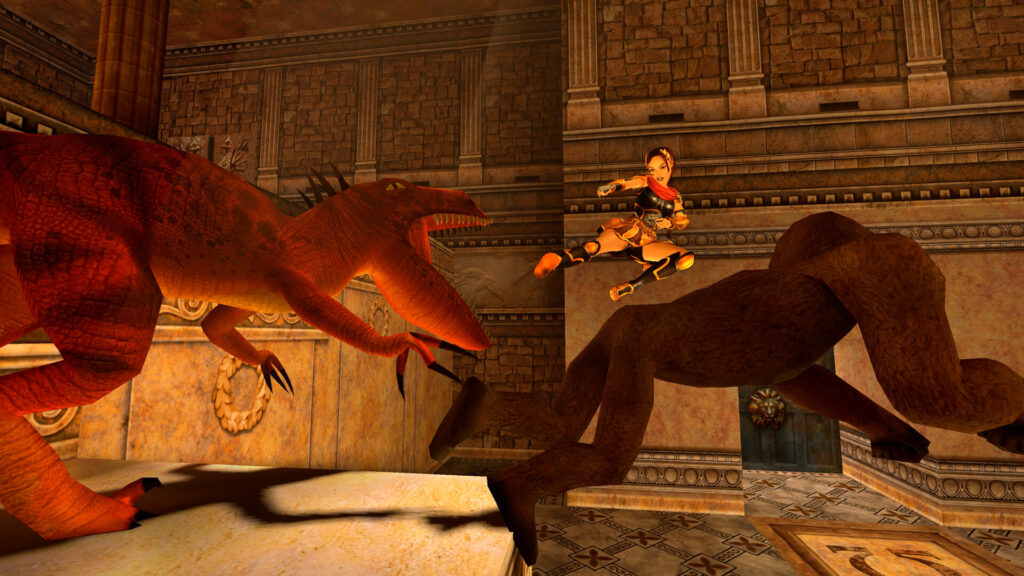
Classic Lara returns in Tomb Raider I-III Remastered, the easiest way to play the original adventures today.
In Tomb Raider II (1997), Lara hunts the Dagger of Xian, a weapon that turns whoever plunges it into their own heart into a dragon. Her rival is Marco Bartoli, leader of the Italian cult Fiamma Nera. The chase leads from the Great Wall of China to Venice, an offshore rig above the sunken liner Maria Doria and the Barkhang Monastery in Tibet, where the Seraph opens the way to the dagger. Bartoli transforms into a dragon, Lara pulls the dagger from his heart, and the cult makes one last failed attack on Croft Manor.
Tomb Raider III (1998) sends Lara after four artifacts carved from an ancient meteorite that crashed in Antarctica: the Infada Stone, the Ora Dagger, the Eye of Isis and Element 115. She collects them in India, the South Pacific, London and Nevada’s Area 51 for Dr. Willard of the RX-Tech corporation, only to learn in Antarctica that he has been using the meteorite to mutate his own men and plans to do the same to all of humanity. Willard turns himself into a spider-like creature in the ruined city of Tinnos, and Lara kills him.
🏺 The Last Revelation, Chronicles and the “Death” of Lara Croft
The Last Revelation (1999) opens with a flashback to a teenage Lara in 1984, exploring Angkor Wat with her mentor Werner Von Croy. Their hunt for an artifact called the Iris ends with Von Croy caught in a trap and Lara escaping without him, the root of their later rivalry. In the present day of late 1999, Lara takes the Amulet of Horus from a tomb in Egypt and unknowingly releases Set, the Egyptian god of chaos. Set later possesses Von Croy. Lara manages to imprison the god again beneath the Great Pyramid of Giza, but as the temple collapses she refuses Von Croy’s outstretched hand, unsure whether he is still himself, and is buried in the ruins.
Tomb Raider: Chronicles (2000) takes place while Lara is presumed dead. After her memorial service, her butler Winston, Father Patrick Dunstan and her old teacher Charles Kane share stories of her earlier adventures: Rome and the Philosopher’s Stone, the Spear of Destiny aboard a Russian submarine, a haunted Irish island visited by a teenage Lara, and a raid on Von Croy’s New York tower to steal the Iris. At the very end, Von Croy digs through the rubble at Giza and finds only Lara’s backpack, a sign that she survived.
🌑 The Angel of Darkness: The Unfinished Chapter
The Angel of Darkness (2003) brings Lara back, but in a darker story. In Paris, she meets Von Croy, who is working for a man named Eckhardt to find the Obscura Paintings. Von Croy is murdered, Lara wakes up as the prime suspect, and the city is gripped by a serial killer known as the Monstrum. On the run, Lara learns that the paintings hide pieces of the Sanglyph, an alchemical artifact Eckhardt wants to use to revive the Nephilim, an ancient race. She crosses paths with Kurtis Trent, the last member of the Lux Veritatis, a secret order sworn to stop Eckhardt and his society, the Cabal.
In Prague, the final twist arrives: Eckhardt’s right-hand man Joachim Karel is himself a shape-shifting Nephilim, and it was Karel, wearing Eckhardt’s form, who killed Von Croy. Lara refuses his offer to join him and destroys the last Nephilim. The game ends with Lara following Kurtis’ weapon into the shadows, with his fate unknown. Angel of Darkness was Core Design’s final main Tomb Raider, and the sequels it was meant to set up were never made, which is why this thread is still open more than 20 years later.
⚔️ Legend and Anniversary: What Happened to Lara Croft’s Mother?
When Crystal Dynamics took over with Tomb Raider: Legend (2006), it gave Lara a new, more personal mission. As a child, she and her mother Amelia survived a plane crash in the Himalayas and took shelter in a Nepalese temple. Young Lara activated an ancient stone dais, and Amelia vanished after drawing a sword from it. Years later, the adult Lara follows the trail of that sword, which turns out to be Excalibur, from Bolivia and Peru to Tokyo, Ghana, Kazakhstan and King Arthur’s hidden tomb in Cornwall.
Her rivals are Amanda Evert, an old friend Lara believed had died during a disastrous dig in Peru, and Amanda’s associate James Rutland. In the finale in Bolivia, Lara reforges Excalibur and places it in the dais, which opens a rift in time showing the moment of Amelia’s disappearance. Amanda’s panicked shout to pull out the sword is what Amelia hears in the past, and Amanda then reveals that Amelia was not killed but transported to Avalon. Anniversary (2007) then retells the 1996 Natla story inside this continuity.
🔨 Tomb Raider: Underworld: Mjolnir, Avalon and Natla’s End
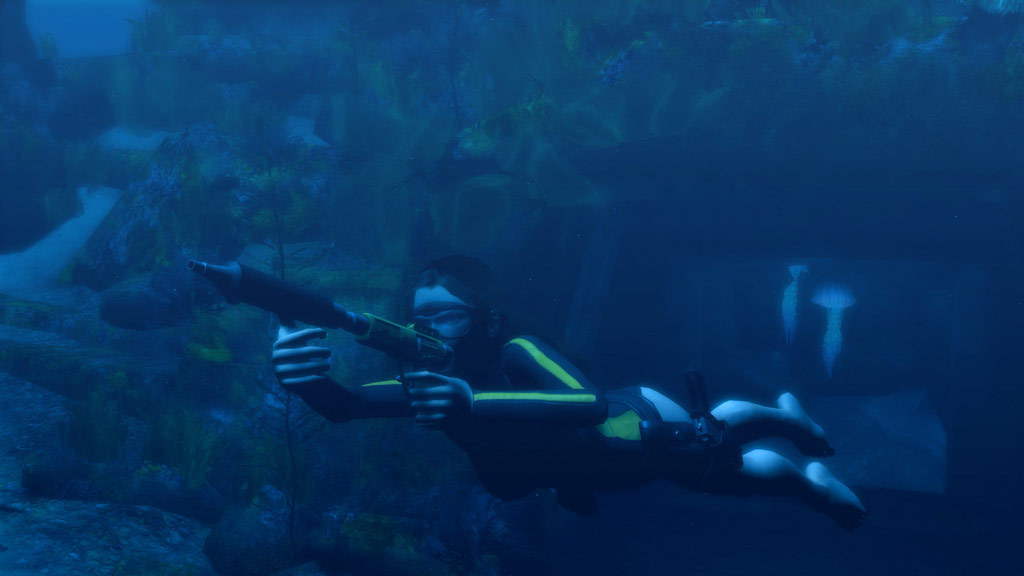
Lara dives into the Mediterranean in search of Avalon in Tomb Raider: Underworld.
Underworld (2008) concludes the Legend trilogy. Searching for Avalon, which the game links to the Norse underworld Helheim, Lara collects Thor’s gauntlets, his belt and finally the hammer Mjolnir. She also meets a captive Natla again, who points her in the right direction, and is hunted by a Doppelgänger built to look like her, which bombs Croft Manor.
The answers are brutal. Natla reveals that she killed Richard Croft, and in Helheim Lara finds her mother turned into a Thrall, an undead guardian, and is forced to shoot her. Natla’s real goal is to trigger a world-ending volcanic catastrophe tied to the myth of the serpent Jörmungandr. Lara stops the device, knocks Natla into a lake of eitr with Mjolnir and escapes with Amanda. Before parting, Lara finally says goodbye to her mother. In the downloadable chapter Lara’s Shadow, the Doppelgänger watches as a trapped Natla drowns in eitr, closing her story in this continuity.
📜 Tomb Raider Games in Order: The Unified Timeline
So how does all of this fit together? Here is what is officially confirmed. In December 2025, Kerslake explained that Catalyst is set years after Tomb Raider: Underworld, with the reboot trilogy serving as Lara’s origin story. Describing Legacy of Atlantis and Catalyst together, he summed it up as “Same character; two different time periods in her life.” Crystal Dynamics head Scot Amos added that one leadership team oversees both games to keep everything consistent with canon.
Based on those statements, the official order of Lara’s life looks like this:
- Tomb Raider (2013)
- Rise of the Tomb Raider (2015)
- Shadow of the Tomb Raider (2018)
- Tomb Raider: Legacy of Atlantis (2027), the new take on Lara’s first hunt for the Scion
- Lara’s later adventures, up to Tomb Raider: Underworld (2008)
- Tomb Raider: Catalyst, set years after Underworld
What Crystal Dynamics has not spelled out is exactly how every classic Core Design game and the Legend trilogy slot into step five, especially since their backstories contradict each other. The most common fan reading treats the classic adventures from Tomb Raider II to The Angel of Darkness, followed by Legend and Underworld, as Lara’s middle years, but that is fan interpretation, not an official chart. Spin-offs such as Lara Croft and the Guardian of Light (2010) and Lara Croft and the Temple of Osiris (2014) stand outside the main series, and their place in the timeline has not been addressed.
🗿 Tomb Raider: Legacy of Atlantis: What We Know
Legacy of Atlantis was revealed at The Game Awards 2025 alongside Catalyst. It is the second official remake of the 1996 game after Anniversary, developed by Crystal Dynamics together with Flying Wild Hog in Unreal Engine 5 and published by Amazon Game Studios. Here is what is confirmed:
- Release: February 12, 2027 on PS5, Xbox Series X/S, Nintendo Switch 2 and PC, with 48 hours of early access from February 10 for Deluxe Edition pre-orders
- Story: Lara travels the world in search of the Scion of Atlantis and fights to keep its power from being exploited
- Cast: Alix Wilton Regan as Lara, Adrienne Wilkinson as Natla and Bradley Snedeker as Larson Conway
- New features: a wrist-mounted grappling hook, an archaeological scanner and a Focus ability that slows down combat, plus separate difficulty options for puzzles and combat
🕉️ Is Tomb Raider: Catalyst a Sequel to Underworld?
Yes. Tomb Raider: Catalyst is officially set years after Underworld and shows a more experienced Lara. The story takes her to Northern India, where a mythical cataclysm has exposed ancient ruins and awakened the forces guarding them. Lara has to compete with rival treasure hunters who want to exploit the site’s power and decide whom she can trust. Crystal Dynamics’ own core team is developing it in Unreal Engine 5 for PS5, Xbox Series X/S and PC, and Scot Amos has called it the largest Tomb Raider the studio has made.
The release date is less clear. Catalyst was announced for 2027, but in July 2026 Amazon Games boss Jeffrey Gattis said on a podcast that the next game would follow Legacy of Atlantis in 2028, while Amazon told press it had nothing new to share on timing. An Amazon listing earlier this month again mentioned 2028 before it was edited, so until there is a firm announcement, treat 2028 as the likely window rather than a confirmed date. Nothing about the story beyond the official premise has been revealed, so any theory about returning villains or the fate of characters like Amanda or Kurtis is pure speculation for now.
❓ Quick Questions About the Tomb Raider Timeline
What is the first Tomb Raider game in the timeline?
Tomb Raider (2013). Crystal Dynamics officially treats the reboot trilogy as Lara’s origin story, even though it came out 17 years after the original game.
Is the Survivor trilogy still canon?
Yes. Under the unified timeline, Tomb Raider (2013), Rise and Shadow are the beginning of Lara’s story.
Who killed Lara Croft’s father?
It depends on the continuity. In the Legend trilogy, Natla reveals she killed Richard Croft. In the Survivor trilogy, Trinity assassinated him, and Amaru admits he gave the order.
What happened to Lara’s mother?
In the Legend trilogy, Amelia Croft vanished through the dais to Avalon, and Lara later finds her turned into a Thrall in Underworld.
Do I need to play the old games before Legacy of Atlantis?
No. It retells the very first adventure for a new generation. If you want to experience the originals, Tomb Raider I-III Remastered and Tomb Raider IV-VI Remastered bring all six classic games to modern platforms, and the latter was even part of PlayStation Plus in November 2026.
Final Words
Thirty years in, Lara Croft has lived three different lives: the aristocratic adventurer who fought Natla and Set, the daughter searching for her mother in Avalon, and the young survivor who grew up on Yamatai. With Legacy of Atlantis and Catalyst, Crystal Dynamics is finally pulling those lives into one story, starting with her first hunt for the Scion in February 2027. Whichever Lara you grew up with, there has never been a better time to catch up. For more deep dives into gaming’s biggest stories, check out our Lore section.
Keep the adventure going! Check out more Gaming News on Gamersuniverse.
Picture Source: Crystal Dynamics (Steam), Eidos-Montréal and Crystal Dynamics (Steam), Aspyr and Crystal Dynamics (Steam), Crystal Dynamics (Steam)