
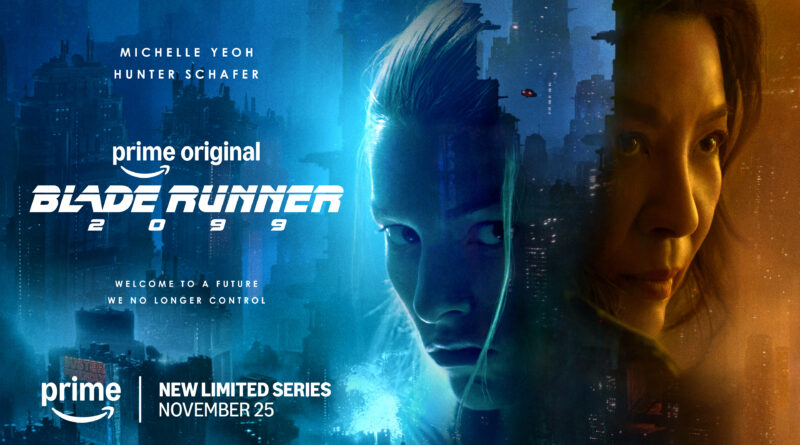
Blade Runner 2099 Review: Michelle Yeoh and Hunter Schafer Anchor a Gorgeous but Overstuffed Prime Video Spinoff
Ridley Scott’s Blade Runner first imagined a rain-soaked, neon-lit Los Angeles back in 1982, and Denis Villeneuve expanded that world nearly a decade ago with Blade Runner 2049. Now Prime Video is taking the franchise to television for the first time with Blade Runner 2099, a limited series created and showrun by Silka Luisa and directed by Jonathan van Tulleken, with Scott on board as an executive producer. The eight-episode season premieres November 25 on Prime Video, and early reviews are already out, with the show currently sitting at 72% on Rotten Tomatoes.
Set fifty years after the events of Blade Runner 2049, the series flips the franchise’s social order on its head: Los Angeles has been rebuilt, but by replicants rather than humans, who are now treated as second-class citizens. Hunter Schafer stars as Cora, a human fugitive who disguises herself as a replicant Blade Runner to protect her younger brother Elias (Lewis Gribben), and finds herself partnered with Olwen (Michelle Yeoh), a replicant Blade Runner counting down her final days before her enforced expiration. Together they’re sent after Marek (Johnny Harris), a replicant on the run who shares a complicated history with Olwen. Here’s our full breakdown across five categories, worth 2 points each.
Table of Contents
Blade Runner 2099 Story – 1/2
Good Points: A Clever Reversal at Its Core
Humans on the Bottom Rung
The show’s best idea is its setup: fifty years on, replicants run Los Angeles and humans are the underclass, which gives Cora’s mission real desperation from the first episode. Schafer and Yeoh’s mismatched partnership, a scared human hiding in plain sight next to a replicant who is literally running out of time, gives the series an emotional spine that the plot leans on whenever the mystery around Marek gets complicated.
Where It Falls Short
The season spends a lot of its eight episodes re-explaining Tyrell Corporation history and Nexus replicant lore to set up the central mystery, and that worldbuilding crowds out time that could have gone to Cora and Olwen’s relationship. The season also ends on a deliberately open note that plays more like a setup for a second season than a satisfying conclusion in its own right, which is a tougher sell for a show marketed as a limited series.
There’s a genuinely interesting show buried in here, but the pacing keeps getting in its own way, alternating between slow, atmospheric stretches and episodes that cram in more lore than they have room to properly land.
Blade Runner 2099 Cast – 2/2
Good Points: Schafer and Yeoh Make the Show Worth Watching
A Genuinely Great Duo
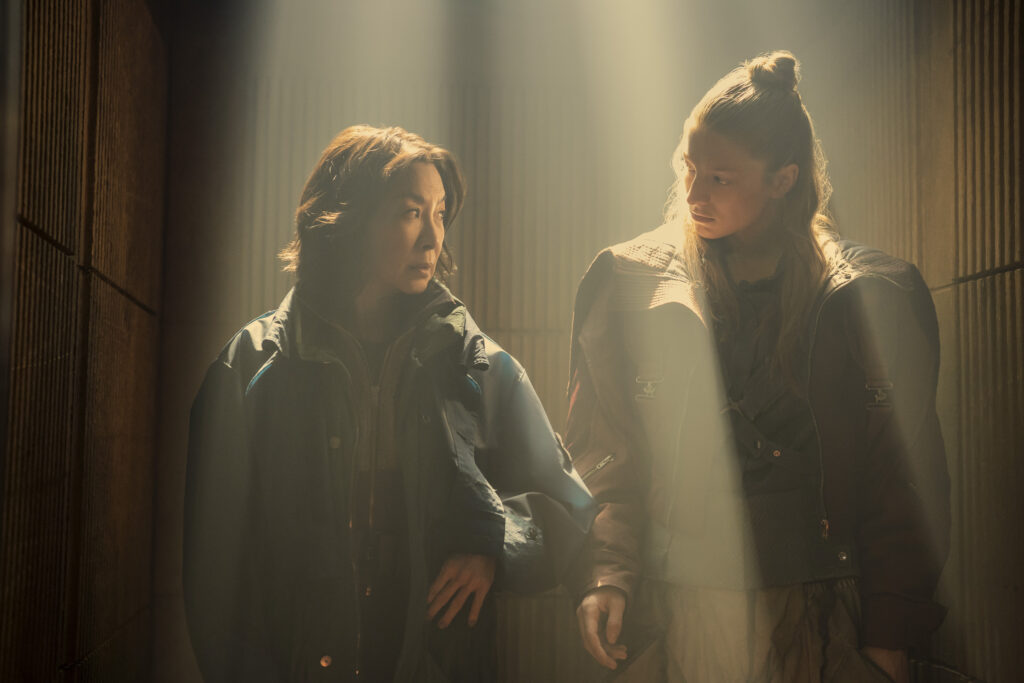
Hunter Schafer is the clear standout, carrying Cora’s constant fear of being exposed alongside a steely determination to protect her brother, and she makes the character’s double life feel exhausting in a way that’s easy to buy into. Michelle Yeoh brings a quieter, more weathered energy to Olwen, a replicant who has made peace with her own mortality, and the chemistry between the two actors is the main reason the show’s slower episodes still work.
A Crowded Supporting Cast
Johnny Harris makes for a compelling target as Marek, giving the character more shading than a standard fugitive-of-the-week role deserves, and Lewis Gribben gets a handful of good scenes as Cora’s brother Elias. The show’s wider ensemble is less fortunate, though. With so many side characters introduced to service the lore, several of them end up feeling like plot devices rather than people, and the season doesn’t always have room to let them breathe.
Blade Runner 2099 World – 2/2
Good Points: The Best-Looking Blade Runner Yet
Golden Light Over a Replicant City
Visually, Blade Runner 2099 might be the strongest entry in the franchise. Swapping the original’s perpetual rain and neon for a sun-drenched, golden-hour Los Angeles is a smart way to signal that this is a different era, and the production leans heavily on practical sets and tactile, lived-in production design rather than digital backdrops. It feels closer in spirit to Scott’s 1982 film than to the sleeker, more stylized 2049, and the show’s quieter, atmospheric scenes are consistently its most striking.
Where It Falls Short
The scope of the worldbuilding occasionally outpaces the show’s ability to explain it clearly, and the shift in power between humans and replicants, while visually well realized, isn’t always matched by enough concrete detail about how that new society actually functions day to day.
Music Score and Effects – 1.5/2
A Score Worthy of Vangelis
Composer Leopold Ross delivers the season’s most consistent strength, building a smoky, saxophone-driven score that nods to Vangelis’s original soundtrack without simply copying it, and it’s doing a lot of the heavy lifting in setting the noir mood whenever the visuals alone aren’t enough. Paired with the practical sets, the sound design makes individual scenes feel far more cinematic than the average streaming drama.
Competent, Not Spectacular Effects
The visual effects supporting all of that practical work are solid but rarely transcendent, handling the city’s skyline and off-world references capably without producing a single image as iconic as the franchise’s best moments. It’s good, functional work, just not quite as memorable as the score or the production design surrounding it.
Originality – 1/2
How It Stands Apart
Flipping humans and replicants into opposite social roles is a legitimately clever twist for a franchise that has always used that divide to ask what makes someone human, and it gives Blade Runner 2099 its own identity rather than just retreading 2049’s plot beats with new faces.
Where It Loses Ground
That said, the show’s central gears, a mismatched buddy duo hunting a fugitive while uncovering a city-wide conspiracy, are familiar sci-fi television shapes that the Blade Runner setting doesn’t do much to disguise. The oppressed-underclass angle also isn’t new ground for the genre at large, and the series doesn’t push its reversal far enough to feel like it’s saying something the franchise, or science fiction TV in general, hasn’t said before.
What’s Next for Blade Runner 2099?
All eight episodes of Blade Runner 2099 premiere November 25 on Prime Video. The season’s open-ended finale leaves plenty of room for a second season, though Amazon has not yet confirmed a renewal, and with the show initially pitched as a limited series, its future beyond Season 1 remains uncertain for now. For more from the Blade Runner universe, check out our earlier coverage of the New York Comic-Con trailer.
Gamersuniverse Score:
7 out of 10 stars⭐
Blade Runner 2099 is an ambitious, gorgeous-looking expansion of the franchise that’s let down by an overstuffed plot and an ending that feels more like a pitch for Season 2 than a conclusion. Hunter Schafer and Michelle Yeoh are genuinely excellent together, and the production design and score are the best the TV side of this franchise has looked and sounded, but the show never quite figures out how to fit Blade Runner’s big ideas into an eight-episode structure without losing momentum along the way.
Score Summary
- Story: 1/2
- Cast: 2/2
- World: 2/2
- Music Score and Effects: 1.5/2
- Originality: 1/2
Total: 7/10
Are you planning to watch Blade Runner 2099 this week, or do you think the Blade Runner franchise works better on the big screen? Let us know in the comments.
You can find more reviews here: Reviews, and more Movie & Show coverage here: Movie & Show
Blade Runner 2099
Summary
Blade Runner 2099 is an ambitious, gorgeous-looking expansion of the franchise that’s let down by an overstuffed plot and an ending that feels more like a pitch for Season 2 than a conclusion. Hunter Schafer and Michelle Yeoh are genuinely excellent together, and the production design and score are the best the TV side of this franchise has looked and sounded.
Pictures: Prime Video




A specific ailment made the visuals feel quite different for me. Delicate Sun