
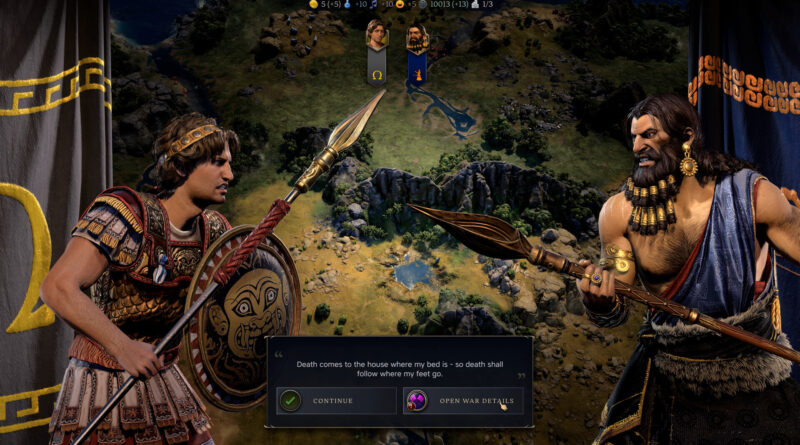
Civilization 7’s Return to Single-Civ Play Was ‘Personally Challenging’ for Its Creative Director
Civilization 7 shipped in February 2025 with a radical change to the series formula: instead of guiding one civilization from the Stone Age to the Information Age, players would switch between several civilizations at fixed age transitions throughout a game. The idea split the community right down the middle, and a new oral history of the Civilization franchise published by Polygon now reveals just how much internal debate it took for Firaxis to eventually walk the system back.
Why Age Transitions Split the Fanbase
According to the oral history, the age-transition structure traces back to series creator Sid Meier, who had long been frustrated that a civilization’s unique abilities only mattered during the specific era they were tied to, leaving the rest of a campaign feeling generic by comparison. Civilization 7 creative director Ed Beach built on that idea, framing the ability to evolve from one historical culture into another as a way to reflect how real civilizations actually changed and blended over time.
That design choice did not land the way Firaxis hoped. Executive producer Dennis Shirk described the launch version of Civilization 7 as polarizing, particularly among the series’ most dedicated players, who wanted the traditional experience of picking one civilization and sticking with it for an entire campaign rather than being pushed through scripted transitions.
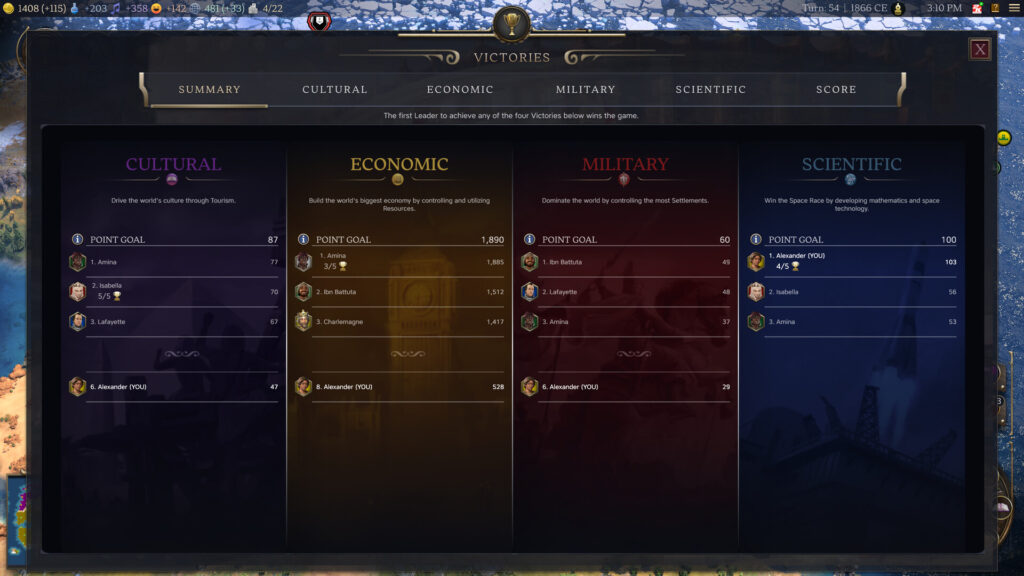
Civilization 7’s Victories screen tracks four separate paths to winning, a system Test of Time reworked to reward sustained progress across an entire campaign.
Bringing Back the Classic Civ Experience
Firaxis’s response arrived in May with the free Test of Time update, developed with help from the studio’s public Firaxis Feature Workshop sessions. The update’s headline addition, Time-Tested Civs, finally let players stick with a single civilization for an entire game while still having the option to pursue age transitions if they wanted them. Test of Time also replaced the Legacy Paths system with a new Triumphs system built around optional objectives, and reworked how Victories are earned across a full campaign.
Beach has since acknowledged that restoring the classic single-civ structure was a difficult call for him personally, since, as he put it, it “wasn’t part of the original vision of the game.” He has said the decision became clear once it was obvious that longtime fans still wanted to see one civilization’s story carried all the way through, something he felt the game had not fully delivered at launch.
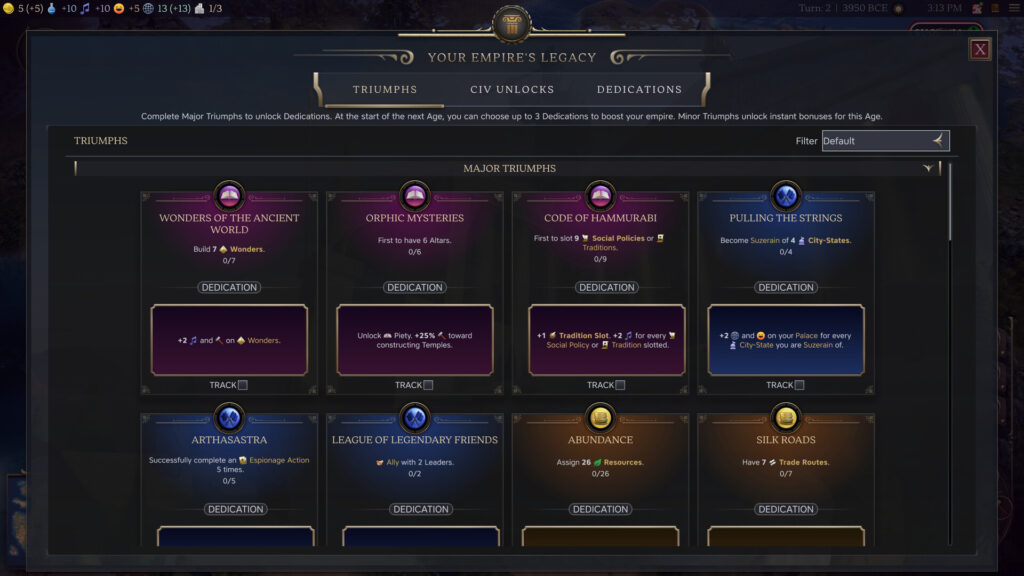
The Triumphs system, built around Major and Minor objectives tied to each civilization’s strengths, replaced Legacy Paths entirely in the Test of Time update.
What’s Next for Civilization 7
Firaxis now considers Test of Time a success internally, crediting the public workshop process for giving the team confidence the update would be well received. Even so, Steam reviews for Civilization 7 remain mixed, and the studio has admitted more broadly that it changed too much about the formula at once with the original release. Firaxis is currently working on the next update timed to Civilization 7’s first paid expansion, Earthrise, alongside a separate free update that will add an atomic age to the game in 2027.
Keep the adventure going! Check out more Gaming News on Gamersuniverse.
Picture Source: 2K Games / Firaxis Games