

Dune: Awakening Map Explained: Hagga Basin, the Deep Desert, and What Update 1.5 Changed
Dune: Awakening officially arrived on PS5 and Xbox Series X|S on September 22, after a head start for Deluxe and Ultimate owners that began on September 17. Update 1.5 is live on every platform, and a lot of new Sleepers are opening their map for the first time and wondering where on Arrakis they’re actually supposed to go. Returning players have plenty to relearn too, because the Dune: Awakening map works very differently now than it did at launch last year. Here’s how the whole map fits together, from Hagga Basin to the Deep Desert, what Update 1.5 changed, and what’s coming next with the Polar Cap.
The Dune: Awakening Map at a Glance
Arrakis isn’t one seamless open world. The Dune: Awakening map is split into separate regions that you move between through the overland map, which also leads to story locations, dungeons, and Testing Stations. These are the big ones:
- Hagga Basin: the main survival region where you start, build your base, and spend most of your early and mid-game.
- The Deep Desert: the endgame region beyond the Shield Wall, packed with spice, shipwrecks, and Testing Stations, and reshaped every week by the Coriolis storm.
- Arrakeen and Harko Village: the Atreides and Harkonnen settlements that act as social hubs for trading, story missions, and faction business.
- The Polar Cap: a brand-new survival map that Funcom is releasing as a free update later this year.
Hagga Basin: Where Every Sleeper Starts
Hagga Basin is a huge depression in the crust of Arrakis, sheltered by the Shield Wall mountain range from the worst of the planet’s storms. It’s one of the few places on the planet where people live permanently, which is why it’s where your base, your vehicles, and most of your survival loop will live too. The basin is made up of very different sub-regions, including the iron-rich sands of the Vermillius Gap, the deep Hagga Rift, the comparatively lush O’odham, and the irradiated Sheol in the southwest, home to shipwrecks like the Wreck of the Delphis and the Wreck of the Euporia.
The biggest change for this part of the Dune: Awakening map is that, on official servers, Hagga Basin is now fully PvE, shipwrecks included. That means the critical crafting resources in those wrecks are no longer locked behind PvP, and farming them no longer means watching your back for other players. If you’re chasing weapon schematics down there, our guide to Dune: Awakening sniper rifles shows which shipwrecks are worth your time.
New Locations Added to the Map Since Launch
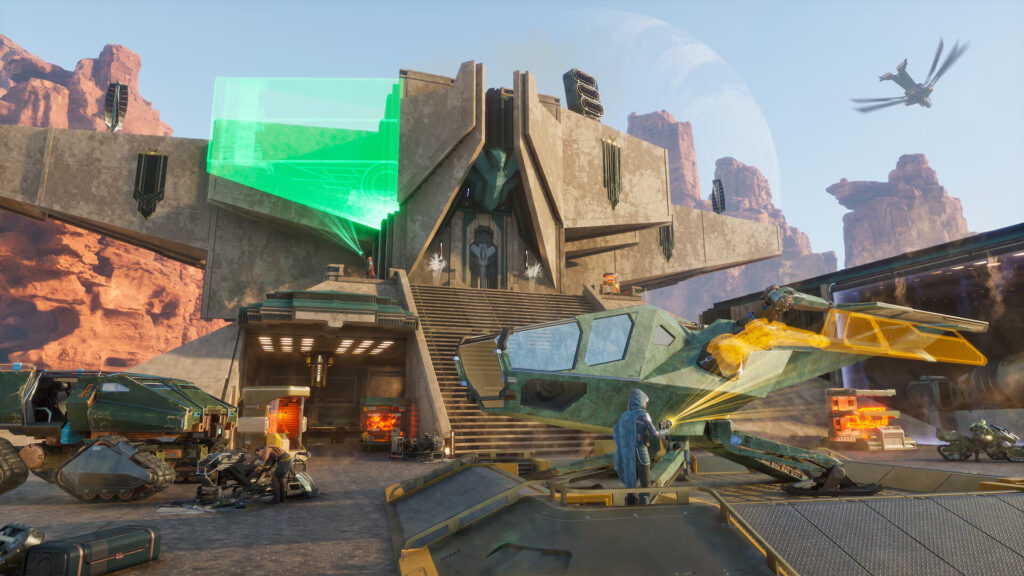
Funcom has spent the past year filling out Arrakis, and returning players will find a noticeably busier map. The new locations added since launch are Smuggler’s Run, Blushing Caverns, The Broodworks, Wreck of Tyche, The Old Quarry, Ruins of Tsimpo, and Wind Pass. On top of that, there are six new Imperial Testing Stations, each with its own boss fight and escalating difficulty, and five of them are repeatable runs you can reach straight from the overland map, solo or in a group. Dynamic encounters and new contracts round things out, so there’s a lot more reason to leave your base than there used to be.
The Deep Desert: The Map That Never Stays the Same
Cross the Shield Wall and you reach the Deep Desert, the endgame part of the Dune: Awakening map. It’s dangerous, but it’s also where the richest spice blows, huge shipwrecks, and buried Testing Stations are waiting. The catch is the weekly Coriolis storm, which destroys everything in the Deep Desert and reshuffles most of its layout, so much of what you mapped out last week won’t be where you left it. The points of interest along the Shield Wall in Rows A and B are the exception, since those stay fixed through the reset.
As of Update 1.5, the Deep Desert runs as both a PvE and a PvP instance on every official World, and you pick which one you enter from the overland map. The PvP instance is back to launch conditions, apart from the Shield Wall rows A and B, which stay PvE, and it pays 2.5 times the yield on mining and harvesting to balance the risk. In the new single-player mode, the Coriolis storm is still dangerous, but it no longer instantly kills you and wipes the Deep Desert, so solo players get to keep their progress there.
Arrakeen and Harko Village
Arrakeen and Harko Village are the two big settlements on the Dune: Awakening map: Arrakeen is the Atreides capital, while Harko Village serves as the Harkonnens’ headquarters. They’re where you meet story characters, trade, and handle faction business for the Landsraad, which Update 1.5 rebuilt around repeatable missions. Both hubs also now offer full character re-customization, so if you want to change your look after the console launch, that’s where to go.
Fog of War and Custom Map Rules
Your map starts covered in fog of war, and exploring is how you reveal it. In single-player, Funcom has also tweaked the Cartographer skill so it now extends your fog of war reveal radius, which makes solo exploration a lot less tedious.
Single-player and self-hosted servers also give you control over how the map behaves. You can adjust sandstorms, turn Hagga Basin into a full PvP or full PvE zone with the security zone settings, and control whether sandworms and the Coriolis storm spawn automatically. On rented private servers, the options you get depend on your provider.
What’s Next: The Polar Cap
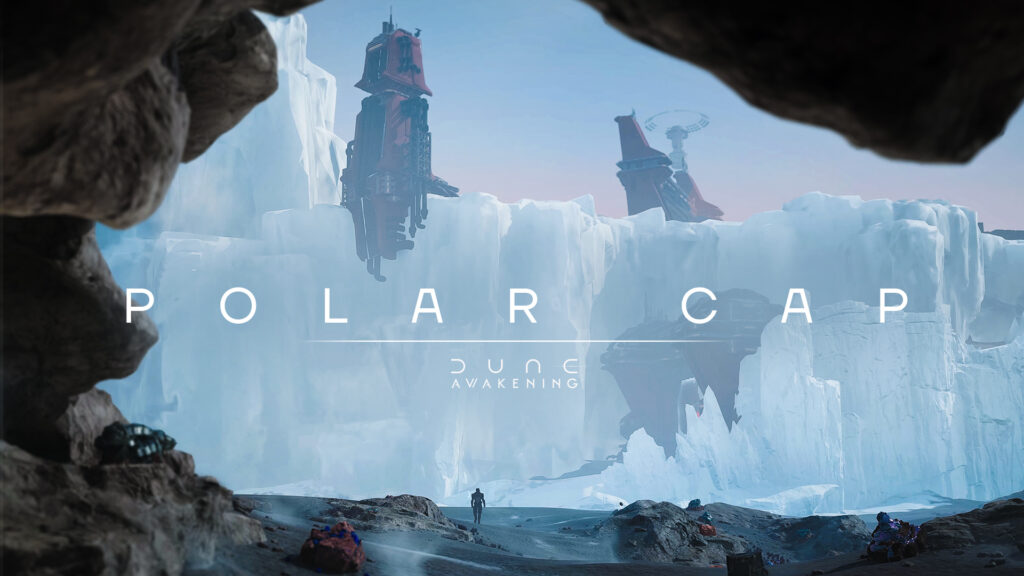
The biggest upcoming change to the Dune: Awakening map is the Polar Cap. Funcom originally hoped to release it alongside Update 1.4 and the Water Wars DLC, but pushed it back to focus on game systems and endgame feedback. It’s now planned as a free update later this year, and Funcom describes it as a sizeable survival map with an icy biome, new survival mechanics, new locations, new resources, new loot, new craftables, and its own standalone storyline. In other words, after a year of fighting the heat of Hagga Basin, you’ll soon have to learn how to survive the cold.
Is the Dune: Awakening Map Worth Exploring Now?
Absolutely. Between a fully PvE Hagga Basin on official servers, a Deep Desert you can choose to enter without PvP, seven new locations, six new Testing Stations, and a solo mode that doesn’t punish you for exploring, the Dune: Awakening map has never been friendlier to newcomers. If you’re just getting started, our guide to every Dune: Awakening character creation choice helps you set up your Sleeper, and our full Dune: Awakening review covers everything the game offers after the console launch.
Keep the adventure going! Check out more Gaming News on Gamersuniverse.