
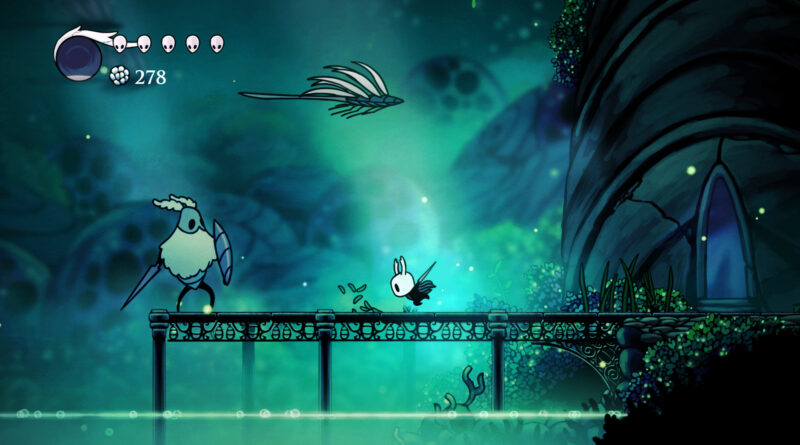
Hollow Knight Lore Explained: The Pale King, the Radiance, the Vessels and Every Ending
Almost ten years after its release, Hollow Knight is still one of the most beloved games of its generation. It arrived on Nintendo Switch 2, PS5 and Xbox Series X|S in February 2026, and with Hollow Knight: Silksong’s free Sea of Sorrow expansion still on the horizon, plenty of players are going back to Hallownest to understand where Hornet’s story began. Team Cherry tells its story through fragments, so here is the full Hollow Knight lore explained in one place: who the Pale King and the Radiance are, how the Infection started, what the Vessels and the Dreamers did, the Godmaster content and every ending, and what it all means for Silksong.
Already finished the sequel? Read our Silksong ending explained next, which picks up the story of Hornet, the Weavers and Grand Mother Silk. If you love games that hide their stories in item descriptions and ruins, our Dark Souls endings explained and Bloodborne lore deep-dive are waiting too.
📜 A Note on Sources and Spoilers: This article spoils the full story of Hollow Knight, including all four free expansions and every ending, plus the ending of Silksong. Hollow Knight never spells out its story directly, so we stick to what the game establishes through dialogue, Dream Nail thoughts, Hunter’s Journal entries, lore tablets and cutscenes, plus statements from Team Cherry and the official manual. Where the community has to interpret the clues, we say so, and fan theories are clearly marked as speculation.
🧾 Quick Facts: Hollow Knight at a Glance
- Game: Hollow Knight by Australian studio Team Cherry, released for Windows on February 24, 2017, later on Switch (2018), PS4 and Xbox One (2018) and on Switch 2, PS5 and Xbox Series X|S (February 5, 2026)
- Free expansions: Hidden Dreams (August 2017), The Grimm Troupe (October 2017), Lifeblood (April 2018) and Godmaster (August 2018)
- Setting: Hallownest, a fallen underground kingdom of bugs beneath the town of Dirtmouth
- Protagonist: the Knight, a nameless, genderless Vessel born of the Void
- Key figures: the Pale King, the White Lady, the Radiance, the Hollow Knight, Hornet and the three Dreamers
- Endings: The Hollow Knight, Sealed Siblings, Dream No More, Embrace the Void (with a Delicate Flower variant) and the bonus scene Passing of the Age
- Sequel: Hollow Knight: Silksong (2025), starring Hornet
🐛 Before Hallownest: The Radiance and the Moth Tribe
Long before there was a kingdom, the land was home to bugs that lived largely by instinct. One of the powers watching over them was the Radiance, a higher being of light. The Moth Tribe was born from her light and worshipped her. Deep below, at the bottom of what would later be called the Abyss, an ancient civilisation worshipped something very different: the Void, a living darkness. The Radiance calls the Void her ancient enemy in her Dream Nail thoughts, and that rivalry between light and darkness is the backbone of the entire game.
Almost everything we know about the Radiance’s past comes from the Seer, the last surviving member of the Moth Tribe, who lives in the Resting Grounds and hands the Knight the Dream Nail. Tending graves and guiding the Knight, she explains, is her penance for the crimes of her people.
👑 Who Is the Pale King? The Wyrm Who Built a Kingdom
The answer to “who is the Pale King” starts with a giant worm. The Pale King was once a Wyrm, an ancient higher being that burrowed across the wastes and came to die in what is now Kingdom’s Edge. But for a being like that, death was a transformation. The old bug Bardoon describes the place as the Wyrm’s grave and hints that the kingdom itself was born from that event. The enormous Cast-Off Shell in Kingdom’s Edge, with a pale broken egg inside, is the Wyrm’s discarded body. From it emerged the Pale King, who reduced his form to the size of the bugs around him.
The Pale King did something no one before him had done: he expanded the minds of the local bugs and gave them sapience. In return, they devoted themselves to him, and he promised them a kingdom that would last forever. That kingdom was Hallownest. It grew into a civilisation with the City of Tears, the Stagways, the trams and Hallownest Seals on nearly every building. The king’s foresight even convinced the cautious Mushroom Clan to accept his rule. He married the White Lady, another higher being, a plant-like “root” who became Queen of Hallownest.
The bugs worshipped their reclusive ruler through King’s Idols and believed he had created their world. The Moth Tribe did something even more fateful: they turned their backs on the Radiance and worshipped the Pale King instead, until their old goddess was all but forgotten.
☀️ What Is the Infection in Hollow Knight?
A god can be forgotten, but not entirely. Traces of the Radiance survived, such as the statue at Hallownest’s Crown, and during the kingdom’s golden age her memory began to spread. Soon all of Hallownest was dreaming of a blazing light. The Pale King and his subjects resisted, and that resistance is what turned her influence into the Infection. A developer note left in the game files states it plainly: the bugs resisted her memory and power, and it started to manifest as the Infection.
The Infection is not a normal disease. According to the Hunter’s Journal, its victims first fell into a deep slumber and then woke up with broken minds. The infection made bugs stronger and braver but enslaved their wills, and even reanimated corpses, which is why Hallownest’s ruins are full of husks with glowing orange eyes. Bardoon sums up the Radiance’s offer: union with all other minds, but at the price of a mind bereft of thought. In other words, the Radiance does not want to destroy Hallownest’s bugs. She wants them to be hers again.
Hallownest tried everything to stop the plague, from rituals and prayers to its legendary protectors, but even the Five Great Knights could not fight a formless enemy that lived in dreams. The Pale King needed something that could not dream at all.
🕳️ The Vessels: Born of God and Void
The Pale King’s solution was as brilliant as it was cruel. He went down into the Abyss, studied the Void, and used it to create the Vessels: the children of the Pale King and the White Lady, born at the bottom of the Abyss with Void inside their shells. Team Cherry has confirmed they are genderless. The idea was simple. A being with no thoughts and no will could hold the Radiance inside itself without being corrupted. The Pale King’s words in the Knight’s birthplace memory make the goal painfully clear: “No mind to think. No will to break.” He also states that the Vessels were born of God and Void, and the whole sequence opens with his motto, that no cost was too great.
The cost was enormous. Countless Vessels were born and judged imperfect. Their discarded shells fill the Abyss, where the Siblings, the shades of the dead Vessels, still drift. Only one was chosen as pure: the Hollow Knight. The Pale King led this Vessel out of the Abyss and sealed the entrance behind him, a seal that can only be opened with the King’s Brand. Another, smaller Vessel watched them leave and fell back into the dark. That Vessel was the Knight, the player character. At some point the Knight and a few other siblings still escaped, and the Knight wandered far beyond Hallownest, losing its memories along the way.
⚔️ Who Is the Hollow Knight? The Pure Vessel and Its Flaw
The Hollow Knight was raised and trained to prime form, then sealed with the Radiance inside the Black Egg in the Temple of the Black Egg beneath Dirtmouth. The City of Tears still honours this sacrifice with a memorial fountain. For a while, the plan seemed to work.
But the Vessel was not as empty as everyone believed. The White Lady says its strength was ill-judged and that it was tarnished by an idea instilled. The game never states what that idea was. A hidden memory at the end of the Path of Pain in the White Palace shows the Pale King with the young Hollow Knight, and most players read it as the source of the flaw: the Vessel had formed a bond with its father. Something that can love can also be reached. Slowly, the Radiance’s light leaked out again, the Infection returned, and Hallownest fell.
Interpretation: whether the “idea instilled” is love, hope or simple attachment is not confirmed. The Path of Pain memory is the strongest clue, but the exact meaning is left to the player.
😴 The Three Dreamers: Monomon, Lurien and Herrah
Sealing the Hollow Knight inside the Black Egg was not enough on its own. Three powerful bugs agreed to fall into an eternal sleep and become living seals on the Temple’s door. These are the Dreamers, and the Knight has to find and kill all three to reach the Hollow Knight:
- Monomon the Teacher: Hallownest’s chief researcher, who sleeps in the Teacher’s Archives in Fog Canyon. Her Dream Nail thoughts suggest she has come to want the Seals broken. She gave her mask to her student Quirrel, the friendly explorer the Knight meets throughout the game, and later called him back to Hallownest to undo that protection.
- Lurien the Watcher: the guardian of the City of Tears, sleeping atop the Watcher’s Spire behind his Watcher Knights. He became a Dreamer out of loyalty to the Pale King and still wants the bonds to remain.
- Herrah the Beast: the Weaver queen of the Spider Tribe of Deepnest, who never accepted the Pale King’s rule. She only agreed to become a Dreamer on one condition: the Pale King had to give her a child.
That child is Hornet. Because she shares a father with the Vessels, she is the half-sister of both the Hollow Knight and the Knight. Herrah had little time with her daughter before going into her eternal sleep, and Hornet grew up in Deepnest. In Hollow Knight, she acts as the protector of the ruined kingdom. She tests the Knight in Greenpath, learns the truth about its origin, and guards the Cast-Off Shell in Kingdom’s Edge, where the King’s Brand waits for a worthy Vessel.
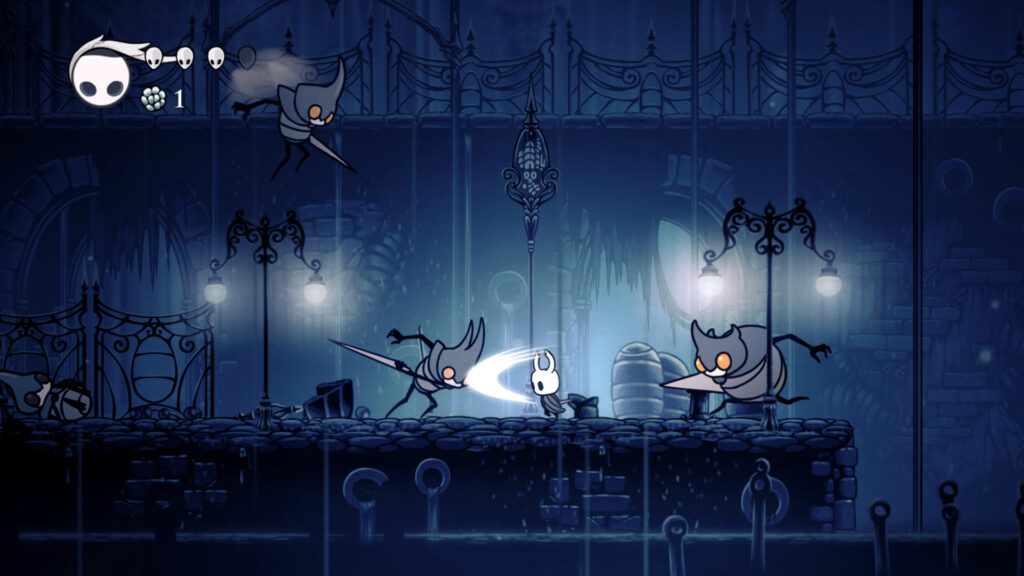
Hallownest’s once-great streets are now haunted by bugs driven mad by the Infection.
🏰 Where Did the Pale King Go? The White Palace and the White Lady
When the Infection returned, the Pale King and his entire White Palace simply vanished. The official game manual says the reclusive king abandoned his subjects and went into hiding. Relic Seeker Lemm notes that there are no signs of conflict where the palace once stood, as if it had disappeared into thin air. The Knight can only reach it in the dream realm, by using the Awoken Dream Nail on a Kingsmould in the Palace Grounds. There, the Pale King sits dead on his throne. Striking his corpse drops his half of the Kingsoul charm.
The other half belongs to the White Lady. She has bound herself in a cocoon-like dwelling in the Queen’s Gardens, guarded by the corpse of Dryya, one of the Five Great Knights. The binding is her own choice. She admits to feeling shame for her part in the deed, which most players connect to the countless children sacrificed in the Abyss. She senses the Hollow Knight weakening through her roots and gives the Knight her half of the Kingsoul, asking it to replace its failing sibling.
If the Knight unites both halves and returns to its birthplace in the Abyss, it remembers its past and the Kingsoul turns into the Void Heart, a charm that unifies the Void under the Knight’s will. This is the key to the game’s better endings.
🛡️ The Five Great Knights and Other Lost Guardians
Hallownest’s most legendary warriors were the Five Great Knights, who once stood beneath the king’s throne. Their names and faces seem to have been erased from history, but the game lets the Knight piece them together:
- Ogrim: the loyal and cheerful Dung Defender in the Royal Waterways, one of only two Great Knights still alive.
- Ze’mer: a knight from distant lands who brought the Delicate Flower to Hallownest. She is the Grey Mourner in the Resting Grounds, grieving for her Mantis lover.
- Dryya: the White Lady’s fierce guard, who died at her post in the Queen’s Gardens.
- Isma: found lifeless in her grove in the Royal Waterways, the source of Isma’s Tear, which grants immunity to acid.
- Hegemol: the only one whose fate is largely unknown.
🗺️ The Knight’s Journey: Why Did the Knight Return to Hallownest?
The game opens long after the fall, when the Radiance’s power has started to crack the Hollow Knight’s shell and the Infection is spreading again. The Knight arrives at Dirtmouth with only an old nail and no memories. The Dreamers themselves wonder what drew it back: a call from the Vessel, or from the captive light. The game never answers this question for certain.
In the Resting Grounds, the Dreamers try to trap the Knight in a dream, and the Seer gives it the Dream Nail to cut its way out. With it, the Knight can enter the dreams of each Dreamer and break their seals. Every Dreamer that dies makes the Infection stronger, turning the Forgotten Crossroads into the Infected Crossroads. Once all three seals are gone, the Temple of the Black Egg opens, and the Knight faces its infected sibling.
🎭 The Grimm Troupe: A Ritual From the Nightmare Realm
Not every story in Hallownest is about the Infection. In The Grimm Troupe expansion, the Knight can light the Nightmare Lantern in the Howling Cliffs and summon a travelling circus to Dirtmouth. Its leader, Troupe Master Grimm, comes from the Nightmare Realm. He and his troupe travel to dying lands to gather Nightmare Flames and feed the sinister Nightmare’s Heart. The Knight carries the Grimmchild, which absorbs the flames and grows, until the ritual ends with a battle against the Nightmare King Grimm, who is then reborn through the Grimmchild. Alternatively, the Knight can side with the troupe member Brumm and banish the troupe from Hallownest.
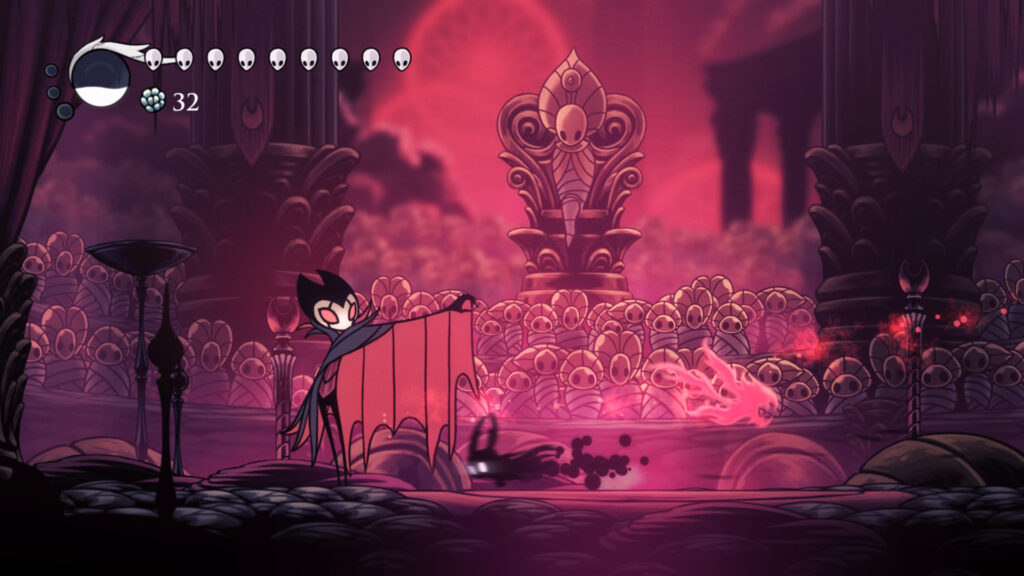
Troupe Master Grimm’s ritual adds a second, darker myth on top of Hallownest’s story.
🏛️ Godmaster Lore: The Godseeker and Godhome
The final expansion, Godmaster, adds the last piece of the puzzle. The Godseeker comes from a faraway place called the Land of Storms, whose own gods died or abandoned her people. Drawn by the lingering power of the Pale King, she arrives in Hallownest searching for a “God of Gods” to worship. In her dream world, Godhome, the Knight fights Hallownest’s strongest beings as attuned gods in a series of Pantheons.
Two figures stand out. The Pure Vessel is the Hollow Knight as it was before the Infection, at the height of its strength. And at the peak of the Pantheon of Hallownest waits Absolute Radiance, the Radiance in her perfect form. What the Godseeker does not realise is that by luring the Knight into Godhome, she is also letting the Void in.
🔚 Hollow Knight Endings Explained
Hollow Knight has three main endings in the base game, two more in Godmaster and one bonus scene:
- The Hollow Knight: without the Void Heart, the Knight defeats its sibling, absorbs the Infection and takes its place inside the Black Egg. The cycle simply starts again with a new Vessel.
- Sealed Siblings: with the Void Heart, Hornet joins the fight and restrains the Hollow Knight. If the Knight does not use the Dream Nail in time, it kills the Hollow Knight anyway and is sealed in its place, and this time Hornet is sealed as well, her face appearing on the door like a new Dreamer.
- Dream No More: while Hornet holds the Hollow Knight down, the Knight uses the Awoken Dream Nail to enter the Radiance’s dream and fight her directly. At the end, the Hollow Knight returns as a Shade, rips open her face, and the Void drags the Radiance down. The Infection ends, the Black Egg disappears, and Hornet wakes to find only the Knight’s broken shell. The Siblings in the Abyss finally sink to rest.
- Embrace the Void (Godmaster): after defeating Absolute Radiance at the top of the Pantheon of Hallownest, the Knight’s shell splits open and a towering Void entity tears the Radiance apart. Void rains down on Godhome, and black tendrils burst from the Godseeker’s real body in the Junk Pit. If the Black Egg has been opened, Hornet watches the Infection’s vines wither as a chained figure, widely believed to be the Hollow Knight, staggers out of the Temple.
- Delicate Flower variant: if the Knight gave the Godseeker a Delicate Flower, the flower repels the Void, leaving only the flower behind with one darkened petal.
- Passing of the Age: not a separate ending but a bonus scene after any ending if the Knight completed Mister Mushroom’s quest. He flies off into the sky, followed by the words “To Be Continued”.
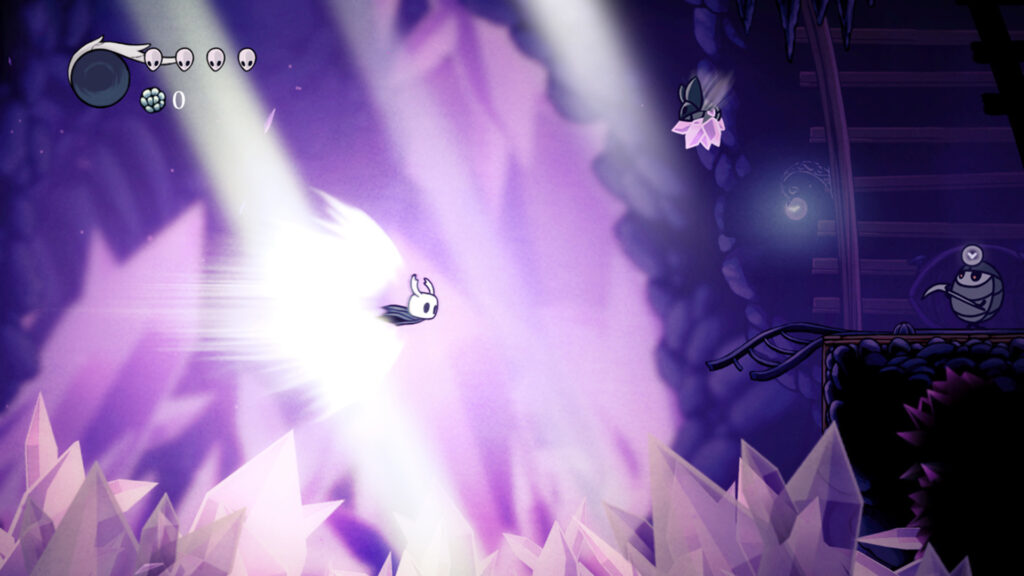
Every corner of Hallownest hides a clue, and the full story only comes together once all its regions have been explored.
✅ Which Hollow Knight Ending Is Canon?
For years, the answer was simple: Team Cherry said early on that all endings were equally canonical and that there was no single true ending. Silksong has changed the conversation. In its final ending, Sister of the Void, the Knight appears in the Void together with its siblings to rescue Hornet and Lace, and Hornet sees flashes of the Knight’s ascended form, the same Void entity from the Godmaster endings. Hornet is also free and travelling in Pharloom, which would not fit an ending where she is sealed in the Black Egg.
Interpretation: most of the community now reads the endings where the Radiance is destroyed, especially Embrace the Void, as the ones Silksong builds on. Team Cherry has not officially declared a canon ending, so treat this as the strongest reading of the evidence rather than a confirmed fact.
🔗 How Hollow Knight Connects to Silksong
- Hornet’s bloodline: Herrah’s bargain with the Pale King gave Hornet Weaver blood, which is exactly why she is kidnapped and taken to Pharloom in Silksong.
- The Weavers: the Weavers’ Den in Deepnest belonged to Weavers who fled Pharloom, a history Silksong finally explains.
- The White Lady and the Delicate Flower: both return in Silksong’s Red Memory, where the White Lady gives Hornet the Everbloom to resist the Void.
- The Void: the same force that filled the Vessels becomes the great threat of Silksong’s third act.
- Mister Mushroom: the “To Be Continued” from Passing of the Age pays off with his return in Silksong.
🧩 Popular Hollow Knight Theories (Speculation)
Everything in this section goes beyond what the game confirms.
- Who called the Knight back? Some fans believe the Radiance lured the Knight home to break the seals, others think the Hollow Knight itself called for help. The Dreamers raise both options, and the game never decides.
- Did the Pale King flee or sacrifice himself? The manual says he went into hiding, but many players believe he died trying to protect the kingdom or to hide his own failure. His corpse in the White Palace confirms only that he is dead, not how he died.
- Is the Void a higher being? The Void behaves like a living force with a will of its own, and the Godmaster endings show it growing far more powerful than anyone expected. What it truly is remains one of the biggest open questions.
❓ Quick Questions About the Hollow Knight Lore
Who is the main villain of Hollow Knight?
The Radiance, a forgotten god of light whose influence causes the Infection.
Is the Knight the Hollow Knight?
No. The Hollow Knight is the Vessel chosen to seal the Radiance. The Knight, the player character, is one of its discarded siblings.
Is Hornet related to the Knight?
Yes. Hornet and the Knight share a father, the Pale King, making them half-siblings. Hornet’s mother is Herrah the Beast, while the Vessels are children of the White Lady.
What is the true ending of Hollow Knight?
Team Cherry originally called all endings equally canonical. In terms of story, Dream No More and the Godmaster ending Embrace the Void are the most complete, since they destroy the Radiance and end the Infection.
Do I need to play Hollow Knight before Silksong?
No, but knowing the Pale King, the White Lady, Herrah and the Vessels makes Silksong’s story, and especially its ending, far more meaningful.
Final Words
Hollow Knight is the story of a king who promised eternity and paid for it with his own children. A forgotten god refused to stay forgotten, a whole kingdom fell into her dream, and in the end it took the smallest discarded Vessel to finish what the Pale King could not. That is why Hallownest still feels so alive almost a decade later, and why Silksong and Sea of Sorrow have so much history to build on. Want to keep exploring? Read how Hollow Knight: Silksong broke the internet or our complete Metroidvania genre guide.
Keep the adventure going! Check out more Gaming News on Gamersuniverse.
Picture Source: Team Cherry (Steam)