Every Dark Souls Ending Explained: Dark Souls, Dark Souls II, Dark Souls III and All Their DLCs
Every FromSoftware game ends with the same quiet question dressed up in different armor: do you keep the world exactly as it is, even if “as it is” means slow decay, or do you let it fall apart and become something new? No series asks that question more directly, or more often, than Dark Souls. Across three mainline games and four major expansions, the player is handed the exact same choice again and again, at the exact same kind of bonfire, with the exact same flame guttering in front of them, and every single time the answer changes what kind of world gets left behind.
That repetition isn’t a lack of imagination. It’s the entire point. This is our complete breakdown of every ending across Dark Souls, Dark Souls II and Dark Souls III, including how Artorias of the Abyss, the Lost Crowns trilogy, Ashes of Ariandel and The Ringed City quietly rewrite what “linking the fire” actually means by the time the credits roll on the last game. We’re covering exact requirements, what happens in each ending, and how they all connect into one long argument about fire, decay, and who gets to decide when a dying world is allowed to die.
⚠️ Full Spoiler Warning ⚠️ This article covers the complete endings of Dark Souls, Dark Souls II and Dark Souls III, along with every piece of downloadable content released for all three games. If you still have any of these on your backlog, bookmark this piece, go link a few flames yourself first, and come back when you’re ready to compare notes.
🔥 Quick Facts Before We Start
- Developer, FromSoftware, directed by Hidetaka Miyazaki (Dark Souls, Dark Souls III) and Tomohiro Shibuya with Yui Tanimura (Dark Souls II)
- Publisher, Bandai Namco Entertainment (From Software self-published the original Japanese release of Dark Souls)
- Releases, Dark Souls (September 2011), Dark Souls II (March 2014), Dark Souls III (April 2016)
- Major expansions, Artorias of the Abyss (Dark Souls, 2012), the Lost Crowns trilogy: Crown of the Sunken King, Crown of the Old Iron King and Crown of the Ivory King (Dark Souls II, 2014), Ashes of Ariandel and The Ringed City (Dark Souls III, 2016 to 2017)
- Setting, Lordran, Drangleic and Lothric, three different kingdoms built around the same dying source of light, the First Flame
- Core choice, at the very end of every mainline game, prolong the Age of Fire by feeding the flame, or let it fade and usher in the Age of Dark
🕯️ Why “Linking the Fire” Is the Only Story Dark Souls Ever Tells
Before any of the individual endings make sense, it helps to remember what the First Flame actually is. In the beginning, according to the opening narration of the original Dark Souls, the world was grey, fog, ancient trees and everlasting dragons wrapped in stone-like scales. Then fire appeared, and with fire came disparity, heat and cold, life and death, and, crucially, light and dark. Several beings found Lord Souls at the source of that fire: Gwyn found the Lord Soul that made him Lord of Sunlight, Nito became the First of the Dead, the Witch of Izalith and her daughters used theirs to duplicate flame itself, and a nameless, unremarkable Furtive Pygmy found the smallest, most overlooked Lord Soul of all, the Dark Soul, which he splintered and shared among what would become humanity.
Gwyn and his fellow lords used their power to defeat the everlasting dragons and end the Age of Ancients, ushering in the Age of Fire. But fire, like anything else, eventually gutters out. Rather than let it fade naturally, Gwyn sacrificed himself, feeding his own Lord Soul into the First Flame to extend it, becoming the first Lord of Cinder and setting a precedent that every mainline Dark Souls game builds its entire final act around: someone, eventually, has to decide whether to repeat Gwyn’s sacrifice or let the Age of Fire finally end. That’s the choice every protagonist across all three games is walking toward from the very first bonfire they sit at, whether they realize it or not.
Not every attempt to prolong that fire went as well as Gwyn’s. The Witch of Izalith, one of the original Lord Soul bearers, tried to duplicate the First Flame outright using her own Lord Soul as a template rather than sacrifice it, hoping to create a second, renewable source of fire for her people. The experiment collapsed into an uncontrollable Flame of Chaos that consumed Izalith and several of her daughters, warping them into the monstrous, wall-sized Bed of Chaos and giving unintentional birth to demons as an entirely new form of life. It’s the first and clearest warning the series ever gives that fire isn’t something that can simply be manufactured on demand, only ever borrowed, spent, and eventually paid back with someone’s soul.
⚔️ Dark Souls (2011): Link the Fire, or Become the Dark Lord
The original Dark Souls plays this choice completely straight, with exactly two outcomes and no hidden third option. After collecting the four Lord Souls, taken from Seath the Scaleless, the Four Kings, Nito and the Bed of Chaos, and placing them in the Lordvessel, the Chosen Undead descends to the Kiln of the First Flame to face Gwyn, Lord of Cinder himself, a broken, hollowed husk of the god he once was, still weakly guarding an ember that’s almost gone out entirely. Beating him is less a triumphant final boss fight and more a mercy killing of something that stopped being a person a long time ago.
What happens next depends entirely on which of the two Primordial Serpents you’ve been listening to, and it’s worth noting Kaathe only appears at all if the Lordvessel hasn’t already been handed over to Frampt, so the two paths do close off against each other well before the final fight. Kingseeker Frampt, the serpent who guides most players through their first playthrough, wants the Age of Fire prolonged and encourages the Chosen Undead to repeat Gwyn’s sacrifice. His rival, Darkstalker Kaathe, tells a very different version of events: that the gods have been suppressing the truth about humanity’s Dark Soul out of fear, and that the Age of Fire was never meant to be extended forever in the first place. Kaathe can be found in the Abyss beneath New Londo Ruins, reachable once the ruins have been drained and the Four Kings defeated, and speaking with him opens up the Darkwraith covenant and frames the alternate path as a deliberate rebellion against the gods’ version of history rather than a simple failure to act.
Mechanically, the choice at the Kiln itself is simple. Approach the bonfire-like flame after Gwyn falls and interact with it to Link the Fire, and the Chosen Undead sacrifices themselves exactly as Gwyn once did, prolonging the Age of Fire for an unknown but finite length of time, an outcome the game’s own flavor text frames as only ever temporary, since one day the flame is destined to fade again regardless. Walk away from the flame instead, and the Chosen Undead becomes the Dark Lord, letting the fire finally die out and the Age of Dark, the age of men, begin. It’s a short, almost anticlimactic final choice for a game built entirely around reaching it, and that anticlimax is deliberate. Dark Souls never wants the decision to feel triumphant either way, because both outcomes are just different flavors of an ending humanity didn’t really get to choose the terms of.
🐺 Artorias of the Abyss: Where the Abyss Actually Came From
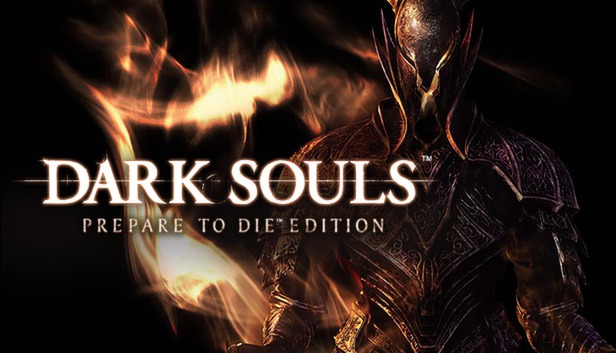
Dark Souls’ one expansion, Artorias of the Abyss, doesn’t add a third ending, but it does something arguably more important for the series going forward: it explains where the Abyss, the corrupting force behind the Dark Lord path and most of the trilogy’s darkest lore, actually came from. Using an item called the Broken Pendant, players are pulled centuries into the past to Oolacile, a kingdom of sorcerers whose scholars dug up and tortured a primeval, ancient humanoid known as Manus in pursuit of forbidden knowledge.
That torture backfired catastrophically. Manus’s suppressed humanity erupted outward as the Abyss itself, a corrupting black void that consumed Oolacile from the inside out. Gwyn dispatched his finest knight, Artorias the Abysswalker, along with his wolf companion Sif, to put a stop to it, but Artorias lacked the Dark Soul-derived resistance humans have and became corrupted by the very Abyss he was sent to fight, forcing the player to put down what’s left of him generations later. Not everyone in Oolacile is lost, though: the mushroom-like guardian Elizabeth, wet nurse to the kingdom’s Princess Dusk, survives the Abyss’s spread and is later remembered as a saint, her remains still turning up centuries afterward in Dark Souls III’s Farron Keep. Players eventually strike down both a possessed Artorias and, later, Manus himself in the “present,” severing the connection between Oolacile’s fall and the version of the Abyss still threatening Lordran generations later. It’s a short, self-contained story, but it retroactively explains why New Londo was flooded to contain its own outbreak of the Abyss, and why Kaathe, a being tied to the primordial Dark Soul, has such a personal stake in how humanity’s story with fire and darkness eventually ends.
👑 Dark Souls II: A New Land, the Same Old Curse
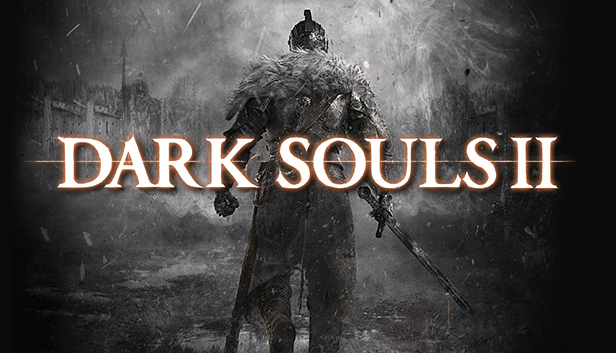
Dark Souls II moves the setting to the kingdom of Drangleic, generations and possibly an unknowable number of cycles after the events of the first game, following a nameless Undead simply called the Bearer of the Curse. Drangleic’s king, Vendrick, spent his reign hoarding giant souls in an attempt to build an army strong enough to resist the darkness he could feel encroaching, only to be slowly hollowed and broken by his own queen, Nashandra, who is eventually revealed to be a fragment of Manus’s shattered soul given human form, manipulating Drangleic from the shadows the same way other fragments manipulate other kingdoms across the game’s DLC.
After defeating Nashandra at the Throne of Want, the base game offers the same binary its predecessor did: sit on the throne and either extend the Age of Fire by linking it, or let the flame fade and allow Drangleic to slide into Hollow-ruled darkness, with Drangleic’s own item flavor text framing either choice as temporary regardless, since another king will only rise to replace the current one until that kingdom, too, eventually falls into ruin, a much more openly cynical framing of the exact same choice Dark Souls presented as almost noble the first time around.
Vendrick’s own downfall is arguably Dark Souls II’s saddest thread. Years before the game begins, he led Drangleic to war against a race of giants after their homeland was destroyed by fire and they retaliated by invading from across the sea, and he ultimately triumphed by collecting the souls of fallen giant royalty and turning the giants’ own strength against them. That victory curdled into obsession, and by the time players find him, Vendrick has spent centuries hoarding still more giant souls in the Undead Crypt, terrified of a darkness he could feel closing in on Drangleic but never able to actually name it, while Nashandra, revealed as a fragment of Manus wearing the face of his queen, quietly encouraged that paranoia from right beside his throne the entire time.
Patched into later versions of the game, and fully integrated in Dark Souls II: Scholar of the First Sin, is a third path built around Aldia, Scholar of the First Sin, an ancient, obsessive scholar who spent his life researching the curse and, unlike Vendrick, refused to simply accept it. Players who seek Aldia out at his handful of bonfires scattered through the base game, gather enough of Drangleic’s giant souls to weaken Vendrick, and defeat him in the Undead Crypt can face Aldia himself as an optional final boss beyond the Throne of Want. Defeating him unlocks the option to walk away from the throne entirely rather than choose between fire and dark, with the Bearer of the Curse rejecting both available futures to go looking for some other, more permanent way to end the curse instead, the trilogy’s first real hint that the fire-or-dark binary itself might be the actual trap.
❄️ The Lost Crowns: Three DLCs, Three Fragments of the Same Broken God
Dark Souls II’s three expansions, collectively known as the Lost Crowns trilogy, aren’t just extra dungeons, they’re the reason Nashandra’s manipulation of Drangleic makes sense as anything other than an isolated event. Crown of the Sunken King sends players to Shulva, a buried, Aztec-inspired city built to contain and worship Sinh, an ancient poison-breathing dragon that a rival cult ends up accidentally unleashing. Crown of the Old Iron King explores an ash-choked tower guarded by the Fume Knight, in life Sir Raime, a Drangleic knight banished for openly criticizing King Vendrick, who later found his way into the tower’s depths and was corrupted into a champion of Nadalia, Bride of Ash, a Child of Dark hidden within it, alongside the tragic Sir Alonne, a foreign general once trusted above all others by the Old Iron King himself, whose knights met their end defending the same volcanic throne. Crown of the Ivory King closes the trilogy in the frozen ruins of Eleum Loyce, where a knight of the fallen kingdom of Forossa rose to become the Ivory King, sacrificing his own humanity in a failed attempt to permanently seal away the Primal, an ancient elemental threat older than the fire itself, and dying in that effort as the corrupted, immense Burnt Ivory King.
The connective thread running under all three is less a single confirmed villain than a single shape of tragedy repeating itself. Nashandra, named outright in the game’s own item descriptions as a fragment of Manus given human form, is the version of that tragedy players see up close in the base game, and Shulva, the Iron Keep and Eleum Loyce all echo the same basic pattern in their own way, a ruler or guardian chasing power, control or protection in ways that ultimately consume the very people and places they were trying to save. It’s the same core Dark Souls tragedy, told three more times in three very different frozen, burning or buried settings, deepening the world Vendrick’s court belongs to even where the DLCs stop short of drawing a direct, confirmed line back to Manus himself. Completing them does matter for the base game’s own ending, though: gathering the giant souls scattered across Drangleic, several of them tucked inside these very DLCs, is part of what makes it possible to weaken Vendrick enough to reach Aldia at all.
🕊️ Dark Souls III: Lothric and the Four Endings of the Ashen One
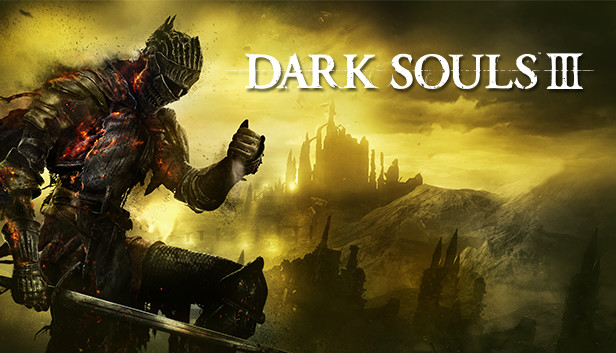
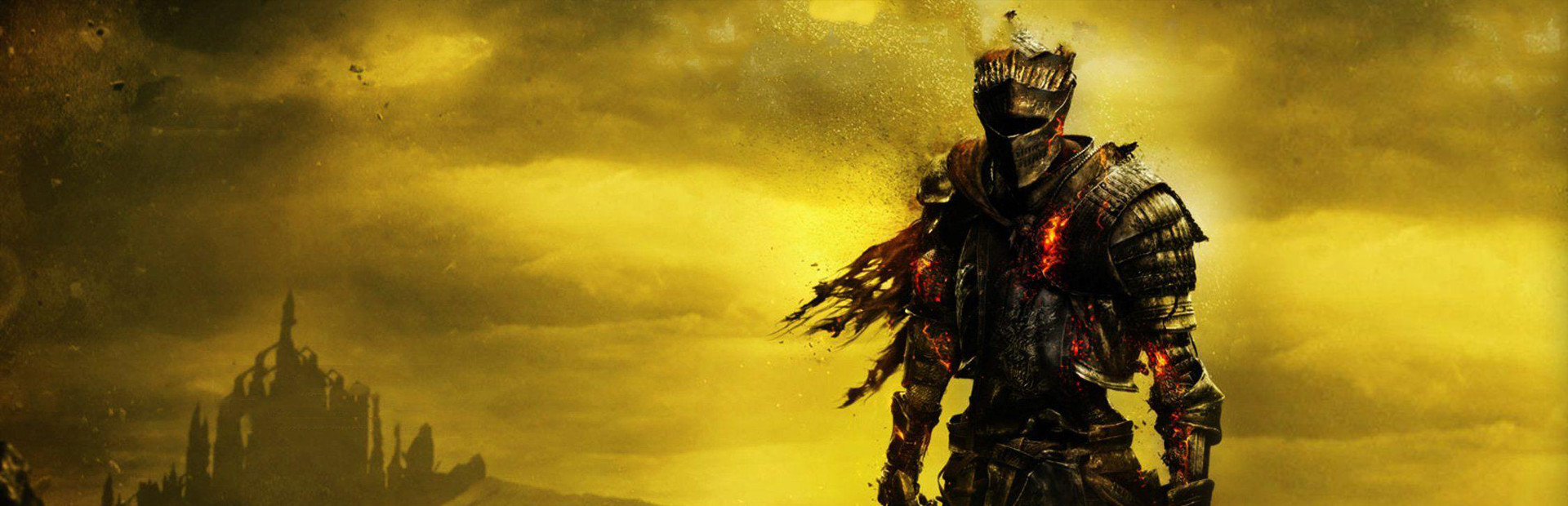
By the time Dark Souls III begins, the Age of Fire is on its absolute last legs. The kingdom of Lothric was built specifically to produce a Lord of Cinder capable of linking the flame one more time, but Prince Lothric refused the duty, and the bell that should have summoned the previous Lords of Cinder back to their thrones instead rang out as a call to arms for every Undead capable of hearing it, the player’s own Unkindled included. The entire game is effectively a manhunt to drag four unwilling former Lords of Cinder back to the Kiln so the fire can be linked one last time, whether they, or arguably the world itself, actually want that or not.
That framing pays off in what is, by trilogy standards, the most mechanically developed set of endings in the series. The four unwilling Lords of Cinder the Unkindled has to drag back to their thrones are the Abyss Watchers, a sworn brotherhood who fought their own encroaching corruption by endlessly slaughtering each other rather than let it spread further, Yhorm the Giant, the last king of the Profaned Capital, asked by its people to rule and protect them after his own ancestor had conquered it, who became a Lord of Cinder trying to extinguish the very Profaned Flame his kingdom had created, a sacrifice that failed to save the people who trusted him with it, Aldrich, Saint of the Deep, a once-holy figure who succumbed to a horrifying hunger for flesh and souls, and the twin princes Lothric and Lorian, who were bred from birth for exactly this duty and refused it anyway, one too frail to act and the other unwilling to link the fire without him. After tracking all four down, the Unkindled finally faces the Soul of Cinder, a composite echo of every Lord of Cinder who ever linked the flame before, at the Kiln itself. Beating that fight opens up four distinct outcomes, three of which have their own unique trophies or achievements.
- To Link the First Flame, the default ending, requiring nothing extra. Simply light the bonfire that appears after Soul of Cinder falls, and the Ashen One repeats Gwyn’s sacrifice one more time, extending an Age of Fire that, per the narration, may not have much extension left to give.
- The End of Fire, obtainable by finding the Eyes of a Fire Keeper behind the Untended Graves, returning them to Firelink Shrine’s own Fire Keeper, and then summoning her to the final bonfire after Soul of Cinder is defeated. She takes the flame into her own hands instead and lets it die out completely, plunging the world into permanent darkness, a bleak but deliberate ending that finally lets the Age of Fire end on someone else’s terms besides the gods’.
- A darker variant of that same ending, during the Fire Keeper’s fade-to-black moment, the player can instead attack and strike her down, seizing the last of the flame’s power directly rather than letting her extinguish it peacefully. It carries no separate trophy, but it’s widely read by the community as the bleakest of the game’s outcomes, the Ashen One choosing violence and personal power over the Fire Keeper’s own quiet act of mercy.
- The Usurpation of Fire, the trilogy’s strangest ending, unlocked through an extensive questline involving Yoel and Yuria of Londor and the wandering knight Anri of Astora. Accepting five of Yoel’s free level-ups, seeking out Anri across several of the game’s later areas without killing their companion Horace before Anri can learn what happened to him, and ultimately undergoing a private wedding ceremony in the Untended Graves leads to a version of the ending where, after lighting the flame, the Ashen One rejects both fire and darkness in favor of becoming the Lord of Hollows, an entirely new kind of ruler over the game’s countless mindless Hollows, married to Anri and answering to neither Age of Fire nor Age of Dark.
Where the first two games treated fire and dark as the only two available futures, Dark Souls III spends its entire endgame arguing that both options are running out of road, and the Usurpation of Fire ending exists specifically to give players a third, stranger kind of power that answers to neither.
🐦 Ashes of Ariandel: Painting a New World to Escape the Old One
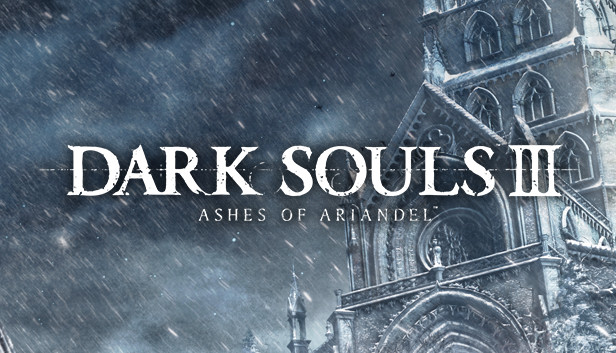
Dark Souls III’s first expansion, Ashes of Ariandel, sends the Ashen One into the Painted World of Ariandel, a pocket dimension created by magic paintings, the same kind of otherworldly refuge first introduced with the Painted World of Ariamis back in the original Dark Souls. Ariandel’s world is rotting from the inside, and its residents have split into two factions over what to do about it: one wants it burned away entirely so a young Painter under the world’s protection can paint an entirely fresh replacement, while the other, led by the icy, scythe-wielding Sister Friede, wants to protect the failing world exactly as it is, fearing what burning it away would actually cost the Painter herself.
Friede, revealed to be an elder sister figure connected to Yuria of Londor’s Sable Church, guards the ailing, self-flagellating Father Ariandel and commands loyal knights like the imposing Sir Vilhelm to keep outsiders from interfering. Defeating her and Ariandel together in the game’s climactic boss fight allows the world’s contained flame to reignite, finally letting the Painter get to work. Waiting nearby throughout the DLC is Slave Knight Gael, an old, weathered knight who arrived long before the player and has appointed himself the Painter’s quiet protector, aware that finishing her painting will require an ingredient far more dangerous than any pigment, the blood of the Dark Soul itself, a quest that becomes the entire premise of Dark Souls III’s second and final expansion.
🌆 The Ringed City: Where the World Actually Ends
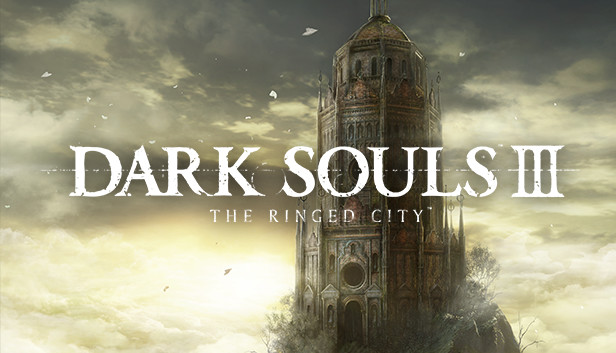
The Ringed City, Dark Souls III’s final expansion, takes players to the literal edge of the world, and the literal end of the timeline. Long ago, Gwyn gifted the pygmies, the original bearers of the Dark Soul, a magnificent walled city at the furthest edge of the world, along with his own youngest daughter, Filianore, presented as a bride but functioning as a hostage meant to keep the pygmies loyal and contained. Filianore eventually fell into an enchanted, unending sleep, using her own power to wrap the entire Ringed City in a bubble outside of normal time, shielding it from the effects of the First Flame’s fading for who knows how many additional ages while the rest of the world moved on without it.
By the time the Ashen One arrives, that bubble has finally started to fail. The Ringed City’s human population has succumbed to the same Hollowing rot plaguing everywhere else, its ruling Pygmy Lords, splintered descendants of the very Dark Soul the Age of Fire was built to suppress, sit isolated and paranoid in their own separate seats of power, and the city’s own enforcers, the towering Judicators and the sorcery-wielding Church Guardians, either lie dead or continue mindlessly executing orders from gods who left centuries ago. Guarding Filianore’s slumbering body directly is Darkeater Midir, an ancient dragon corrupted by prolonged exposure to the Dark, the single most powerful guardian the old gods ever left behind and one of the hardest optional bosses in the entire series.
Waiting at the very end of it all is Gael, having finally caught up to what he’s been chasing since Ariandel. Desperate for the Dark Soul the Painter needs, he devours the Pygmy Lords’ concentrated humanity one by one, and it corrupts him completely, transforming him into a bloated, monstrous husk consumed by the very power he spent a lifetime pursuing. Defeating him in the game’s true final boss fight lets the Ashen One claim his blood, now saturated with the Dark Soul of Man, and carry it back to the Painter so she can finally begin her work, closing Dark Souls III’s story on the quiet, faintly hopeful image of an entirely new world about to be born from the ashes of the old one, whether or not the flame back at Firelink ever gets linked again.
🔄 So… Which Ending Is Canon?
FromSoftware has never officially confirmed a canon ending for any of the three games, and given how directly Dark Souls III’s opening narration treats the entire premise as a cycle that’s already happened an unknowable number of times before, that ambiguity looks a lot more like a design choice than an oversight. New Game Plus in every entry drops players right back at the very beginning with no acknowledgment of which ending they chose, which lore researchers have long pointed to as evidence that the choice barely matters in the grand scheme the games are describing, the Age of Fire and Age of Dark are framed as an oscillating cycle regardless of any single protagonist’s decision, not a one-time fork in the road.
Director Hidetaka Miyazaki has come about as close as he ever does to breaking that silence when asked directly about Dark Souls III’s four endings, telling Kotaku there’s an ending he’d personally choose, while declining to say “which one is of prominence among the four endings.” Even there, he stops short of calling it canon, treating it as a personal preference rather than a definitive answer, which tracks with how he’s talked about Dark Souls’ storytelling philosophy more broadly: the fragments are there for players to assemble their own understanding from, not to be handed a single correct interpretation.
If there’s a “most narratively final” ending across the whole trilogy, most lore discussions land on The Ringed City’s conclusion, not because it overrides whatever choice a player makes back at Firelink Shrine, but because it’s the one moment in the entire series explicitly set at the true, literal end of the timeline, after every kingdom, every Lord and every DLC storyline has already played out. Everything else, fire linked or not, happens somewhere upstream of that moment.
🧩 The Throughline: What All These Endings Are Really About
Strip away the specific bosses and NPCs, and every ending across ten years and three games is really just three answers repeated with increasing exhaustion. Fire: keep the current order alive a little longer, at the cost of one more sacrifice and the near-certainty of having to do it all again. Dark: let it fall, hand the world back to the very humanity the gods spent an entire age trying to suppress, and hope they do better with it. Or, as both Dark Souls II’s Aldia path and Dark Souls III’s Usurpation of Fire increasingly suggest, refuse the question altogether and go looking for a third option nobody with power over the flame has ever seriously considered.
What makes the trilogy’s ending game so effective isn’t any individual outcome, it’s watching that same three-way choice get progressively more exhausted and more openly rigged with each installment. Gwyn’s sacrifice is framed as tragic but noble. The Bearer of the Curse’s version is framed as a pointless, cynical loop. By the time the Ashen One reaches the Kiln, the game itself seems to know the fire is basically already gone, and the genuinely new, hopeful ending isn’t even at the Kiln at all, it’s a Painter picking up a brush in a pocket dimension nobody with real power over Lordran, Drangleic or Lothric was even paying attention to.
❓ Quick Questions About the Dark Souls Endings
How many endings does Dark Souls 3 have?
Four distinct outcomes: To Link the First Flame, The End of Fire, a darker unnamed variant of The End of Fire where the Fire Keeper is attacked instead of allowed to extinguish the flame, and The Usurpation of Fire, which turns the Ashen One into the Lord of Hollows.
Do the Ashes of Ariandel or The Ringed City DLC change the main Dark Souls 3 ending?
Not mechanically. Both DLCs are optional side stories that can be completed independently of the four main endings, but The Ringed City in particular recontextualizes the whole trilogy by showing what happens after the Age of Fire and Age of Dark cycle has already played out for an unknowable number of times.
What’s the difference between the Dark Souls 1 and Dark Souls 2 endings?
Dark Souls 1 offers a straightforward binary, link the fire or become the Dark Lord. Dark Souls 2 offers the same binary at first, but Scholar of the First Sin adds a third path through Aldia, Scholar of the First Sin, letting the Bearer of the Curse reject the throne entirely instead of choosing between fire and dark.
Is there an official canon ending?
FromSoftware has never confirmed one for any of the three games. New Game Plus resets without acknowledging which ending was chosen, which most lore researchers read as proof the individual choice matters less than the cycle it belongs to.
Do I need to play the DLCs to understand the endings?
Not strictly for the base endings themselves, but Artorias of the Abyss, the Lost Crowns trilogy, Ashes of Ariandel and The Ringed City all add context that changes how those endings read, and The Ringed City especially is treated by most lore discussions as essential to understanding how the whole trilogy actually concludes.
Final Words
Ten years and three games later, Dark Souls never actually answers whether fire or dark is the “right” choice, and that refusal is the whole point. Every ending we’ve covered here, from Gwyn’s original sacrifice to a Painter finally picking up her brush at the edge of the map, is a variation on the same question asked to a slightly more exhausted protagonist each time: is it better to preserve a dying order, or let something unknown take its place? The games never tell you which answer is correct. They just keep building bigger, sadder, more beautiful rooms to ask you the question in.
If you want to go deeper on the trilogy itself, our complete Dark Souls 3 bosses guide covers every fight standing between you and any of these endings, and our soulslike genre guide explains exactly how Dark Souls’ design philosophy went on to shape an entire generation of games that followed it. If Yharnam’s cosmic horror is more your speed, our Bloodborne lore deep-dive covers FromSoftware’s other great, endlessly debated ending.
Keep the adventure going! Check out our latest posts for more lore, reviews and gaming news here: Gaming
Official Dark Souls III Website
Picture Source, Bandai Namco Entertainment, DARK SOULS III on Steam, Bandai Namco Entertainment, DARK SOULS on Steam, Bandai Namco Entertainment, DARK SOULS II on Steam, Bandai Namco Entertainment, DARK SOULS III Ashes of Ariandel on Steam, Bandai Namco Entertainment, DARK SOULS III The Ringed City on Steam