
AI in Game Development: How Epic, NVIDIA and SpaceX Could Spark a Golden Age of Gaming
AI in game development is no longer a side experiment running in a few research labs. In October 2026 it sits at the heart of the biggest conversations in gaming: Epic Games has announced what Tim Sweeney calls a “huge pivot” toward AI-accelerated development, Unreal Engine 6 is being built with AI models wired directly into the editor, NVIDIA is turning neural rendering and AI characters into everyday developer tools, and SpaceX, through its xAI subsidiary, is chasing a fully AI-generated game. Here at Gamersuniverse we think this could be the start of a golden age of game development, as long as everyone remembers one simple rule: AI is the tool, people are the vision.
Epic Games Goes All In on AI-Accelerated Development
The clearest signal came on October 12, 2026. According to a Bloomberg report by Jason Schreier, Epic has delayed an unannounced shooter made with Disney, featuring Marvel and Star Wars characters and previously planned for March 2027, while the team moves to an “AI first” production model built around tools such as Anthropic’s Claude. According to the report, an internal message called for “no more hand-written code” and art made with full AI workflows, with human developers overseeing and guiding the work.
Tim Sweeney confirmed the broader direction on X the same day, writing that Epic is moving developers around to retool for maximum AI acceleration, and that the aim is to survive the AI revolution, help other developers do the same and come out on the other end making better code and content faster. He did not comment on the Disney project itself. An Epic spokesperson framed the shift around people rather than machines, calling Epic’s developers “the visionaries and creative drivers for everything we do.” That line is exactly the right mindset for this new era.
Unreal Engine 6: AI Built Right Into the Engine
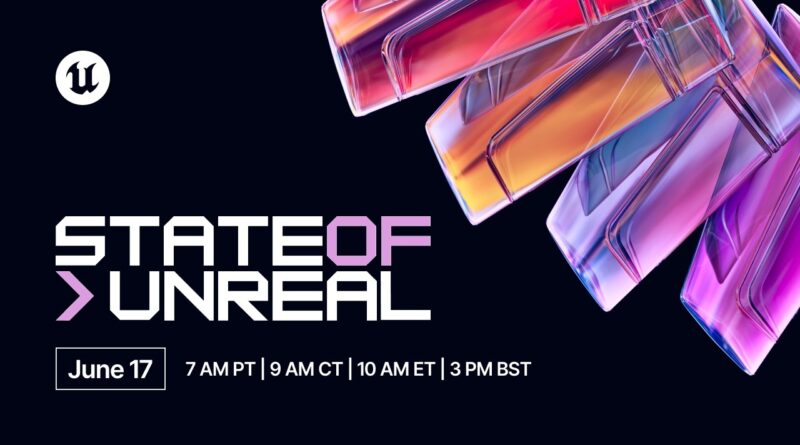
Epic’s pivot did not come out of nowhere. At State of Unreal 2026 in Chicago on June 17, the company laid out its roadmap for Unreal Engine 6, which will merge Unreal Engine 5 and Unreal Editor for Fortnite into one product, with Early Access targeted for the end of 2027. One of its three core initiatives is a set of pipeline features, including Model Context Protocol (MCP) integrations for models like Claude and Gemini, that Epic describes as “creativity and productivity multipliers.” The stated goal is to let teams spend their energy on the essential creative and technical work instead of time-consuming manual tasks.
Developers do not even have to wait for UE6. Unreal Engine 5.8, released the same day, ships an Experimental MCP plugin that connects AI models directly to Unreal projects, so they can work inside real engine workflows instead of just suggesting snippets to copy and paste. Epic also showed diffusion model workflows that use depth passes, normal maps and camera data from 3D scenes as inputs, with the tools behind them planned for release early next year.

Unreal Engine 5.8 is the last planned major Unreal Engine 5 release and the first to ship an Experimental MCP plugin for AI models.
NVIDIA Is Turning AI Into the New Graphics Pipeline
While Epic focuses on how games are built, NVIDIA is reshaping how they look and feel. At GDC 2026, the company showed RTX Mega Geometry, which lets developers build ray tracing structures 100x faster than previous methods. Remedy applied it to existing assets in Alan Wake 2 and saw a 5 to 20 percent FPS boost plus a 300 MB VRAM reduction, and CD PROJEKT RED plans to use a new, still in development Mega Geometry foliage system to bring fully path traced forests to The Witcher 4.
On the AI character side, NVIDIA ACE added its first production-quality on-device text-to-speech model, while Creative Assembly is adding a natural language advisor to Total War: Pharaoh to guide new players and Krafton is using AI for interactive teammates in PUBG: Battlegrounds. NVIDIA even released an AI Code Assistant Playbook aimed at helping studios scale AI-assisted coding in Unreal Engine. Add DLSS 4.5 with its second-generation transformer model and the message is clear: AI is becoming a core part of the graphics and development stack, not a gimmick on top of it.

NVIDIA’s RTX Kit uses the ReSTIR PT algorithm for full resolution path traced mirror reflections.
SpaceX and xAI Want to Ship an AI-Generated Game
The boldest bet comes from Elon Musk’s companies. SpaceX completed its acquisition of xAI on February 2, 2026, making the Grok developer a wholly owned SpaceX subsidiary. xAI has been building its own game studio since its public announcement in February 2025, and in October 2025 Musk promised that it would release a “great AI-generated game” before the end of 2026. The company has also been hiring video game tutors to train Grok in game design and player experience.
So far, no release or release date has been announced, so whether that promise lands in the final months of 2026 remains to be seen, and many developers are skeptical that a fully AI-generated game can match human-made craftsmanship. But the fact that one of the world’s most valuable companies is investing in AI game creation shows how seriously the technology is being taken far beyond traditional publishers. Platform holders are moving too, with Microsoft recently launching XBOX LABS to experiment with AI-driven mods and ports.
Why AI Could Help Indies Reach AAA Quality
For independent studios, this is where it gets exciting. Making a modern game has always meant choosing between ambition and budget. Rigging characters, setting up particle systems, skinning bone weights, adjusting lighting, writing boilerplate code and hunting bugs eat up months of work that a small team simply does not have. Several of these, from character rigs and particle systems to skinning bone weights and lighting, are exactly the tedious tasks Epic named as targets for AI help in Unreal Engine.
In our view, that changes the math. If a team of five can spend its time on world building, combat feel, story and art direction instead of repetitive setup work, ideas that once needed a 200 person studio suddenly become realistic. AI will not give an indie a great idea, but it can give a great idea a fighting chance to look and play like a AAA production.
Why Big Publishers Could Finally Take More Risks
The same logic applies at the top of the industry. AAA budgets and development cycles have exploded, and when a single game costs years and hundreds of millions, publishers understandably play it safe with sequels and proven formulas. If AI meaningfully cuts the cost and time of production, big studios could expand their existing IPs faster and, more importantly, afford to greenlight new projects that would have been too risky before. More shots on goal means more chances for the next surprise hit.
A Tool, Not a Replacement for Human Vision
None of this works if AI is treated as a replacement for the people who make games. The vision behind a world, the feeling of a perfect boss fight, the weird idea nobody else would dare to try, these come from developers, artists, writers and dreamers. AI can make that vision happen faster and cheaper, but it cannot invent the soul of a game for you.
It is also fair to acknowledge that many developers are worried. In the GDC 2026 State of the Game Industry survey of more than 2,300 professionals, 36 percent said they use generative AI tools in their job, while 52 percent said generative AI is having a negative impact on the industry, up from 30 percent a year earlier. Epic’s own pivot reportedly surprised parts of its staff, and players are watching closely too, as Jagex learned when it pulled a RuneScape trailer after fans spotted generative AI mistakes. Those concerns about jobs, credit and quality are real, and the studios that win this transition will be the ones that use AI to empower their teams rather than replace them.
Quick Questions
- How is AI used in game development? For coding, prototyping, level and character setup, lighting, testing, voice and NPC systems, and AI-powered rendering such as DLSS and neural shading.
- Is Epic Games using AI to make games? Yes. Tim Sweeney confirmed in October 2026 that Epic is retooling its teams for AI-accelerated development, and Unreal Engine 5.8 already includes an Experimental MCP plugin for AI models.
- When does Unreal Engine 6 come out? Epic is targeting an Early Access release at the end of 2027.
- Will AI replace game developers? We do not believe so. AI can speed up production and lower costs, but the creative vision that makes a game special still comes from people.
Final Words
We are standing at the edge of a huge leap. With Epic building AI into Unreal Engine, NVIDIA pushing AI into every frame and SpaceX’s xAI chasing AI-made games, the tools to build bigger, better and more daring games are arriving faster than ever. If the industry uses them wisely, indies get the power to chase AAA dreams, publishers get the freedom to take risks again, and players get more great games. That is what a golden age of game development looks like, powered by AI and driven by human imagination.
Keep the adventure going! Check out more Gaming and Tech News on Gamersuniverse.
Picture Source: Epic Games / Unreal Engine, NVIDIA