
Pragmata Review: Capcom’s Boldest New IP Hacks Its Way Into Greatness
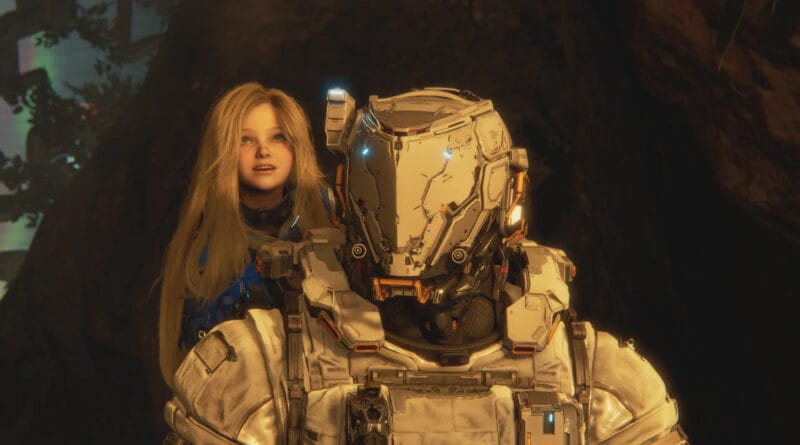
Pragmata is Capcom’s first brand-new franchise in years, and after a six-year detour through development hell, it has landed as one of the most inventive third-person shooters in ages. Released on April 17, 2026 for PC, PlayStation 5, Xbox Series X/S, and Nintendo Switch 2, it pairs a stranded astronaut with a hacking android on a moon base gone horribly wrong, and builds an entire combat system around the two of them working as one.
Here’s the full breakdown across our five categories (2 points maximum each).
Table of Contents
Pragmata Story – 1.5/2
Good Points: Characters, Premise, Emotional Core
Premise
Systems engineer Hugh Williams is sent to the Cradle, a lunar mining outpost built around lunafilament, a material that can 3D-print almost anything. He arrives to find the base eerily abandoned, and before his team can investigate, a moonquake knocks him out and separates him from everyone else. He’s revived by D-I-0336-7, a child-like android whom he renames Diana, and together they have to fight through an AI-controlled facility to find a way home.
Hugh and Diana
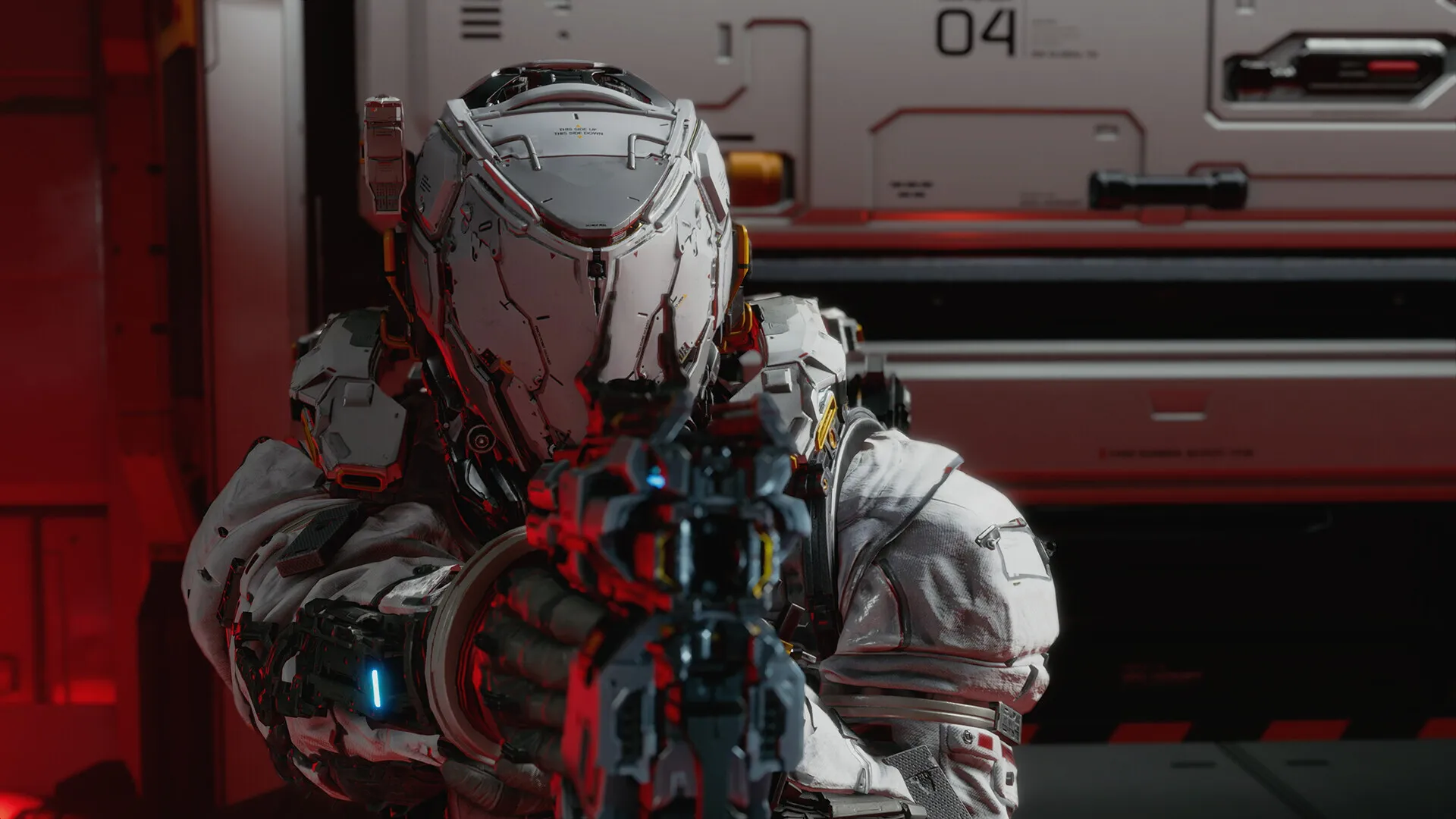
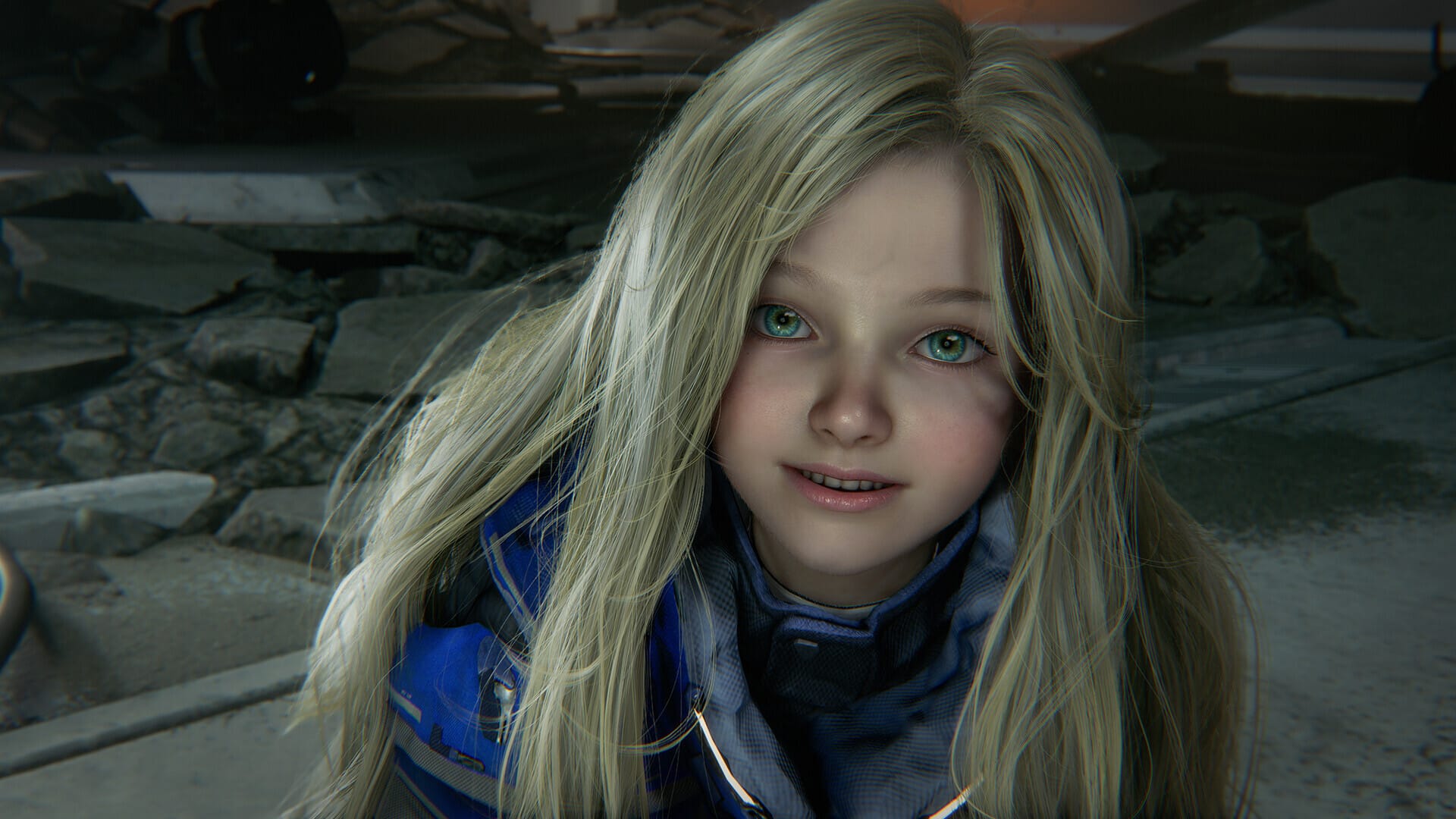
The entire game rests on this duo, and it works. Diana is curious, a little odd, and never grates despite talking constantly, while Hugh slides into a fatherly role that could easily have felt forced but instead earns its warmth over the course of the campaign. Their bond deepens through small, optional moments back at their hub, where Hugh shows Diana keepsakes from Earth and talks about his own childhood.
Where It Falls Short
The wolf-and-cub structure is familiar, and the back half leans harder on plot mechanics (dead filament contamination, a rival Pragmata named Eight, a doomed scientist’s grief) than it does on subtlety. Hugh in particular gets less of a personal arc than Diana does, and the story ultimately feels like a serviceable frame for the combat rather than the main event. It’s a good, sometimes touching sci-fi tale, but not quite an unforgettable one on its own merits.
Pragmata Gameplay – 2/2
Special Praise: The Hack-and-Shoot Loop
Shooting Meets Hacking
Robots on the Cradle are armored, so shooting alone barely scratches them. Aim down sights and Diana overlays a small grid puzzle on the target; guide a cursor from a start node to a goal node with the face buttons while Hugh keeps dodging and firing, and the armor cracks open for real damage. It sounds like it should slow the action down, but it never stops the fight around you, turning every enemy into a puzzle you’re solving under fire rather than a pause in the action.
Weapons, Nodes, and Hacking Modes
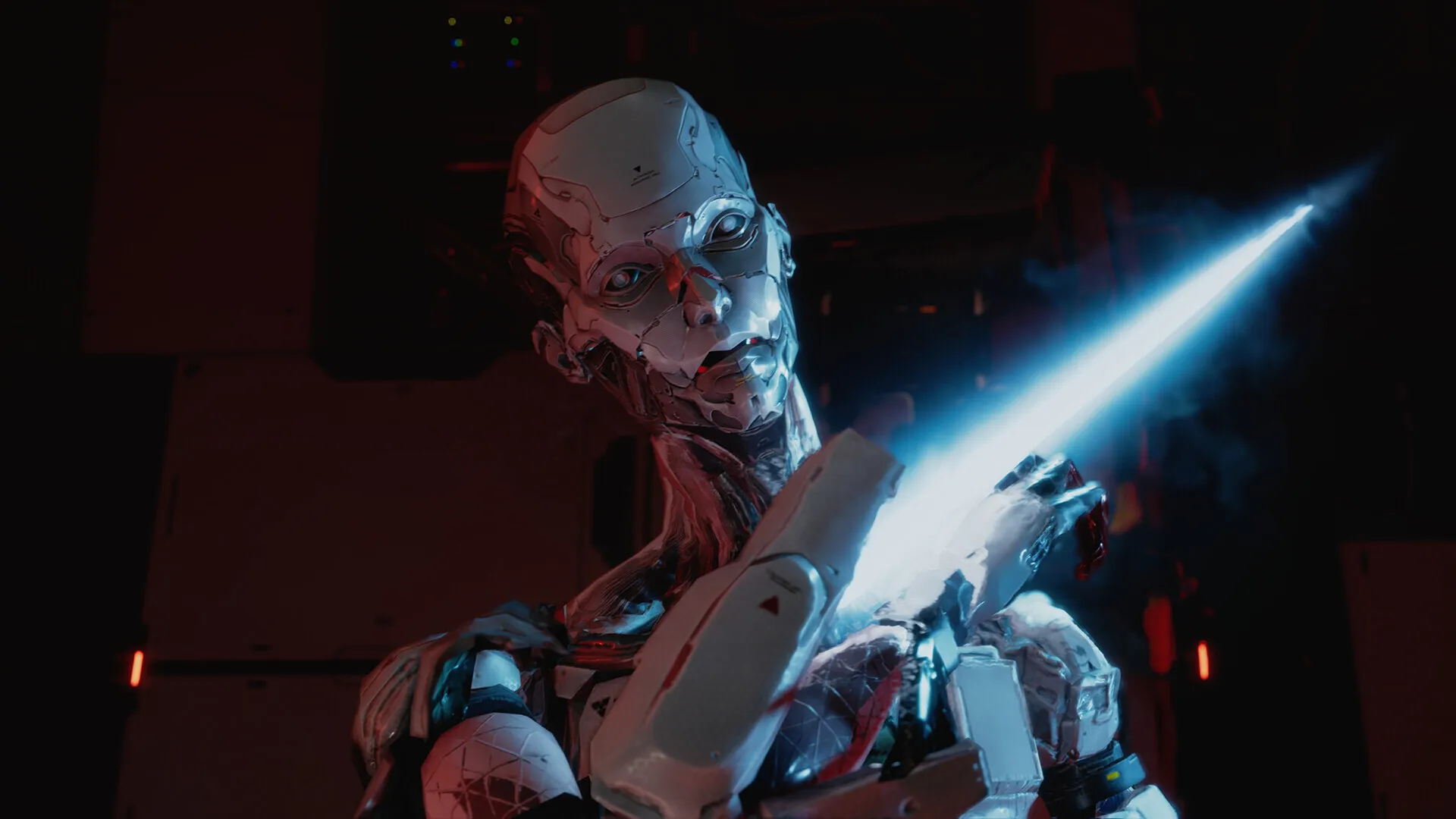
Hugh’s base sidearm has infinite ammo but a small clip that regenerates over time, pushing you to constantly juggle secondary weapons like a slowing Stasis Net or a grid-shrinking Sticky Bomb. Diana’s side is just as deep: yellow consumable Hack Nodes populate the grid randomly and add temporary buffs, while unlockable Hacking Modes change what the grid actually rewards you for doing, letting you build a genuinely personal playstyle around the same core loop.
The Shelter
Between missions, you return to the Shelter, a hub where you upgrade weapons and stats, unlock new hacking tools, and chat with Cabin, a support robot who runs a stamp-card reward system. It’s a satisfying loop of loot, upgrades, and character beats that never feels like padding.
Pragmata World – 1.5/2
Good Points: Setting, Atmosphere, Art Direction
The Cradle
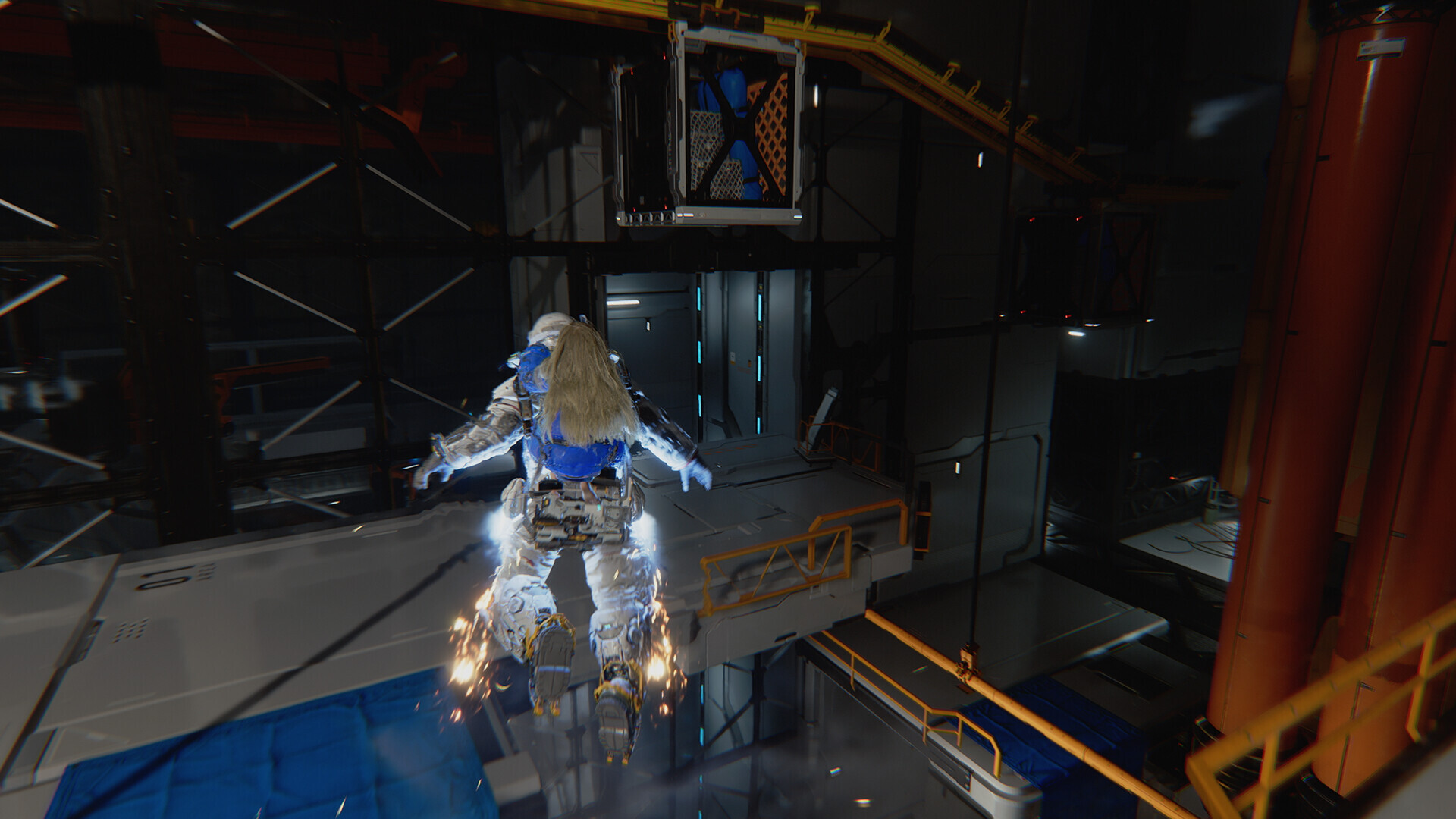
The lunar facility is cold, reflective, and quietly unsettling, with half-built replicas of Earth cities scattered across its sectors. One late-game stretch mimics New York, deliberately built by Capcom’s human artists to look subtly AI-generated, with taxis sinking into the floor and buses growing out of walls. It’s an eerie, well-executed idea that sums up the game’s sci-fi ambition.
The Shelter as Sanctuary
Away from combat, the Shelter offers a calmer, warmer atmosphere that contrasts nicely with the sterile hostility of the Cradle, letting the world-building of Hugh and Diana’s relationship breathe between fights.
Where It Falls Short
The Cradle’s back half increasingly funnels you into tighter, more linear arenas built for multi-enemy fights, and it loses some of the exploratory freedom of the opening hours. Collectibles are also harder to track than they should be: without a proper minimap, scanning for pickups clutters the HUD instead of pointing you cleanly to them on the blueprint map.
Bugs – 1.5/2
On consoles, Pragmata is solid: PS5 and Xbox Series X run a stable 60fps-targeted frame-rate mode or a prettier resolution mode, and a Patch 1.21 update later bumped PS5 Pro’s internal resolution up to match the base PS5, fixing softer reflections at launch. Switch 2 is the weakest link, with lower resolutions and a frame rate that swings between 30 and 60fps, but it holds together for a portable version of a game this ambitious.
On PC, results are more mixed. Path tracing looks stunning on capable Nvidia hardware but can introduce noisy, blotchy reflections and occasional ray-traced glitches, and DLSS Frame Generation has been linked to traversal stutter and camera micro-stutter for a chunk of players, generally fixable by disabling frame generation or capping the frame rate manually. GPUs with 8GB of VRAM or less struggle noticeably once path tracing is enabled. Denuvo’s anti-tamper DRM has also drawn criticism from the PC community and currently blocks Steam Deck and Linux play entirely. None of this breaks the game, but it’s enough friction to cost it a point here.
Features of Pragmata – 2/2
How the Systems Work Together / Uniqueness
Engine
Pragmata runs on Capcom’s RE Engine, the same technology behind the modern Resident Evil and Monster Hunter titles. On PC it supports full path tracing with ray-traced global illumination and reflections, developed with roughly 18 months of dedicated work alongside Nvidia to optimize performance through Shader Execution Reordering. Capcom also extended RE Engine’s strand-based hair simulation specifically to handle Diana’s long hair believably under path tracing, a piece of tech that was later reused for Resident Evil Requiem.
System Synergy
What makes Pragmata click is how tightly its systems are welded together:
- Hugh’s shooting and Diana’s hacking are two halves of a single combat action, not separate modes.
- Hack Nodes and Hacking Modes let you reshape what the grid puzzle rewards, personalizing the loop without changing its rules.
- The Shelter ties progression, upgrades, and the Hugh-Diana relationship into one hub instead of splitting them apart.
- Environmental storytelling (datapads, recordings) constantly feeds back into the central mystery of what happened on the Cradle.
Nothing here feels bolted on. The hacking mechanic alone would have been a gimmick in a lesser game; here it’s the backbone of both the combat and the storytelling.
DLC Integration Notes
The base game is a complete, self-contained story with no content locked away for later. The only add-on so far is the Shelter Variety Pack, a cosmetics bundle with new outfits for Hugh and Diana, a weapon skin, alternate Shelter music, and Diana gestures, sold separately or included in the Deluxe Edition. It’s purely optional and doesn’t touch the campaign. Capcom hasn’t confirmed a story expansion yet, but if one lands, we’ll cover it here with its own dedicated review and link back to this page.
Gamersuniverse Score:
8.5 out of 10 stars⭐
Pragmata is Capcom’s best new idea in years: a genuinely fresh combat hook wrapped around a heartfelt, if familiar, story about an unlikely father-daughter duo trying to get home. The hacking-and-shooting loop alone is worth the price of admission, the RE Engine visuals are gorgeous when your hardware can keep up, and the Shelter gives the relationship room to breathe between fights. It loses ground in a slightly formulaic back half, a fiddly collectibles system, and some real PC performance and DRM headaches at launch.
If you want a third-person shooter that actually tries something new, or you’re a sucker for a well-told story about found family, Pragmata is very much worth the trip to the moon.
Score Summary
- Story: 1.5/2
- Gameplay: 2/2
- World: 1.5/2
- Bugs: 1.5/2
- Features: 2/2
Total: 8.5/10
Have you played Pragmata yet? Did Hugh and Diana get you too? Let us know in the comments.
You can find more reviews here: Reviews
Pragmata
Summary
Pragmata is Capcom’s best new idea in years: a genuinely fresh combat hook wrapped around a heartfelt, if familiar, story about an unlikely father-daughter duo trying to get home. The hacking-and-shooting loop alone is worth the price of admission, the RE Engine visuals are gorgeous when your hardware can keep up, and the Shelter gives the relationship room to breathe between fights. It loses ground in a slightly formulaic back half, a fiddly collectibles system, and some real PC performance and DRM headaches at launch.
Pictures: Capcom


Pingback: Denuvo Sues Anonymous Game Cracker 'voices38' Over 26 Games, Including Black Myth: Wukong and Hogwarts Legacy - Gamersuniverse