Dune: Part Two Review: Denis Villeneuve’s Sci-Fi Masterpiece Is a Work of Art
Some sequels continue a story. “Dune: Part Two” completes one. Denis Villeneuve’s follow-up to his 2021 epic adapts the second half of Frank Herbert’s 1965 novel, and it does so with a confidence, scale, and emotional punch that very few blockbusters of the last decade can match. Where our Dune (2021) review praised a patient, slow-burn opening chapter, Part Two is the payoff: a war epic, a doomed love story, and a chilling warning about messiahs all at once. With “Dune: Part Three” arriving in theaters this December, here is why Part Two is the high point of the saga so far.
“Dune: Part Two” premiered in London in February 2024 and opened in U.S. theaters on March 1, 2024, with international releases starting February 28. Running 166 minutes, it earned more than $710 million worldwide, far surpassing its predecessor, and won two Academy Awards (Best Sound and Best Visual Effects) from five nominations, including Best Picture. Here’s the full breakdown across our five categories (2 points maximum each).
Table of Contents
Dune: Part Two Story – 2/2
Good Points: A Phenomenal Rise and Fall Told in One Breath
From Refugee to Fremen Warrior
The film picks up right where Part One ended. Paul Atreides (Timothée Chalamet) and his mother Jessica (Rebecca Ferguson) are hiding among the Fremen of Sietch Tabr, and Paul has to earn his place in the desert. His first sandworm ride, his growing bond with Chani (Zendaya), and the Fremen guerrilla raids on Harkonnen spice harvesters give the first act a sense of momentum that Part One deliberately held back. Villeneuve promised a war film, and he delivered one.
The Messiah Trap
What lifts the story into masterpiece territory is how it handles the prophecy. Stilgar (Javier Bardem) sees the Lisan al-Gaib in everything Paul does, Chani sees a dangerous lie planted by the Bene Gesserit, and Paul himself knows exactly where the path ends: a holy war fought in his name. Every victory he wins makes the audience cheer and feel uneasy at the same time. Jessica’s transformation into a Reverend Mother who actively spreads the prophecy in the south adds another layer of manipulation, and Paul’s speech to the war council is one of the most chilling turns in modern sci-fi cinema.
An Ending That Changes Everything
The final act on Arrakeen delivers everything fans waited for: the assault under cover of a sandstorm, the confrontation with Emperor Shaddam IV, and Paul’s duel with Feyd-Rautha. But the ending refuses to be a simple triumph. Chani walking away as the Great Houses reject Paul and the holy war begins is a bold change from the novel, and it makes Herbert’s original warning about charismatic leaders even clearer than the book did.
Minor Nitpicks
Book readers will notice that the time jump of the novel is gone and that some threads, like Thufir Hawat, are left out entirely. The compressed timeline means Paul’s rise happens very quickly. These are deliberate trade-offs, though, and the tighter structure is a big part of why the film never drags across its nearly three-hour runtime.
Dune: Part Two Cast – 2/2
Good Points: The Best Ensemble in Modern Sci-Fi
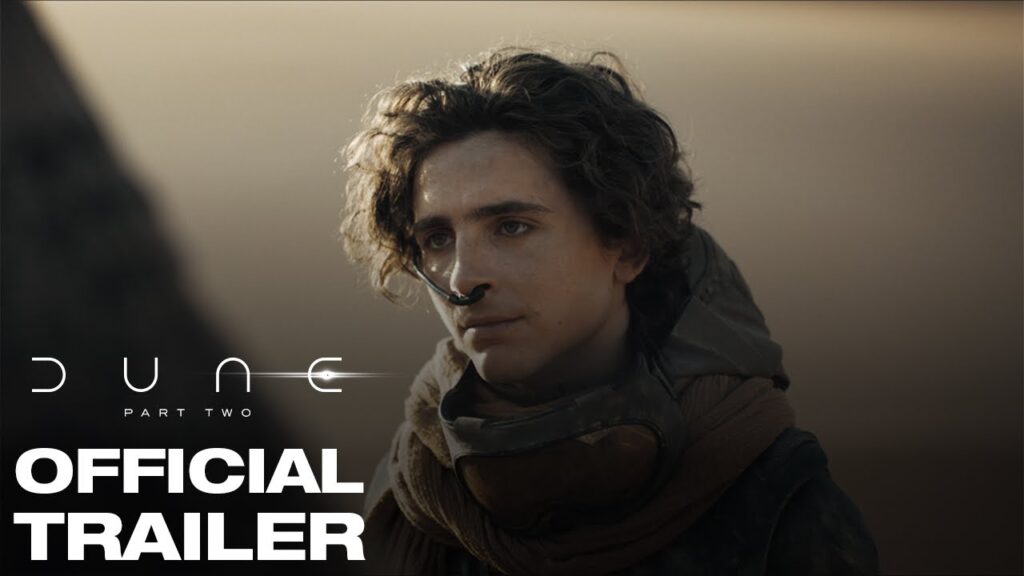
Timothée Chalamet as Paul Atreides in Dune: Part Two
Chalamet and Zendaya Carry the Heart of the Saga
Timothée Chalamet finally gets the full arc that Part One only set up, and he nails every stage of it: the uncertain outsider, the devoted Fremen fighter, and the cold, terrifying leader who emerges after drinking the Water of Life. Zendaya, who only had a few minutes in the first film, becomes the emotional center of this one. Chani is skeptical, funny, and fierce, and her final scene says more without words than most blockbusters say in a whole monologue.
Austin Butler’s Feyd-Rautha Steals Every Scene
Austin Butler is unrecognizable as Feyd-Rautha Harkonnen, the Baron’s psychotic nephew. With a shaved head, black teeth, and Stellan Skarsgård-inspired vocal delivery, he turns the gladiator arena sequence on Giedi Prime into one of the most memorable villain introductions in years. Javier Bardem’s Stilgar is the surprise of the film, bringing genuine warmth and humor as a true believer whose faith becomes increasingly unsettling.
A Stacked Supporting Cast
Rebecca Ferguson’s Jessica turns from protective mother into a calculating Reverend Mother, and it is a fascinating, eerie performance. Florence Pugh brings quiet intelligence to Princess Irulan, Christopher Walken plays a weary, fragile Emperor Shaddam IV, Léa Seydoux makes a memorable impression as Lady Margot Fenring, and Josh Brolin, Dave Bautista, Stellan Skarsgård, and Charlotte Rampling all return in top form. Souheila Yacoub’s Shishakli adds another strong Fremen voice. There is not a single weak link in this cast.
Dune: Part Two World – 2/2
Good Points: Worldbuilding on a Level Rarely Seen
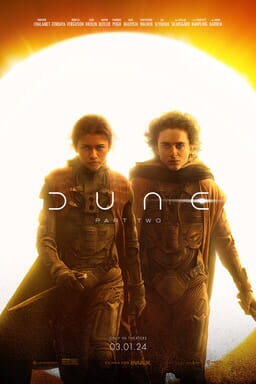
Official Dune: Part Two key art
Living With the Fremen
Part One showed Arrakis from the outside. Part Two takes us inside Fremen culture, and the depth is staggering. The sietch, the water discipline, the deathstill, the ritual of the Water of Life, the sandwalk, and the maker hooks used to mount a worm all feel like part of a real society with its own beliefs and rules. Filmed again in the deserts of Jordan and Abu Dhabi, with additional locations in Italy and interiors built in Budapest, the planet feels huge, hostile, and beautiful at the same time.
Giedi Prime in Black and White
The single most striking piece of world-building is Giedi Prime. Villeneuve and cinematographer Greig Fraser shot the Harkonnen homeworld’s outdoor scenes with infrared cameras, turning its black sun into a bleached, colorless nightmare. The gladiator arena, the fireworks that look like ink splattered across the sky, and the Harkonnen rituals tell you everything about that culture without a word of exposition.
Sets, Props, and Costumes
Patrice Vermette’s production design expands the brutalist language of Part One with new locations like the southern Fremen strongholds, the Emperor’s camp, and Kaitain’s garden. Jacqueline West’s costumes, the new Fremen stillsuits, the Sardaukar armor, and the weapons all feel tactile and lived-in. The world never looks like a set, it looks like a place someone actually lives in.
Music Score and Effects – 2/2
Hans Zimmer’s Score
Hans Zimmer returns with a score that is simply top-tier. He builds on the alien soundscape of the first film but adds something it lacked: a real romantic theme for Paul and Chani that gives the story its emotional core, alongside the thundering war drums, throat singing, and haunting vocals of the Fremen and Harkonnen themes. The Academy ruled the score ineligible for Best Original Score because it reuses themes from Part One, which only proves how essential those motifs are to the saga. On its own, the soundtrack is a work of art.
Visuals That Are a Masterpiece of Their Own
Visually, “Dune: Part Two” is breathtaking. Greig Fraser’s cinematography turns nearly every frame into a painting, from the orange haze of the deep desert to the silhouette-heavy war scenes. DNEG’s visual effects, supervised by Paul Lambert, won the Oscar, and it is easy to see why: the sandworm ride, the worm charge through the Emperor’s army, and the harvester attacks blend practical locations and digital work so seamlessly that you never question what you are seeing. The Oscar-winning sound design shakes the room every time a worm surfaces. This is reference-quality cinema for any IMAX screen or home theater.
Originality – 2/2
How It Stands Apart / Uniqueness
Yes, “Dune: Part Two” is an adaptation of a nearly 60-year-old novel. But where Part One followed Herbert’s story beats closely, Part Two takes real creative risks. Reframing Chani as the skeptical voice of the Fremen, ending on her rejection of Paul instead of the book’s quieter conclusion, and shooting an entire planet in infrared black and white are decisions no studio sequel had to make. The result is a blockbuster that openly questions the hero you are rooting for.
That is rare in a genre built on chosen ones and triumphant endings. “Dune: Part Two” turns Herbert’s warning into its own distinct cinematic statement, and its visual language has already become a benchmark for big-screen science fiction. That earns it full marks here.
What’s Next After Dune: Part Two?
The saga closes this winter. “Dune: Part Three,” based on Frank Herbert’s “Dune Messiah,” opens only in theaters and IMAX in North America on December 18, 2026, with international releases starting December 16. Villeneuve directs from a screenplay he wrote with Brian K. Vaughan. The story is set nearly two decades after Paul seized control of the Imperium, with Paul now a ruthless Emperor haunted by visions of collapse and caught in a conspiracy with Chani at its center.
Timothée Chalamet, Zendaya, Jason Momoa, Florence Pugh, Rebecca Ferguson, Charlotte Rampling, and Javier Bardem all return. Anya Taylor-Joy, who made a brief surprise appearance as an adult Alia in one of Paul’s visions in Part Two, steps into a much bigger role, and Robert Pattinson joins the saga as Scytale. On the small screen, the HBO prequel series “Dune: Prophecy” has wrapped filming on its second season, though HBO has not set a premiere date yet. And if you want to explore Arrakis yourself, our Dune: Awakening review, the Dune: Awakening character creation guide, and our Dune: Awakening map explainer are the perfect next stop.
Gamersuniverse Score:
10 out of 10 stars⭐
Dune: Part Two is a modern sci-fi masterpiece. Hans Zimmer’s score is top-tier, and the visuals are a work of art in their own right, with nearly every frame worthy of a gallery wall. The story of Paul’s rise among the Fremen is phenomenal, turning a war epic into a haunting warning about power and faith, and the world-building, from Fremen rituals to the black-and-white horror of Giedi Prime, is unmatched in the genre.
Add an outstanding cast led by Timothée Chalamet, a career-best Zendaya, and a terrifying Austin Butler, and you have one of the best blockbusters of the decade. “Dune: Part Two” is essential viewing before “Dune: Part Three” arrives in December.
Score Summary
- Story: 2/2
- Cast: 2/2
- World: 2/2
- Music Score and Effects: 2/2
- Originality: 2/2
Total: 10/10
Is Dune: Part Two the best chapter of the saga for you? Which moment gave you chills: the first sandworm ride or the duel with Feyd-Rautha? Let us know in the comments.
You can find more reviews here: Reviews, and more Movie & Show coverage here: Movie & Show
Dune: Part Two
Summary
Dune: Part Two is a modern sci-fi masterpiece. Hans Zimmer’s score is top-tier and the visuals are a work of art in their own right. The story of Paul’s rise among the Fremen is phenomenal, the world-building from Fremen rituals to the black-and-white Giedi Prime is unmatched, and the cast led by Timothee Chalamet, Zendaya, and Austin Butler has no weak link. One of the best blockbusters of the decade.
Pictures: Warner Bros. Pictures, Legendary Pictures