
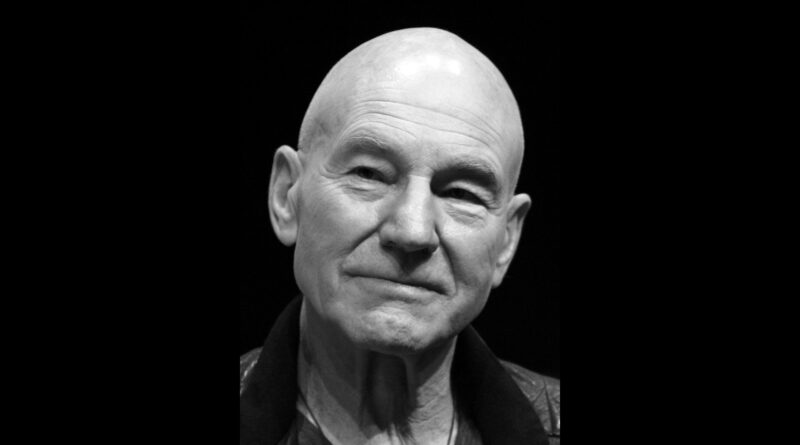
Sir Patrick Stewart, Star Trek’s Captain Picard and X-Men’s Professor X, Dies at 86
Sir Patrick Stewart, the actor who gave us Captain Jean-Luc Picard in Star Trek: The Next Generation and Professor Charles Xavier in the X-Men films, has died at the age of 86. He passed away on Wednesday, October 28, at his home in Los Angeles, “in the loving care of his beloved wife Sunny, following a brief and poignant journey with Alzheimer’s Disease and Lewy Body Dementia,” according to a statement shared on his official Instagram account on Thursday.
It is heartbreaking news for the Star Trek community, which only days ago said goodbye to Walter Koenig, who died on October 25 at the age of 90. For gamers, it is also the loss of one of the most recognizable voices in the medium. Below we look back at the life and career of a man who brought Shakespearean gravity to every genre he touched.
A Farewell Full of Warmth
The announcement paints a peaceful picture of his final days. “He has been held in the warm embrace of family and friends, surrounded by live music, prayers, tears, laughter and the kind of profound emotion that only he could inspire after a lifetime of devotion to all of us,” the statement reads. “We will forever cherish the peaceful ease and reflection on his face, an enduring reminder of his invincible grace.”
The statement also looks back on a life that went far beyond acting. His family says his professional accomplishments were “humbly matched by his philanthropy and activism on behalf of human rights, survivors of domestic violence, global refugees, veterans’ mental health services, and animal welfare, particularly his cherished foster pitties,” and that he will be remembered for “the dignity, compassion and humanity he brought to every role.”
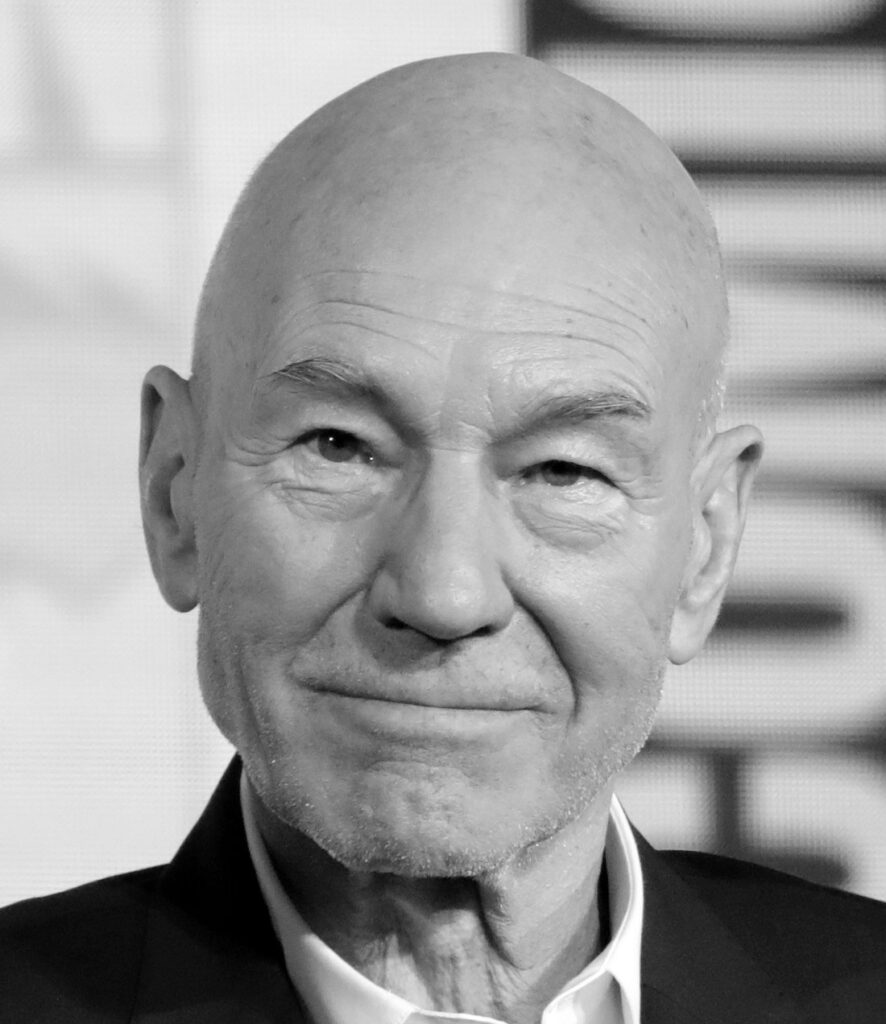
Sir Patrick Stewart, 1940 to 2026.
From Mirfield to the Royal Shakespeare Company
Patrick Stewart was born on July 13, 1940, in Mirfield in the West Riding of Yorkshire. Acting became his refuge early on. At 15 he took a job at his local newspaper, the Dewsbury Reporter, but when his editor made him choose between journalism and the stage, he quit on the spot. By 18 he had won a scholarship to the Bristol Old Vic Theatre School, and in 1966 he joined the Royal Shakespeare Company, where he went on to appear in more than 60 productions. In 1979 he won his first Laurence Olivier Award, for Best Actor in a Supporting Role, for Antony and Cleopatra in the West End.
On screen, British audiences knew him from landmark television such as I, Claudius and Tinker Tailor Soldier Spy. His American film debut came in John Boorman’s Excalibur in 1981, followed by David Lynch’s Dune in 1984, in which he played the minstrel Gurney Halleck. Fans heading into the next chapter of Arrakis can find our spoiler-free guide to Dune: Part Three right here on Gamersuniverse.
Captain of the Enterprise
In the late 1980s Stewart was a stage veteran largely unknown in America when Star Trek producer Robert Justman spotted him reading Shakespeare at a UCLA lecture. After a contentious casting process, he won over even creator Gene Roddenberry and became Captain Jean-Luc Picard. Stewart later recalled signing a six-year contract because everybody told him the revival would not last past its first year. Star Trek: The Next Generation premiered in September 1987 and ran for seven seasons until 1994.
The show soared with the season-three finale “The Best of Both Worlds,” which saw Picard assimilated by the Borg, and Stewart was at the heart of episodes still counted among the finest hours of science fiction television, including “Yesterday’s Enterprise” and “The Inner Light.” His Picard became a diplomat, a scholar and a moral compass for a generation of viewers. The cast became one of the closest on television, and Stewart said his co-stars taught him “that you can do good work and have a good time at the same time.”
Picard followed him to the big screen in Star Trek: Generations (1994), Star Trek: First Contact (1996), Star Trek: Insurrection (1998) and Star Trek: Nemesis (2002). After 17 years away from the role, he returned in January 2020 for Star Trek: Picard, giving fans one more voyage with the captain they loved.
Professor X and a New Era of Superhero Films
Stewart was hesitant to be typecast again, but in 2000 he accepted the role of Professor Charles Xavier in X-Men, a film that helped launch the modern age of superhero cinema. Opposite his longtime friend Ian McKellen as Magneto, he played the founder and mentor of the mutant team in X2, X-Men: The Last Stand, X-Men: Days of Future Past and the emotional farewell Logan in 2017, plus cameos in X-Men Origins: Wolverine and The Wolverine. He returned as a variant of Xavier in Doctor Strange in the Multiverse of Madness in 2022 and was part of the announced cast of Avengers: Doomsday, arriving in theaters on December 18. If you want to revisit the road that leads there, start with our MCU watch order.
Looking back in 2017, Stewart told The Hollywood Reporter that he had “immensely admired” both Picard and Xavier “for their morality, for their kindness, for their sensitivity, for their compassion.” Fans would say exactly the same about him.
A Stage Giant to the End
Even at the height of his Hollywood fame, Stewart never left the theater behind. He turned Charles Dickens’s A Christmas Carol into a one-man show in which he played every character, bringing it to Broadway in 1991 and winning a Drama Desk Award and an Olivier Award for it. He played Prospero in The Tempest, Othello in a celebrated “photo negative” production in Washington, D.C., Mark Antony, and a widely praised Macbeth in the West End and at the Brooklyn Academy of Music. In 2008 he played King Claudius in Hamlet opposite David Tennant and won his second Olivier Award. In 2009 he finally fulfilled a 50-year ambition by playing Vladimir in Waiting for Godot alongside Ian McKellen, and the pair later took Waiting for Godot and No Man’s Land to Broadway.
Television, Film and a Fearless Sense of Humor
Stewart earned Emmy and Golden Globe nominations for playing Captain Ahab in the 1998 miniseries Moby Dick and for his work as King Henry II in The Lion in Winter in 2003. He played Ebenezer Scrooge in a 1999 television adaptation of A Christmas Carol, and another Emmy nomination came for playing a lecherous version of himself in Ricky Gervais’s Extras. He headlined the Starz comedy Blunt Talk in 2015 and 2016, appeared in Jeffrey and the Elizabeth Banks reboot of Charlie’s Angels as Bosley, and was the voice of CIA Deputy Director Avery Bullock on American Dad! for two decades. This year he lent his voice to The Sheep Detectives.
The Voice of Gaming
Few actors have sounded so right in a video game. Stewart reprised Captain Picard in a string of Star Trek titles, including Bridge Commander, Elite Force II and Star Trek: Legacy, and he voiced Professor X in the X-Men Legends games. Gamers of a certain generation will always hear him as Emperor Uriel Septim in The Elder Scrolls IV: Oblivion, a performance that earned him a Spike TV Video Game Award in 2006. He also worked on Castlevania: Lords of Shadow, Forgotten Realms: Demon Stone and Lands of Lore, narrated the introduction of The Sims Medieval, and lent his voice to the Holocaust story game My Memory of Us. If his Castlevania work made you curious about the series, our Castlevania timeline is a good place to start.
Honors, Awards and Milestones
Over a career of more than six decades, Stewart won two Olivier Awards and a Grammy for his narration of Prokofiev’s Peter and the Wolf, and received nominations for a Tony Award, three Golden Globes, four Emmys and three Screen Actors Guild Awards. He received a star on the Hollywood Walk of Fame in 1996, was appointed an Officer of the Order of the British Empire in 2001, and was knighted by Queen Elizabeth II for services to drama in 2010. From 2004 to 2015 he served as chancellor of the University of Huddersfield, and he remained a lifelong supporter of Huddersfield Town. Here are the key moments at a glance:
| Year | Milestone |
|---|---|
| 1940 | Born on July 13 in Mirfield, West Riding of Yorkshire |
| 1966 | Joins the Royal Shakespeare Company |
| 1979 | First Laurence Olivier Award, for Antony and Cleopatra |
| 1984 | Plays Gurney Halleck in David Lynch’s Dune |
| 1987 to 1994 | Captain Jean-Luc Picard in Star Trek: The Next Generation |
| 1994 to 2002 | Four Star Trek films: Generations, First Contact, Insurrection and Nemesis |
| 1996 | Star on the Hollywood Walk of Fame |
| 2000 | Becomes Professor X in X-Men |
| 2001 | Appointed OBE |
| 2006 | Spike TV Video Game Award for The Elder Scrolls IV: Oblivion |
| 2008 | Second Olivier Award, as King Claudius in Hamlet |
| 2010 | Knighted by Queen Elizabeth II |
| 2017 | Says farewell to Professor X in Logan |
| 2020 | Returns as Picard in Star Trek: Picard |
| 2023 | Publishes his memoir, Making It So |
A Legacy That Will Go On
Stewart is survived by his wife, Sunny Ozell, a jazz musician he married in 2013 in a ceremony officiated by Ian McKellen, and by his two children from his first marriage, Daniel and Sophia. The statement closes with words from his 2023 memoir, Making It So: “Like me, Jean-Luc has lived an unusual life that has taken him far beyond the bounds of normal human experience. But he is also someone who has remained true to his earthbound roots, for they are what gave him his identity. In the end, he feels the call of home, as do I.”
From the stage of the Royal Shakespeare Company to the bridge of the Enterprise, the halls of Xavier’s school and the imperial throne of Tamriel, Sir Patrick Stewart gave us characters who led with intelligence, compassion and courage. Gamersuniverse sends its deepest condolences to his family, friends and fans around the world. Thank you, Sir Patrick. Engage.
Keep the adventure going! Check out more Movies & Shows News on Gamersuniverse.
Picture Source: Gage Skidmore, Wikimedia Commons (CC BY-SA 3.0), Gage Skidmore, Wikimedia Commons (CC BY-SA 3.0). Both photos cropped and converted to black and white. Sources: The Hollywood Reporter, BBC News, NBC News.



The fact that he died at a specific age makes this milestone particularly poignant. That condition highlights a unique aspect of his long career.